Midwest Honey Bee Expo - Panel Discussion: Building Your Business (373)
Jeff and Becky introduce a live business panel from the 2026 Midwest Honey Bee Expo. Experienced beekeepers discuss profitability, overwintering losses, labor, and the financial realities of running a sustainable beekeeping operation.






At the 2026 Midwest Honey Bee Expo, Jeff and Becky briefly introduce a live business-focused panel before turning the conversation over to experienced beekeepers representing different scales of operation, including Kamon Reynolds, John Hill and MHBE Co-Founder, Doug Koltermann.
The discussion centers on the realities of running a beekeeping operation in today’s environment. Panelists address audience questions about profitability, input costs, labor, equipment investment, overwintering losses, and adapting management strategies in response to market and environmental pressures.
From hobbyist beekeepers considering growth to sideliners and commercial operators evaluating margins, the panel offers candid insight into what it takes to keep colonies healthy while maintaining a sustainable business model. The exchange highlights how regional challenges, varroa pressure, and fluctuating honey markets shape decision-making at every level.
Recorded live on the Expo floor, this episode captures both the practical concerns and collaborative spirit of the beekeeping community. Whether you’re running a few colonies or several thousand, the conversation offers perspective on navigating risk, managing costs, and planning for the seasons ahead.
Websites from the episode and others we recommend:
Midwest Honey Bee Expo: https://www.midwesthoneybeeexpo.com
- Project Apis m. (PAm): https://www.projectapism.org
- Honey Bee Health Coalition: https://honeybeehealthcoalition.org
- The National Honey Board: https://honey.com
- Honey Bee Obscura Podcast: https://honeybeeobscura.com
Copyright © 2026 by Growing Planet Media, LLC

______________

Betterbee is the presenting sponsor of Beekeeping Today Podcast. Betterbee’s mission is to support every beekeeper with excellent customer service, continued education and quality equipment. From their colorful and informative catalog to their support of beekeeper educational activities, including this podcast series, Betterbee truly is Beekeepers Serving Beekeepers. See for yourself at www.betterbee.com

This episode is brought to you by Global Patties! Global offers a variety of standard and custom patties. Visit them today at http://globalpatties.com and let them know you appreciate them sponsoring this episode!
As a beekeeper, you want products that benefit you and your bees. When you choose Premier Bee Products, you choose hive components that are healthier for bees and more productive for you. Because we believe that in beekeeping, details make all the difference. Premier Bee Products: Better for bees. Better for beekeepers. Use promo code PODCAST for 10% off your next online order.

APIS Tactical is a beekeeping brand focused on innovation. We create a wide range of gear for beekeepers of all types—whether you’re managing a few hives or working bees every day. We combine science and artistry to create purposeful, hardworking gear. We’re here to help you care for your bees with confidence, so you can focus on what matters most—your hive.

Thanks to Strong Microbials for their support of Beekeeping Today Podcast. Find out more about their line of probiotics in our Season 3, Episode 12 episode and from their website: https://www.strongmicrobials.com

HiveIQ is revolutionizing the way beekeepers manage their colonies with innovative, insulated hive systems designed for maximum colony health and efficiency. Their hives maintain stable temperatures year-round, reduce stress on the bees, and are built to last using durable, lightweight materials. Whether you’re managing two hives or two hundred, HiveIQ’s smart design helps your bees thrive while saving you time and effort. Learn more at HiveIQ.com.

Thanks for Northern Bee Books for their support. Northern Bee Books is the publisher of bee books available worldwide from their website or from Amazon and bookstores everywhere. They are also the publishers of The Beekeepers Quarterly and Natural Bee Husbandry.
_______________
We hope you enjoy this podcast and welcome your questions and comments in the show notes of this episode or: questions@beekeepingtodaypodcast.com
Thank you for listening!
Podcast music: Be Strong by Young Presidents; Epilogue by Musicalman; Faraday by BeGun; Walking in Paris by Studio Le Bus; A Fresh New Start by Pete Morse; Wedding Day by Boomer; Christmas Avenue by Immersive Music; Red Jack Blues by Daniel Hart; Bolero de la Fontero by Rimsky Music; Perfect Sky by Graceful Movement; Original guitar background instrumental by Jeff Ott.
Beekeeping Today Podcast is an audio production of Growing Planet Media, LLC
** As an Amazon Associate, we may earn a commission from qualifying purchases
Copyright © 2026 by Growing Planet Media, LLC


373 - Midwest Honey Bee Expo - Panel Discussion: Building Your Business
Patrick Stevenson
Hi, I'm Patrick Stevenson from Illinois, and I'm at the Midwest Honey Bee Expo with Jeff and Becky.
Jeff Ott
Welcome to the Beekeeping Today podcast. Welcome to Beekeeping Today Podcast presented by Better Bee, your source for beekeeping news, information, and entertainment. I'm Jeff Ott.
Becky Masterman
And I'm Becky Masterman. Today's episode is brought to you by the Bee Nutrition Superheroes at Global Patty. Family operated and buzzing with passion, Global Patties crafts protein-packed patties that'll turn your hives into powerhouse production. Picture this: strong colonies, booming brood, and honey flowing like a sweet river. It's super protein for you. Your bees and they love it. Check out their buffet of patties tailor-made for your bees in your specific area. Head over to www.Globalpatties.com and give your bees the nutrition they deserve.
Jeff Ott
Quick shout out to BetterBee and all of our sponsors whose support allows us to bring you this podcast each week without resorting to a fee-based subscription. We don't want that and we know you don't either. Be sure to check out All of our content on the website. There, you can read up on all of our guests, read our blog on the various aspects and observations about beekeeping, search for, download, and listen to over 300 past episodes, read episode transcripts, leave comments, And feedback on each episode and check on podcast specials from our sponsors. You can find it all at www.beekeepingtoday.com. Hey everybody, welcome to this special edition of Beekeeping Today. Hey Becky, how are you doing?
Becky Masterman
I'm doing very well, thank you. You doing you doing okay?
Jeff Ott
Yes, Fresco's doing well too. Hey everybody, a couple weeks ago we had the opportunity to go to the Midwest Honey Bee Expo, and in that we were able to record a panel discussion.
Becky Masterman
We did. And boy are they going to enjoy it because I think you and I enjoyed this panel discussion greatly.
Jeff Ott
It was lots of fun. It features Kamon Reynolds. John Hill of Hillco.
Becky Masterman
And Doug Koltermann of the Midwest. Can we call it the Great Midwest Honeybee Expo?
Jeff Ott
We can call it that, but Doug calls it the Midwest Honey Bee Expo. It was very cold that weekend, but it was really we had some great conversations inside. This is our panel discussion. We hope you enjoy this. Thanks everybody for being here. Today we're on on the podcast we do a bunch of different series on uh being beekeepers. And one of our most popular series has been how to grow your operation from being a hobbyist to a sideliner. What do you need to consider? What do you need to do and think about So when we approached about doing a uh a panel discussion here at the Midwest Honey Bee Expo, we thought talking to some experts or people who've been through that process, have grown their operations, have talked about bees can share their information, share their experiences and how they got started, how they grew from being one or two or three or ten hives up to fifty, sixty, hundred, two hundred, six hundred. So Welcome. Thank you for joining us today.
Becky Masterman
I I would also like to say that we have very successful beekeepers on the stage. We don't want to hear all the good news, you guys. We want to hear what was hard, what hurt, what you had to work on. But first I think what we're going to do is is tell everybody who you are. Uh well what are we gonna limit it limit them to? A couple of minutes?
Jeff Ott
Well some of these guys, yeah, we better limit it to one minute.
Becky Masterman
Are you s going to start, Kamon? Let's go for it.
Kamon Reynolds
And welcome to the Beekeeping Today Podcast. I'm Kamon Reynolds. I keep a few hundred colonies, and it's a pleasure to be here. I've been keeping bees since I was fourteen. That was uh twenty-four seasons ago, something like that. And Honestly, uh it's just it's really fun to be at this show and hang out with a bunch of beekeepers. Besides keeping bees, this is my favorite thing to do. So my name is Doug Koltermann.
Doug Koltermann
Um it's my eighth year in beekeeping and and Jeff introduced this panel as a panel of experts. Well that's not me. He wasn't looking down the table this far, but um I appreciate the the optimistic gesture there, Jeff. But um so it's my eighth year. Um I got started after I sold the company and and retired. I'll tell you about my big failure later in my first year of beekeeping. It was pretty sad. But um anyhow I've grown to about uh a hundred colonies. Uh I peaked maybe last year at one 110 colonies. I went into Wintern, Wisconsin with about 85. So I'm obviously the the underdog here when it comes to experience and knowledge, but I'm glad to be up here.
Becky Masterman
I'm just before you go, John, I just want to say just a shout out. We've got the uh founder of the North American Honeybee Expo. And then Doug, founder of the what co-founder of the Midwest Honey Bee Expo. So do we think they deserve a round of applause? John, do you have any expos you wanna talk about?
John Hill
Yeah, there's a lot of good ones we do all over the country and uh m yeah no anyway. No. The Midwest we do a quite a few different conferences and expos all over the country and the Midwest Honey Bee Expo is the second best expo we do compared to uh the North American Honey Bee Expo. So he's trying to get a discount. I told you underdog. I told you underdog, yeah.
Doug Koltermann
He was negotiating with me and that was one of his tools for negotiation.
John Hill
Anyway, no, when it comes to uh when it comes to actual beekeeping sideliner experience, I feel like I'm a little bit of a fish out of water here. I have had up to about fifty hives. at one point in time but it was fairly brief and as our you know as I was uh setting out to be a commercial beekeeper and and uh then I kinda got in the supply business and so I dwindled d down my number of hives pretty quick And so now I usually run about ten to twelve hives is all I all I ever run at one any one given time. So when it comes to sideliner or commercial discussion, I I'll turn it over to you guys.
Becky Masterman
I'm I'm just going to run through the three of you too because We all know that we can make money by selling jars of honey, we can sell nukes, we can we can do a lot of different things in beekeeping, but why don't you now go through the the three of you and just talk about your different beekeeping income streams and what products you sell or I I already mentioned the expos, but just talk about like what does your revenue, your beekeeping related revenue look like? Not the amounts, but what is it generated from?
Kamon Reynolds
Government assistance, of course. Um no, so uh none of that. Honey is uh our secondary from the bees. Um we wholesale everything at six dollars a pound to stores and have to buy at least four cases and stuff like that. Uh we sell to a lot of beekeepers actually. Um I can't produce enough for all the beekeepers that want our honey because you know some of them maybe had a bad year or You know, they are in Nashville and the demand is so high. I'm in a very small town and so that's $4. 25 a pound for a bucket, which is really darn good for me. Um the nucleus colonies is the definitely number one seller for us. Um it's easier to produce nukes than honey, it's more consistent and Yeah, there's s some stuff here and there, a little bit of beeswax, but that's primarily it for us.
Jeff Ott
And and you said just real quick, you you sell it by the Four cases at a time to your whole wholesale outlets or your retail outlets.
Kamon Reynolds
Yeah, we're just doing mom and pop shops, um, you know, some co-ops, um farmers market people that want to resell our honey and they make money off of it. And of course they love selling our honey because they make good money off of it. And so I don't have to fool with the sales tax because I'm wholesaling and So it's just a very simple method, but there are people that are buying our honey and selling it as pure Tennessee honey, which it is, and they're charging eighteen dollars for a jar that they paid uh less than half of that for. So I don't care. Make all the money they want. As long as they make it easy for me, I've got a conference to run.
John Hill
Oh, there we go.
Doug Koltermann
So my first five years in beekeeping, I I lost money. Um buying a lot of equipment, buying bees, um trying to familiarize myself to how to get my bees to make it through winter. Kind of at the fifth year was my turning point in terms of being able to overwinter my bees and start to turn my operation profitable. I sell my honey both retail and wholesale. I live on uh I'm blessed to live on a state highway in Maguanego. Um I get ten thousand cars a day to pass by by a driveway. So I sell quite a substantial amount of my honey at the end of my driveway, which is fantastic. At a real retail price in Wisconsin I'm getting twelve bucks a pound. Our range is about ten dollars to sixteen dollars in Wisconsin for a pound of honey And I my honest opinion is I think our honey's a little better than Tennessee honey, so I don't know how you're getting that but we'll do a blind taste test deal, King. Not yet, not yet But uh anyhow, besides uh selling honey, retail, wholesale, uh last year was my first year that I sold uh nukes from overwintered colonies. I was um able to get to the position where I overwintered enough bees that and my colonies coming out of winter were strong enough that I sold nukes. Now I did sell them later and I was buying queens obviously 'cause it was too early to raise good queens that were mated properly. So I was purchasing queens to add to those nukes if the purchaser wanted a nuke with a new queen. Otherwise if they wanted an over queen overwintered queen I was selling those nukes with uh last year's production queens. So um looking forward to doing that again this year. Um I haven't opened my hives in the last month or so because we had a negative fifteen temperature here in Wisconsin uh about two weeks ago and I've been super busy with the Midwest Honey Bee Expo um doing the planning things so I just haven't had time to open 'em but If things were going as well as they were a month ago, I plan on selling nukes again. And that's gonna be a really nice additional income stream for me to add to the honey. Next year will be my first year. I'm going to The plan is to take about 50 colonies to California. They'll first go to Idaho in cold storage, they'll move to California for almonds and hopefully come back strong enough where that'll help support more uh nuke production.
John Hill
Well Doug's got a whole lot to say there. I don't know. He might be the next Kamon Reynolds only taller and better looking.
Betterbee
For more than 45 years, BetterBee has proudly supported beekeepers by offering high-quality, innovative products, providing outstanding customer service. Many of our staff are beekeepers themselves. And sharing education to help beekeepers succeed. Based in Greenwich, New York, BetterBe serves beekeepers all across the United States. Whether you're just getting started or a Season Pro, Betterbee has the products and experience to help you and your bees succeed. Visit betterbee. com or call 1-800-632-337-0. 9. Better Bee, your partners in Better Beekeep.
Apis Tactical
This episode of Beekeeping Today podcast is brought to you in part by Apis Tactical. A beekeeping brand focused on innovation. They use new designs, new materials, and new ideas to bring more joy to beekeeping. Apis Tactical creates a wide range of gear for beekeepers of all types. New designs, new materials, and new ideas to bring more joy to beekeeping. Their products are built with purpose and they're already getting attention well beyond the US, with beekeepers in Europe discovering them through this podcast. If you're looking for well-made beekeeping gear from a company that understands the work, take a look at Apis Tactical. You can learn more at apis-tactical.com.
John Hill
Yeah, once again, I'm up here as I don't know what I'm up here for, but uh because I'm I'm less of a beekeeper than I am a supplier. But yeah, for my own beekeeping I pretty much if yeah, focus on just producing honey for friends and family. I usually splitting off a number of my hives in the springtime and selling off as nukes to fill in numbers of our other nuke sales and a lot of times we got we always have customers at the end of the there's some Snyder mark about to come over here. I'm just waiting. I'll just uh go ahead and finish. Okay, okay. And then uh Yeah, so we've always got straggler customers in the springtime after our other nukes and package sales are over with that are wanting some hives, that are wanting singles, that are wanting nukes, and so I'm usually splitting off what I've got and uh shelling that out to other people. So by by the time I do all that there's not as much uh Not as much honey production high as but go ahead, Kamon, the floor is yours.
Kamon Reynolds
All I know is I've heard a rumor that there's gonna be an extra expense at your vendor booth next year. You know that that unloading fee is just Wow, it just went out, but no it's it's all good, you know what's what's it. I know, I know. Well
Becky Masterman
I okay I'm gonna interrupt this too. Laughing is a lot of fun. I d I do want to get a little serious. Have you actually said the word Hilco in this podcast? I don't No, if you've actually told people howdy folks.
John Hill
Howdy folks. So they all they they don't want to know any more about me, do they?
Doug Koltermann
But nobody knows that name just in case. That's a company that sells beekeeping Hilco if you haven't heard of them before Yeah.
Kamon Reynolds
Yeah, so I guess I'll give John a plug because I feel sorry for him. And so he's one of the companies out there and one of the things I was a little confused about what this podcast was going to be about, um to be honest, because I don't pay much attention And I especially since you brought John, I'm like, what the heck's he doing on this? If it's about bees, it must be about who's, you know, doing different things in the industry. But um Yeah, Hilco is a very young company, but a very successful one. They're the biggest company at our show and have done a lot in the industry and they've been a catalyst to cause not uh only new innovation that they've produced, but it's caused a lot of other companies to reevaluate and get more aggressive in what they're doing for beekeepers. So John has done a lot of stuff for the industry. I I appreciate what he's doing. Just don't like working with him. Absolutely.
John Hill
All that back at you. Thank you. Very kind, very kind words, Kamon. And I'll I'll go back at him for a second here. I mean I think this goes without being said. Just be quiet. The B the Bee Expo as and and Doug, you I think you can you can deal with this too. I mean it's really a catal you're talking about a catalyst, it's really a catalyst for a lot of things and it's and it's spurring further growth and further excitement in the industry and as well as spawning other events like this one here that that is inspired by the North American Honey Bee Expo and all these things are bringing beekeepers together, spurring innovation, spurring conversations, getting people excited. And that's what this industry really needs.
Kamon Reynolds
Mm-hmm. Very cool.
Jeff Ott
Going back in time and and you decided to go from your few hives in the backyard and expand your operation. What were some of the thought considerations? What did you think about as you made that decision to make that leap. That's a big commitment to you and your family and and time.
Kamon Reynolds
I was a teenager, I wasn't doing a whole lot of thinking at all. And so I really wasn't. And I thought how hard could it be? I was already doing some farmers markets. And I I looked at it and go, okay, I've got tomatoes that only last a couple of days. I've got this over here, this over here. Here's some honey. It it supposedly they say it can last thousands of years in the right conditions. I mean how hard could it be And so I I dove into it with five hives at fourteen and I purchased them outright in October, which is stupid by the way. And only one of them overwintered because they were not in a good position and also I didn't even have a B suit. That's just the type that's the story of my life is I just jump into things without really investigating enough and then just make it work after that the fact. And so Uh I had a a rough start, but that one hive um got strong and made a little bit of honey out of it and I I enjoyed the process and I really struggled the first several years because I didn't get a hold of good education and I wasn't taking care of my bees properly. And so Eventually, I was able to get it to the point after I studied not only the bees' life cycle and what they needed, but also the pests and the problems that they have. And then I was able to start doing it naturally as a business. I think that's a lot of people get too far ahead too quick and they think I can I can just buy these bees and boost these numbers. But the reality of it is if you can't manage Five colonies well, you can't manage ten well. If and that goes all the way up. So if you can't be sustainable with five, you can't be sustainable with fifty or any number. There's no special number You've got to be able to do it well with what you have and then you can grow very quickly after that.
Doug Koltermann
Yeah, so um what I've I sold the company in in 2018, 2019 and um I got into beekeeping as a s as a secondary addition to my hobby farm. I first bought um cattle. Then I bought some chickens and uh was in uh a store one day, fleet farm, and I saw bees for sale on the wall and um so I'm like, well that'd be a cool addition. So I bought The bees, the package of bees, and the beekeeping for dummies book. That first year I made it through chapter four. Didn't even know what a varroa mite was that season. Of course, the bees swarmed and died. So long story short, but How I got to a hundred colonies like Kamon was referring to before. I grew with my bees. Um I was I was a big fan of or I am a big fan of Bob Benny and um watched a lot of his videos Basically that was Bob's line that I just used and it's so true. Grow with your bees. He does not recommend uh a multiplication of more than two recommends, you know, for sure not multiplying by three or more in a year. So, you know, I started out with two. Took me a while and next thing you know I'm at eight and because of my I guess I was I'm supposed to be retired, okay? And I I I have this personality where I just enjoy taking on challenges and I don't like sitting on the couch. So You know, things grew rapidly and uh I when I got to a hundred I'm like, okay, that's that's good, I'm good right there. And that was last year, and then I pull up to the show and here's a pallet waiting for me outside. I ordered, you know, and I'm like, oh my gosh, why did I do this? To myself here I got more equipment, you know. And I see Andy Hemkin just walked in and he told me he's like His word of advice to me was Doug, be careful. So that was good advice, Andy. Um, because it's true. You know, um, if you've got that personality where you um want to always add on um this can become an addictive but it's become my passion and I think for anyone in this, um if you're gonna be in it seriously, and Kamon, you know, was kind of alluding this too, like You want to grow at with the bees and you want to grow only if you have the passion to take care of these creatures because these this is not a easy uh deal. You gotta pay attention, listen to the scientists, and apply your own art and grow with your bees.
John Hill
Yeah, for myself, I I grew up with a family that was in business and various businesses, and so I always wanted to be self-employed, and so I As a sixteen year old getting into bees. But anyway. Is that what it is? Okay. Anyway. But yeah, I wanted to do bees for a living uh right off the bat and so I was working towards that and got out of for few years when I got married, started having kids. I was working full time in farm equipment industry and then ended up getting back into bees and I started rampant working back towards that full-time goal of of of doing beekeeping And so I never yeah, I got to about fifty hives and I had been expanding too quickly and I had hives swarming on me like crazy and things were kind of getting out of hand and meanwhile it was the same year that we were kind of really getting Hillco started as a supply business. And so I I remember standing out there, so this is maybe a maybe not the opinion you're wanting to and maybe not the encouragement you want to hear here, but uh yeah, I remember standing out there and all in July one day and I had hives in the trees and I'm looking up there and there's a swarm there, there's a swarm there and there's a swarm there, way up too high for me to get 'em. And I'm s bending over these hives out there and hive after hive and I look down the under end of the road I hadn't inspected yet I'm like, I'm not sure I really love this. You know, I I like having a few hives, I like doing this as a hobbyist, but doing this all day in and day out was not really my cup of tea and so and again at the time You know, our supply business was already taking off strong and we saw a lot of potential there, so that's when I kind of started dialing it back in. But absolutely a mistake I made was We're trying to ramp up too quick and I think I'd have done better and probably enjoyed it more if I'd have been more careful and more methodical about that growth.
Becky Masterman
John, just as a follow-up, you started beekeeping, but how soon did you determine there was a need for you to start your supply business?
John Hill
Yeah, well I was um I was making hive boxes for myself. Don't try that by the way. Y'all just buy them from your supplier. Way better, way easier. Um I started making hive boxes for myself and uh to in it as a way to expand, right? I could save money again as I mentioned yesterday in here. I was working in a lumber yard, I could buy lumber at an employee discount, take it home. I started experimenting with making hive boxes and I thought well maybe I could sell some of these to local beekeepers in the area. And so it's just that the originally the supply stuff was just kind of a way to bring in bring in more funds to help the overall project of growing into commercial beekeeping, which obviously didn't turn out that way But that was kind of how it went. And so as I saw that need, that interest in the community in the local area of oh we gotta get mouthpiece here, his thing. As I saw opportunity in the local area and a desire for a local supply house, that was where I kind of started moving that direction.
Becky Masterman
So al along the journey, you've some of you have hinted at it, but there are some key resources. You mentioned Bob, Benny, Doug. Key resources. Did you have a mentor or mentors? Were there were there clubs that helped you or how did you get most of your information and support. And honestly I'm curious because there's support for beekeeping, but there's also support for the business side. John you said you had your family, but I I'd be really curious if you could talk about those resources, mentors For both the bees and the business part.
Kamon Reynolds
Yeah, it's i's relationships are critical in any field, beekeeping or otherwise. Uh especially if you're new, you need to learn some stuff. And unfortunately there's as much bad or more bad information out there as good. And so how do you know if someone has no experience? which is good and which is not. And so I I'm very thankful that guys like Bob Benny have decided to compete. And Bob's not doing it because he needs the money. Bob doesn't need another cent. Um but he uh started his YouTube channel and there's some other resources that are really good on YouTube as well and Facebook. We have to compete where the the people are learning. Obviously there's some really good B books. I'm I love books Uh a lot of people don't like to read. That's fine. Um but we have to get these folks good information. So obviously there's now, you know, this Bee Expo, my Bee Expo, there's some other options. But when I got into it Several years ago.
John Hill
Thirty-seven seasons ago.
Kamon Reynolds
I w I'm thirty-seven years old. The math doesn't work. So there but there wasn't really a great B club near me. I hope that if any of them listen to this, they don't take this ill, but they weren't Running bees sustainably. They weren't producing bees, they were buying bees most of them every year. And so obviously that that wasn't what I wanted to do And I was in a I'm in a very small town, that's why I wholesale my honey. If I was closer to Nashville, it'd be a sit a different situation. I'm two hours from Nashville in the middle of nowhere, sixteen, eighteen hundred people in the town, which is the way I like it But I have access to that information and back twenty odd years ago YouTube was not much of a thing and you know Facebook and heck I was a teenager. I wasn't allowed to have it anyways, even if that would have been around I'd have a cell phone till I was nineteen. So how do you get access to this information? So you need to invest not only into um your knowledge, you have to invest in good relationships. And heck if it's going and finding somebody like Bob Binnie and just Work and you know pay the money for a hotel. If you're really dead serious about running a business, you need to go work for somebody who's running a business. And fast it's worth every single penny. I would have done that in a heartbeat at this point in my life. I wasn't smart enough to do that back then. I've got a couple of the next gym kids we brought in. They've done that and they're twenty years old. They are a better beekeeper at twenty years old than I was at thirty years old because they're getting really good information young. They're going and physically doing the work and they're getting paid a wage It might not be the biggest wage, but they're getting paid a wage to learn how to do their craft. And so invest in yourself in those ways. Get the frame time, get the book time, maybe find a good YouTube video or two if you can find one. Or podcast. Or people still do podcasts? Particularly. Have you ever heard of the Beekeeping Today podcast? And we're sponsored by Better Be! And so yeah, you know, make sure you take the time. I didn't have access to that. It took me Ten years to get to where I'm seeing many beekeepers get in two to three years that get the right information because I was just going in all the wrong areas. So learn about your bees, take the time invest and that knowledge and learn how to be successful. And we talked about that a little bit today. Great queens, dead mites, and good nutrition, take care of those bees, and then you'll have to worry about those swarms that John was talking about.
Doug Koltermann
So when I got started I told you about my failure in my first year and um when I was reevaluating my year and the failures, I thought I'd better get serious about this. This is a pretty expensive experiment my first year, right? couple thousand dollars went down the drain and flew away and died. And um so I spent the winter reading, like Kane was talking about before gaining knowledge on my own and then started watching uh some stuff on the internet and like came and said there's a lot of good stuff and a lot of uh bad stuff. So I tried to, you know, with people I started to gain uh knowledge and networking through the beekeeping community, finding out who they were getting advice from and then listening to them and then decided on my own who I wanted to listen to because I like their style and I thought their information was really good. So Started um reading, um, listening on, you know, watching YouTube and figuring out who I wanted to watch, and then I decided to, you know, join a local bee club. And really um my advice was, you know, or is to young beekeepers is to first join a local bee club um and hook up with like Kamon said, uh a mentor that's respected in the area. I went to uh work. I was fortunate enough to be at the point where I was retired so I could go to work with another beekeeper almost full-time, and I volunteered my time. He reaped the benefits of my labor and um that was a great relationship 'cause I basically went to zero one hundred that second year in my beekeeping knowledge. Um I really started ground zero. By the end of the year I was helping Graft Queens. um, you know, a lot of different aspects of beekeeping in that first year because I had the time to invest and I was hooked up with someone that knew what they were doing. So then I just grew with my bees the years after that and got to the position um of of being able to handle like Kamon talked about before, only if you can't maintain five, you can't maintain fifty. So Finally got to the point where I could be sustainable, keeping more and more colonies and growing with my bees. So Regarding kind of more of the business side of things, um I had a business background for 25 years, and then um when I started this beekeeping endeavor and it became my passion and I knew I enjoyed it and I started um thinking about voids in the community of what was needed. Um bit kind of a business mind like John was talking about before. I I saw the need for something bigger in the Midwest in terms of uh expo like this with a different business model than what the state organizations have. And that's kind of how this was born. Going back to more of the fact about networking with people. Over the years I got to know Bill Werning and I knew what kind of gentleman he was. Great guy, trustworthy. beekeeper with a long history. Like I said before, I'm just a you know, nothing more than a essentially a beginner beekeeper now moving to kind of a you know, a seasoned beginner I would call myself, or maybe uh, you know, a little bit uh more on the advanced things, um but really networking with people and I met Bill and that's how this was born um this expo. So um surround yourself with good people, with knowledgeable people and um You know, look for someone that's gonna complement your skill set. As human beings we all have our strong points and our weak points, right? So look for someone that's going to compliment the things that you're a little bit strong point, right? That's going to compliment you and that you can work with. So that's my advice.
John Hill
You know, if Doug would have just quit talking about one minute ago and he said all the things I was about to say, but uh anyway. No, all excellent things. And so and uh the but uh especially on the networking part and the meeting people again, I think that's where the value is in in all of us being at events like this. Events like the North American Honeybee Expo. Um that's held in Louisville, Kentucky, by the way, if y'all haven't heard of it. And uh anyway, but yeah, that network those network opportunities about
Kamon Reynolds
Trying to dig yourself out of that financial hole, huh?
John Hill
Pretty much. Anyway, but no, uh I'm uh I'm kind of a school of hard knocks guys, we're going back to kind of I think the question was about how we kind of learn and I I I've as as I get older I get less and less patient and so my level of patience for watching YouTube videos of certain people put out you know, is uh not there and uh even reading books and I'm not I don't say that and that's not something I'm proud of. I say that uh to my shame that I don't do the a very good job. You know, I'm the kind of guy I want to watch a YouTube video, learn how to do something. If it's a ten minute video I watch about the first minute and a half to kind of get an idea where they're generally going and then I okay now I'm gonna go try and figure this out. So I learned things the hard way and uh so that's kind of but I think there's also uh just you know, there there's an element of study, there's an element of research and watch the YouTube videos and you know the Bob Benny's and the other good YouTubers out there. And there's also an element of uh There's also an element of just get out there and do things, you know. And um again I'm kind of a school of hard knocks kind of a guy, but the but the networking is really big too. And in spite of how much I like to pick on Kamon Um we do have a lot of long talks about abot uh you know as we build our respective businesses and nd others in the industry, up and coming younger guys and not so young guys that we're talking about Doug. You know, and uh but even you know I see Jonathan here as well, show Ulter from Beeline. You know, we have a lot of conversations, a lot of talks as we try to again grow our businesses together and to some degree and some of us are a little bit a little bit competing with each other, but we also, that's one really, really nice thing about the beekeeping. industry in general is that was filled with really nice people, really helpful people. Just keep quiet for a second there. Amen, John. Yeah. But one but yeah, one more quick thing is that Is that uh where was I gonna go with that? He distracted me here. But uh no. Anyway, a lot of great people, a lot of collaboration, yeah. And even though we can compete a little bit sometimes, we really just get along awfully good and so and yeah, this is what I was gonna say is that uh you know, all of us in our go comings and goings we have a lot of opportunity to meet beekeepers and beekeepers are all walks of life, every stripe, every demographic, every religious persuasion and occupation and everything else. But the one common denominator that I have seen amongst beekeepers is that we all like to talk, right? Every one of us likes to talk. And so we talk to each other, we network, we compare notes, everybody's willing to help each other for the most part. And if you're that person that has a lot of knowledge to share with somebody else, don't think you need to keep it all close to the vest, like, well, I'm not going to share my trade secrets with you because you might, you know, no. There's plenty of room for everybody, just share with each other and we can all learn an awful lot.
Kamon Reynolds
Yeah, I we need that. Excellent.
John Hill
Did you disagree with me? Mm-hmm.
Premier Bee Products |
Beekeeping is demanding work. The last thing you need is equipment that can't keep up. That's why Premier Bee Products builds every frame and hive body in our South Dakota factories. With one goal in mind, reliability when it matters most. From our beefy pure frames to our natural profile hive bodies with rough interiors, we design for long life, in the field and in the colony. Because we believe that in beekeeping, details make all the difference. Premier bee products, better for bees, better for beekeepers. Visit online at Premier Bee Products. com or call us today. Use promo code Podcast for 10% off your next online order.
StrongMicrobials
Beekeepers, if you're looking for a smarter way to support colony health, take a look at bee bites from strong microbials. Bee bites are a new protein patty made with spirulina, chlorella, and targeted probiotics. Designed to support nutrition without creating new problems in the hive. With 15% protein, bee bites are unique because they do not attract small hive beetles, a big deal if you've ever battled infestations during feeding. Strong microbials has been supporting beekeepers And farmers since 2012. Developing high-quality commercial probiotics and nutritional supplements you can trust. Learn more about Bee Bites and their full line of bee nutrition at strongmicrobials.com.
Jeff Ott
Everybody, and when they're starting a business, I have to believe everybody. And you're out there uh and you're feeling like you're on that branch alone at 2 a. m. and you're thinking about the business and everything else. And you're about to decide trying to decide should I stay in this business or should I let it go? Should I go back to wherever whatever I was doing? What was the decision, what was the thought process that kept you going? What was that tipping point that said, you know, I'm gonna bare down and work on this harder What was that deciding point?
Kamon Reynolds
Just being too stubborn primarily. Um honestly. I'll be the first to admit that I'm very frustrated oftentimes because just average intelligence and I see uh areas I wish I could be a lot smarter uh and uh more gifted naturally. I'm just not And so I've always known that, so I I just have to work extra hard to make up for it. But if there's one thing that I am good at is I'm relentless. and I will just keep going after something until I I figure it out. Ten years, fifteen years, it doesn't matter. And so I think that's really you know, Bob Benny uses the words beekeepers are tenacious. And you have to be. And it's not just beekeeping. If you want to get really good at you know raising chickens, that's why I started when I was about twelve, getting into that. We used to do a few thousand birds a year. And I really, really struggled with that for the first several years because I didn't understand what the heck I was doing. I didn't know how to protect them well. So with so with beekeeping, it's not going to be any different. I think it's important that you be tenacious. You also understand that there is a learning curve You know, when you're a gardener, you're gonna lose some plants. When you're a chicken person, you're gonna lose some chickens. When you're a beekeeper, you're gonna lose some bees. But if you learned that that's okay, go through that and learn how to create your own bees
Doug Koltermann
Came and kind of just took my words from me, but uh I would say that You know, I use the word grit a lot. I think beekeepers are some of the um a group of people that have a lot of grit, right? It's not easy a lot of times when it's ninety degrees out, you're carrying supers that way, a lot, you know, they're all they're heavy. You're sweating your tail off, you're getting stung. Um we have a lot of grit um as a group. And I just want to comment based upon what John had said before. I was down in the hotel very early this morning at Spark. And uh one of the ladies came up to me, she said, your group of beekeepers that are staying here is one of the best groups of people we have had from an expo. So compliments to all you folks out there. You guys make me look good. So thank you. I appreciate it. No, really that means a lot and it's very true. I've often said the beekeeping group in general is an awesome group of people, really. It is really a great group of people. You guys are solid. You're good hearted. You're honest. You were hard workers and that's, you know, says a lot.
John Hill
Yeah, I think it you know uh we're talking about relentlessness, tenacious, you know, do you have the fire in the belly to do this? And that's what it boils down to. I mean because this it does it doesn't uh you know for me at this point at least it doesn't get easier it can get harder and you just get di you just get deeper and deeper into it. And so yeah, when you're when you're starting out and you're thinking about do you take it to the next step or you're part way through and do you Do you keep on moving? I mean there gets to be a point where you're locked into this thing, you know, and that's where I'm at right now. If I even if I decided tomorrow that I didn't like this job anymore, I didn't like this business, I didn't like this path I'm on, it would be awfully hard to get off the train. Right? And so and that's good. That's really good. You know, but it's but that's it's just something to think about. It's not like a job. You know, I don't like this job anymore, I don't like this career path anymore. Well I'm gonna go look for another job. No You can't really do that anymore. Um you know, we're dug in pretty deep here. That's good. That's good, but it's just something to think about is that again, but there's a level of fire builders that that the fact of that two AM you talk about there, you know, are you do you find it do you find it uh Exciting to be in that spot where at two AM in the morning you wake up and you're Heck no. You just oh maybe after thirty-nine seasons you're uh you're just getting too old and bored by now. I don't know. But No, I mean there there's a lot to be excited about. So yeah, there's burdens, there's things that you're sweating over. You know, we're gonna have to be able to pay the bills this month, these kind of things. I got this big inventory purchase I gotta cover. All these kind of things that you know again the zeros just get bigger. Uh there's there just gets to be more zeros, you know, and so even though you got millions coming in, you got millions going out. And so millions. Don't say that braggie. I'm just saying that's what it when you get to those numbers, when you get to those numbers, um there's just more of them and there's more pressure and stuff. So do you thrive on that or don't you? And I'm the kind of person God's wired me to kind of thrive on that stuff a little bit. Is it always fun? No But, you know, if you if if that's not the kind of pressure you can live with, if that's not the kind of pressure you can thrive on when your back's against the wall to get up and get going and fight harder, then You know, maybe not something to be doing, but if that is something that excites you, then get after it.
Becky Masterman
I've got two directions we can go in. Do we think we've talked about your biggest lesson learned yet? Do you have anything that you want to share I you've been very honest and I really appreciate your sharing actually the good and the bad. I just do we want to go down that path? Do we have something Kamon, do you have something to share?
Kamon Reynolds
Not s because there's so many different stories. I mean, I think the message has already been shared that You know, you're gonna everyone's gonna deal with that, but I also want to just say there's a lot of good that comes with this too.
Becky Masterman
Because honestly I wanna skip over lesson learned because I think you got you you've already been very honest with all of us What brings you the most joy? What brings you the most joy?
Kamon Reynolds
A lot. I mean there are so many different ways to make money in the US, different career paths, different parts of agriculture. Uh I was doing a lot into agriculture and I decided to get into bees because I I loved it. If I wanted to make uh tons and tons of money, there's definitely uh paths that would have been a lot easier uh to take. But you have to really enjoy. I always wanted to work outside, getting to experience all the different flowering plants and learning about the trees and the different plants as they're blooming, how that impacts the bees. And also as someone who likes to grow, um I'm growing a lot of different things from Black locust, tulip, poplar and getting to watch the bees over the course of time, you know, use those plants that I'm growing. And also Getting to the point where you're actually good at keeping bees alive and where you're able to make your own splits. And that's my favorite part is making splits raising my own queens and watching these uh young queens and these young hives turn into these massive colonies the next year and produce honey and then make a split off of that and continue the cycle I really enjoy being a part of nature and beekeeping is such a unique aspect of that and get to experience all the different types and flavors of honeys. There's so many opportunities and Obviously all three of us do different things and have some different backgrounds and locations, but there's so many different opportunities. Uh most of us are trying to do too much of the same thing. And I think creamed honey is a great opportunity. Uh I've seen a company that's making uh honey june, which is kombucha, just with honey. And it's delicious. Um I don't really like kombucha that much, but this guy's got some great flavors and they're they're selling it for like eight dollars a cup at the farmer's market and they sell out each uh Saturday. So I just think there's a lot of opportunities, there's a lot of fulfillment with keeping beats and there's a lot of good. But you gotta focus on the fundamentals and the basics and you're gonna struggle a little bit, just like with anything, but there's a lot of awesome things and there's some great years and some great stories and you get to work with a lot of weirdos and you know that can be really good if you like stories and storytelling. So I have a lot of ammo.
Becky Masterman
Thanks Kamon.
John Hill
I'm going to actually have John answer because I think then John's going to I might and go yeah okay thank you thank you yeah first of all thanks for having me it's an honor to be up here with uh Doug Um and Jeff and Becky. Uh okay. Anyway, we have a lot of fun. We have an awful lot of fun as you can tell and I hope that you all uh feel that too when you come to events like this. Lightweight. Anyway, but that is no seriously, but one of the joys, you know, yeah, that's the question. One of the joys of f doing this and part of that is the relationships, right? Very much, and ad all of us feel that, whether we're small or big or in between or whatever. But for myself in in building our business, uh I you know, I'm not uh you know, building personal wealth is not something that really motivates me. I'm not that ex I mean I I mean, you know, money's obviously always nice to have, but uh but I'm not really trying to build personal wealth. I just love to see something grow, just to build something. And it's so meaningful when we are at events like this and customers come up to you and say, wow, thank you for producing this product. It's been a game changer for us. Or thank you for in general, you know, trying to, you know, do things, build equipment, sell equipment, whatever that that make beekeeping more affordable for people And that's a big thing. Obviously, we're here to make money. Obviously, we got to pay the bills. We got, you know, we're trying to get a little bit of profit when it's all said and done. But the things that really motivate me are seeing something grow, seeing something succeed, seeing something build, being able to provide meaningful jobs for young people and not so young people. But you know, I mean we have young people come in, you know, and being able to give them an opportunity to grow and improve themselves and to move up and to learn new things. That's so meaningful, such a powerful opportunity and I'm something we're really thankful for.
Becky Masterman
Excellent Thank you very much for joining us, John. We really appreciate it.
Doug Koltermann
Yeah, so my first year in beekeeping, um I was just fascinated looking inside the hive. That was my motivation. Um everything about it was fascinating. God gave us these amazing creatures to care for. That really inspired me to stay in it as my passion versus cattle and chickens. And I still have cattle and chickens, but they get fed every day and the you know they're there. I get eggs and I get beef. But The bees themselves are fascinating, right? In every aspect of them. So that carries me, my passion for seeing the fascination of the bees. But really what carries me now is the people in beekeeping you folks. Choking up a little bit here. Because really, all of you, you know. It's humbling to be up here, I'm sorry, sitting on a stage with you know Kamon Reynolds next to me just because I started a you know a Midwest Bee Expo. And I'm humbled by all you folks at this conference. It's amazing to see this girl. Thank you. Sorry, but uh You know, I I love being surrounded by good people and like I said before, this is about as good as a group people as you find on earth. But thank you.
Becky Masterman
Thank you so much.
Kamon Reynolds
That is that is the best part of uh running these events. There's obvious a lot of logistics and little details that are frustrating and stuff, but when you get to the event and you get to see uh people enjoy your what you've worked all year to put together that is very fulfilling We want to see people with the YouTube, with conferences to come and enjoy themselves, to gain uh knowledge so they can be more successful. Um that's the same thing. uh with a Bee club or anywhere else and we want to see a lot more folks um be successful ultimately and so that uh that's a a good thing that you're doing here.
Doug Koltermann
And I I really appreciate Kamon just one second on this if I may. I don't want to get too long, but um after our first expo last year in Waukeshaw, a week or two went by and my phone rang and it and I saw it was a number from Tennessee and it was Kamon Reynolds call me He said me, he's like, Doug, congratulations on the show. I heard it was a huge success. And I didn't know how that phone call was gonna go, right, when it was Kamon Reynolds on the line calling. It's like Hey, and I didn't know if he was gonna say, hey, you're stepping on my toes, right, in my territory. And he handled it like a gentleman and a scholar. And like you said before, there's room for all of us here. Um I'll compliment you even though John tore you down. John and I are good buddies. I know you are. I'm kidding you. It's been an incredible experience, an incredible ride the last eight years, and it's been um Uh so meaningful meet all the relationships I've made along the way.
Becky Masterman
Thank you. We are going to take questions, but I have a I have another Kamon question really quickly, specifically, because You wrote a book. You co-wrote a book. Oh yeah. And could you just tell everybody a little bit about that? Because I actually haven't heard you talk about it.
Kamon Reynolds
Sure. And I have not talked about it as much as I normally would just because the first rounds were all sold out at my expo and so the next shipment should be getting in soon. But this was actually a project that Blake started initially and got it going and decided that Um he'd like to have uh me on, which was a a really nice uh honor for me, Blake Shook, uh for those of you who don't know. Um he's a couple years younger than I am, but I remember reading about him in the American Bee Journal when I was a teenager and being that upstart. Um because he had more bees than I did and he still has about Yeah, 27,000 more hives than I do or something like that. So you know, he's a little bit of a show-off, but he's a he's a great guy and and he asked me in on this project to help write the book and it's called The Golden Rules of Beekeeping by uh Blake and Kamon. And so this is a a nuts and bolts get your questions answered book. And with a lot of nuance and stuff, but it's it there's not a lot of storytelling, it's just straight to the point, okay, you're wanting to super your colony. This is the conditions for this situation, this situation. And um the Beesupply.com, which is his company, will be the ones that'll be selling that book.
Thank you. Thank you. So we're gonna make you use the microphone. We want you to ask questions, but we will Jeff and I'll go to you and go ahead and introduce yourself, your just your name and where you're from and then go ahead and ask your question.
Jeff Ott
And I just want to clarify that for those who listen to the podcast know that we've been doing a promotion of a hive tool if you a ask a question and we answer it. This is not part of that. So please don't so raise your la raise your hand if you have a question for the panel, for Becky, for me.
Audience Member
Hi, I'm Joel Carlson. I'm from uh St. Paul, Minnesota. I'm just a small uh beekeeper in St. Paul. I have opportunity to expand my operation, but it's 150 miles away where we own property out in farmland Is that too far for uh you know, how often does a person have to get out there to visit them? Can you put six supers on at a time and just Hope that everything goes well or you know you gotta be out there every month and check them. And also I wanted to point out the black locust in Minnesota is uh in ruled an invasive species, so don't bring it up here when you come up here, Kim
Kamon Reynolds
I tell you what, Black Locust has been here longer than probably we have. I mean that uh I know. It's funny how that works though. But as far as 150 miles, that is a a pretty long way. Now I uh for those of you who've maybe listened to some of my talks, the last couple years I brought my bees up to Wisconsin and I live in Tennessee, so it's a twelve and a hour Twelve and a half hour drive to the part of Wisconsin I go. So obviously I can't be there the whole time. A lot of it has to do with knowing you know, where your bees are at and also knowing that you're probably gonna incur a couple more losses than you naturally would because if you know, you're not able to get to them quite as quick and one of them goes queenless and it isn't able to write itself, then you know maybe that colony just gets too far gone and you have to combine it back later. So I preferred to be in my colonies every other week, um, even if it's just a two minute inspection. Um, but that obviously when they're in Wisconsin, I can't do that. I don't stay up here. So I bring the first fruits of my operation up here. These are colonies that are really strong, ready to produce honey Um the queens are laying good, everything looks perfect. And that doesn't mean they'll all stay that way. But I have a better chance of having good success. So there's a those go to the outyards or go up to Wisconsin. And so I bring 'em up here, put my excluder on, super 'em up, and then so make sure they have space, make sure everything's good, and then I go back home. And then I I come back um You know, sometimes it's six weeks or so later. And so it works, but you definitely have to um n understand that if there's any issues within that time period, six weeks is a long time for a hive. And It it's it's gonna it's gonna be a problem if um they get a little bit queenless for a while or have any issues because you're not there, any collapses, wax moss, stuff. So You just kinda have to be willing to accept a little bit of that. 150 miles is a is not as far though. So you know can you get out there within like a three to four weeks?
Audience Member
If I'm working. No, probably because I'm seven days a week sometime so it's impossible. But if I'm laid off then I can. Um also I was asking about a water source too, uh for when you're leaving them like that. I mean you can't be out there checking on them and Putting cork jars in front of their hive every time. I don't know how you create water sources for your bees. That's what I do.
Kamon Reynolds
That's not a problem. But yeah, I I really wouldn't recommend it. You know, if you're if you're not able to check your bees fairly often, and I'm doing this after twenty odd years of experience, I'm just starting to get comfortable with that idea. Especially early on, I would have just really messed myself up. So it I if I did it I would start really small and and then work my way up from there. I wouldn't go f really big with it really quick.
Jeff Ott
Any other questions?
Audience Member
My name is John Pashnick. I'm from Plano, Illinois. Uh my question is as far as bees go, do you guys have a specific type of bee for you the area that you uh have your hives in first For where you're at?
Doug Koltermann
Uh to answer that question, I I started out with uh, you know, m someone was mentoring me essentially my second year beekeeping and they're like, you know, Italians, Carnelions are t the typical bees that guys use around here. So I've kinda stuck with that. However, after talking to Zach Lamas this um weekend and Dr. David Peck regarding the potential for trophy coming our way, it sounds like the future, uh at least in Doctor Peck's opinion, was that perhaps Russian, uh the Russian breed. might be a little better option. And you know, I don't want to get into the whole reasons why it's a long dissertation and I'm not a scientist. But so that's just in the back of my mind right now that um I think It's just a matter of time when trophy's gonna get here. And so uh uh I respect uh 100% what Dr. Peck says. So that's It's a big thing in the back of my mind right now that if I start buying, you know, some queens looking for some VSH breeds and whatnot, I may be, you know, respecting his opinion and going some Russian way
Kamon Reynolds
So Carneys and Italians are what I have the most experience with. I have tried Russians, but I'm I'm really concerned I keep getting you know these letters from I think the NSA whenever I say Russian nukes online. And so All jokes aside, the Carnies and the Italians are quite different in in some ways. The Italians brood too much in my opinion. And so they're good for almonds, the three banded Italians. Of course there's different variables, but most Italians keep bigger colonies. Um I want something that has more carnolean genetics, primarily because I want a winter shutdown. Because if I can get a broodless period, which is not normal in Tennessee But the Carnies will give it to me if they're really strong carniolens. And so I'm able to use oxalic acid vapor and get a very good clean on my mites. three quarters of a frame of brood with a three banded Italian. So there's some aspects where one's more beneficial than the other. I have some buddies in Hawaii, uh Canada that buy bees from Hawaii and love those queens. They say they overwinter good up there. Thank you. Genetics are important to a degree when it comes to overwintering, but the condition of the colony going into winter is the most important. And a a queen that's from the deep south that built a big cluster that's large and has plenty of food and that's healthy is still gonna do a good job overwintering.
Becky Masterman
How do you divide your colonies?
Doug Koltermann
I typically do splits because in the past seven years of my operation I've been trying to grow the operation. So I typically do splits for a number of reasons, um primarily to give them a a brood break and prevent swarming. In addition, you know, the other benefit of that is obviously to grow the operation. So moving forward, I really don't want to grow much anymore in terms of number of colonies. I'm satisfied with where I'm at and like where I'm at right now. So I'm going to um start doing some regular after the summer solstice. I'm going to start doing some queen replacements where I leave them brood, try to you know obtain that broodless period to get that advantage of broodless. Kane was talking about getting a broodless period that's super important for varroa control and colony health. So that's what I'm gonna be doing moving forward
Kamon Reynolds
So for splitting bees, we do a couple different types of splits and and like he mentioned there is some advantages to it. So whenever you make a split, whether the bees are split swarming or whether you're making a split, you're causing a hiccup in brood production. And when there's a the more of a hiccup there is, the more mites are exposed. And so there's opportunities there with not only keeping yourself in young queens and a s a sustainable manner and having these insurance colonies. uh but also there's opportunity to clean the parent colony and to clean the daughter uh colony of mites. We can't use something strong like formic or thymol though during this period because This can really uh rough up the colony when they're just tr trying to get a new queen that's starting to lay. So we don't want to do that. But what we can do is wait for the queen to have laid for about seven or eight days because when the queen lays an egg Um it's gonna be capped around uh day nine. And so if we uh get her introduced in there, I know it's gonna take about a day for her to get out of the cage. We're gonna come back Probably about eight days after we think that she's come out of the cage and we're gonna do oxalic acid vapor. She's still very gentle. She's already been laying enough that they've accepted the queen And we get a lot of mic kill there. And then we're gonna wait, you know, about another five days or so, and even more of the rest of the brood will have emerged out of that split. And we'll hit them with the oxalic acid vapor. So splitting is a great way of uh controlling your minds, dividing the m population. The two splits we primarily do is prior to the honey flow, the nukes that we sell I'm taking two frames of brood and a couple frames of food or one frame of food and two foundations and I'm feeding them with a queen cell. You can also purchase a queen. This is a small split and it works really good earlier in the year as long as you shake enough bees to provide coverage of the brood because it's still cool in March when I do this, quite cool. But as long as they have good bee coverage, this is going to either one be a great nucleus colony to sell, or it's going to be a powerful colony by the end of the flow that's able to go through our summer dearth periods. and be very successful. After the flow is over and our honey production is done, I'm gonna strip the honey supers off immediately, which is different for Wisconsin people. But for me, my honey flow is done the second week of June Let's strip those honey supers off, and then I'm going to take that really massive colony that's over two deep strong and I'm gonna split it in half. Queen goes on one side, one queen remains, unless she's doing a poor job Most of the time they're good. And then I am going to put a box of foundation on those as well and I'm going to feed them and I'm going to turn them into double deeps, get new combs, have a new queen. And so that's how Um if you have a hundred colonies, you can turn it into three hundred in a year and and do very well with that in in my region. But um We can afford to lose thirty percent of our bees. Splitting is uh those nucleus colonies and those young queens are essential to sustainability.
Becky Masterman
And when you're shaking frames of bees, are you shaking frames of bees from brood frames?
Kamon Reynolds
Yeah, uh primarily brood frames. You know, bee bread frames are really good too because especially if you're doing it around ten to two, you know, when a lot of bees are flying. What you're shaking is mostly those young bees at that point, which is really good. But we you especially with splits early in the season when it's cool, and even in summer because of the small high beetles The mistakes people make most of the time as new splitters is they don't add enough bees. And so and it may look like you did, but then if you have a frame and a half of bees that fly back because they're forage or bees Well now your brood gets chilled, that nuke is just no good at that point 'cause they're already small as it is. And the other one is not giving them enough feed because just because there's a a mild flow going on for the big colonies, they can devote 20,000, 15,000 bees to it. That nucleus colony can't devote much at all. And m the foragers fly back for the first little while too. So feed them, give them plenty of bee power, and then uh Definitely make sure that you um give them some space because if that queen starts taking off, they're gonna explode. Those young nucleus colonies are the most fun of anything that I do.
Jeff Ott
Well, thank you very much for everybody for being here, being at the Midwest Honeybee Expo, being here at this session, and thank you to our our guest to talk about their stuff on bees. Yeah, and John in in absentia. Listen in the next couple of weeks you'll hear this on Beekeeping Today podcast or on your drive home. You can listen to our past episodes. Thank you so much. Thank you. And that about wraps it up for this episode of Beekeeping Today. Before we go, be sure to follow us and leave us a five-star rating on Apple Podcasts or or wherever you stream the show. Even better, write a quick review to help other beekeepers discover what you enjoy. You can get there directly from our website by clicking on the reviews tab on the top of any page. We want to thank BetterBee. our presenting sponsor for their ongoing support of the podcast. We also appreciate our longtime sponsors, Global Patties, Strong Microbials, and Northern Bee Books for their support in bringing you each week's episode. And most importantly, thank you for listening and spending time with us. If you have any questions or feedback, just head over to our website and drop us a note. We'd love to hear from you. Thanks again, everybody.
Kamon Reynolds
What was fun… I got a raz John a little bit.
Becky Masterman
That turned out so nice

Beekeeper, Conference Founder, Educator
Kamon Reynolds is the co-founder of one of North America’s largest honey bee conferences, The North American Honey Bee Expo, is the founder of Tennessee's Bees and has been keeping bees in North Central Tennessee for 20 years.
Kamon keeps 250 hives with his wife Laurel. Kamon and Laurel also have filmed hundreds of educational videos to help new and veteran beekeepers around the world keep their bees successfully. Though Kamon does 99% of the talking, Laurel has been Beekeeping for 16 years and is an invaluable part of their Business, Tennessee’s Bees LLC. Tennessee’s Bees specializes in quality Bee Genetics, Pure Tennessee Honey, and Honeybee Education.
Kamon currently has 62,000+ beekeepers that follow him on Youtube.

Co-creator Midwest HoneyBee Expo
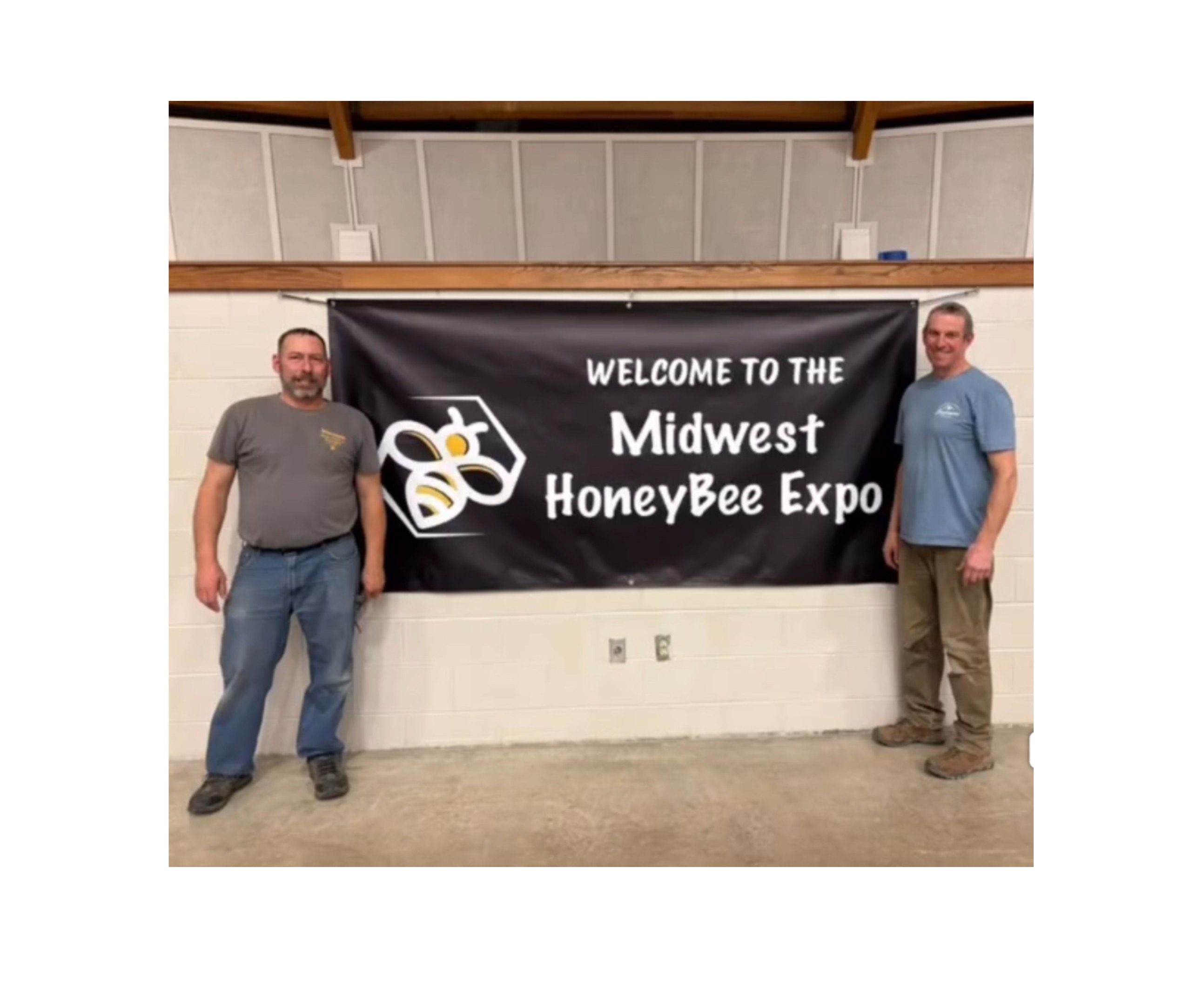
After a rewarding career in business ownership, Doug ‘retired’ and became a hobby farmer and caring for his Honey Bee’s quickly became his passion. Doug believes that every beekeeper should strive to be the best beekeeper they can ‘bee’ through continued education, networking and organizational involvement. He also believes that we have a lot to learn from these fascinating super-organisms that we care for. Doug is a co-creator of the Midwest HoneyBee expo and currently he is on the Board of Directors for the WI Honey Producers Association, acting as the Legislative Chairman and he is the acting President of The Walworth County Beekeepers Association. Doug also mentors youth and adult beekeepers through the Wisconsin Honey Producers Association youth scholarship program and the Wisconsin Hero Outdoors program. Doug strives to continually learn, educate, network and promote the fascinating world of the Honey Bee. Doug lives in Mukwonago, WI and currently maintains approximately 80 hives and has successfully overwintered 85% - 95% of his hives during his beekeeping endeavor. Doug has also won numerous awards in honey shows at the local, state and national level. Most recently he was awarded the Blue Ribbon at the 2024 North American Honey Bee expo and the 2024 WI State Fair honey products contest for his amber class honey entry.