




[Bonus] North American Honey Bee Expo 2026, Day 2 (Friday)
Join us on the floor at NAHBE 2026 for Day 2 as we capture conversations, reflections, and the energy of one of North America’s premier beekeeping events.






Join us for a special series of episodes recorded live from the floor of the North American Honey Bee Expo in Louisville, KY, January 8–10, 2026. Jeff and Becky bring you the latest beekeeping insights, trends, and innovations directly from one of the biggest beekeeping events of the year.
Tune in as we chat with industry leaders, researchers, and beekeepers from across the country. Whether you’re attending in person or catching up from home, these episodes will keep you connected to the hive buzz at NAHBE!
Stay tuned for insights into the hottest topics in beekeeping, new product launches, and live Q&A from the Expo floor!
Listen Today!
Websites we recommend:
- Honey Bee Health Coalition: https://honeybeehealthcoalition.org
- The National Honey Board: https://honey.com
- Honey Bee Obscura Podcast: https://honeybeeobscura.com
Copyright © 2026 by Growing Planet Media, LLC

______________

Betterbee is the presenting sponsor of Beekeeping Today Podcast. Betterbee’s mission is to support every beekeeper with excellent customer service, continued education and quality equipment. From their colorful and informative catalog to their support of beekeeper educational activities, including this podcast series, Betterbee truly is Beekeepers Serving Beekeepers. See for yourself at www.betterbee.com

This episode is brought to you by Global Patties! Global offers a variety of standard and custom patties. Visit them today at http://globalpatties.com and let them know you appreciate them sponsoring this episode!

Thanks to Strong Microbials for their support of Beekeeping Today Podcast. Find out more about their line of probiotics in our Season 3, Episode 12 episode and from their website: https://www.strongmicrobials.com

Thanks for Northern Bee Books for their support. Northern Bee Books is the publisher of bee books available worldwide from their website or from Amazon and bookstores everywhere. They are also the publishers of The Beekeepers Quarterly and Natural Bee Husbandry.
_______________
We hope you enjoy this podcast and welcome your questions and comments in the show notes of this episode or: questions@beekeepingtodaypodcast.com
Thank you for listening!
Podcast music: Be Strong by Young Presidents; Epilogue by Musicalman; Faraday by BeGun; Walking in Paris by Studio Le Bus; A Fresh New Start by Pete Morse; Wedding Day by Boomer; Christmas Avenue by Immersive Music; Red Jack Blues by Daniel Hart; Original guitar background instrumental by Jeff Ott.
Beekeeping Today Podcast is an audio production of Growing Planet Media, LLC
Copyright © 2026 by Growing Planet Media, LLC

Jeff Ott
Recorded live from the floor of the North American Honeybee Expo, this Beekeeping Today podcast presented by Betterbee. I'm Jeff Ott.
Becky Masterman
And I'm Becky Masterman.
Jeff Ott
Hey, Becky. Day two. I can't wait.
Becky Masterman
It's just, I mean, the exciting start of the second day of NAHBE. I mean, how much fun is that?
Jeff Ott
It's going to be a fun day. People are just, there's more people expected to be here today than yesterday, which was a half day. Full day today. I'm looking forward to it. Let's see what the day brings.
Becky Masterman
I predict we are going to speak to some amazing beekeepers.
Jeff Ott
I trust that prediction. Excellent. Hey, everybody. This is our, what, second day? Second day. It feels like our fifth day.
Becky Masterman
Oh, come on.
Jeff Ott
Drink more coffee. It's great. We're talking here with Jeff Hyde from Apis Tactical. Jeff, what are your impressions of the show? This is your first year here? Our second year.
Jeff Heyd
actually but my impression is wow this is uh you know that i've been to a lot of trade shows in my lifetime let's put put it that way in other industries um but the excitement and of course beekeeping the type of people beekeeping beekeepers typically are uh just you know there's a few ornery ones but for the most part why did you look at me when you said that exactly Well, you know. So just the interactions with the customers, the excitement. So we're a new company. We're just going into our third year really as a fully formed company, probably three years on our gloves that we started earlier. So we're known for our beekeeping gloves.
Jeff Ott
So before you go much further, tell us, what is Apex Tactical? What do you do?
Jeff Heyd
Yeah, we're a beekeeping brand. So we develop products that don't currently exist. That's our focus. We're not a beekeeping supplier, so we don't try to offer everything to end the users. We're a brand that develops products, so the innovation is a big part of what we do. The name tactical for us means, well, the word tactical is used by the military. We understand that, but it's used for a reason, and that's you do things on purpose, being mission-oriented, for example. But our mantra is on purpose for a purpose when we develop products. So we're rethinking beekeeping gear, updating it where necessary. We're using new designs, new materials, many taken from other industries of search and rescue, fire, emergency services, military. All those things are giving us ideas of how to improve beekeeping gear in general. Wow.
Becky Masterman
I love it because right now the three of us are talking in our booth. Your booth is across the aisle, and I'm watching a flood of people try on gloves, look at the products. People have been very, very excited to look at what you're offering.
Jeff Heyd
It is fun. First, I'll say, you know, we always say, like in retail, you know, it comes in waves, so a wave of customers will come and check it out. We had one wave yesterday. One big wave. It was the entire day. And it looks like it's starting again already. It's definitely starting. So it's super fun for us. And an interesting side note, I brought some of my family to help I needed warm bodies to transport from North Dakota. We're a North Dakota-based company. Our warehouse and headquarters is there. So we drove from North Dakota, the big truck full of product. But I coerced my brother and his family to come help. And they have just been so excited because they go, I had no idea. You know, they knew I had a product company. It was interesting. But just to interact with customers. My favorite thing to this day is to see the reaction of someone trying on our gloves for the very first time.
Becky Masterman
I love that.
Jeff Heyd
And that's what started the whole thing. I was helping my brother. He's got about 200 and some hives up in North Dakota. So that's a North Dakota hobbyist. Yeah, right. But I was helping him one day and I go, "Why did you give me the junkie gloves?" He goes, "No, I gave you the best. Those are $50 beekeeping gloves." I can't do anything with these. They're floppy. They're just a plain old leather glove really with a sleeve. And so I was in industrial safety and some specialty areas so I'd go to a lot of trade shows that had gloves and safety equipment and things. So I knew there was better technology out there. So I said well this shouldn't be too hard of a problem to solve. Well two years and $130,000 later we had a working prototype finally and the ability to sell. And we eventually got the full utility patent in the U.S. on the gloves. So we've been known for gloves because of that. We started with the gloves before we even had the funding for our company just to test the waters. And because of the success of the gloves, it's allowed us now to develop our beach-kicking suits and jackets, for example. We have a product funnel of about 20 products that are in development. That's exciting. Exactly. So it's just a matter of time, bandwidth, and cash, and warehouse space.
Becky Masterman
I'll tell you, Jeff, we actually had somebody stop by here yesterday with the same polo shirt, the Apis Tactical polo shirt you have on. And he expressed that he loves the product, but he really loves the polo shirt, too. So are you selling those, too?
Jeff Heyd
Yeah, well, my vision of what a real brand is, is a company that, you know, really goes, brands itself. Now, I notice, again, the theme of building things that don't currently exist in beekeeping. One of those things is our own performance clothing line or work clothing line. We don't have it for beekeepers. And so we're developing that. We have, we call it a polo shirt, but it's a polo shirt you can wear on your worst day at work out in the shop. And you can also put it on, and my brother wears it to church.
Becky Masterman
I was going to say, it's a nice-looking shirt, but it's performance material.
Jeff Heyd
Yeah, there's a lot of features that you don't notice. The collars are buttoned down, and there's mesh under the armpits to give more airflow. Oh, wow. You can literally crumple it in a ball and put it in your suitcase, leave it for a couple weeks, which I've done accidentally, and throw it on and wear it the next day to a trade show.
Jeff Heyd
Right. So it's really versatile. Oh, I love that. It goes again to that's kind of what we do. We try to find new materials and put some excellence into the design. And we just came out with our pants. They're new. Same thing. They work like a really good, strong work pants, but they also have that 3% spandex lycra, so they've got some stretch. And for beekeepers, they've strategically placed pockets, hive tool. There's internal magnet pockets already installed, so you can slip a magnet in there to hold your hive tool. That's nice. Just fun things like that.
Jeff Ott
We were just talking on an episode about where you put your hive tool. Where you put your hive tool, yep. And losing it. You're usually finding it with a lawnmower.
Jeff Heyd
Great options. I always joke that someday in the future, anthropologists will be excavating the remains of our civilization, and they'll keep coming across all these stainless steel hive tools. They go, this must have been a very important object to these people because they're laying everywhere. That's true. Like arrowheads. I found one. I found one. I know a guy who'll buy a pack of 100 at the beginning of every season. Commercial, you know.
Becky Masterman
Right, right. That's funny. We go through a lot of them. That's great.
Jeff Ott
No wonder our giveaway for the Hive IQ tool is so popular.
Becky Masterman
Everybody's lost their Hive tool. They really are depending upon us to answer the question and give them a free Hive.
Jeff Ott
That's funny. Well, Jeff, I know people are lining up at your booth. I appreciate you taking the time this morning to come over and talk to us. and introduce our listeners to Avis Tactical.
Jeff Heyd
Yeah, when we started out, our mantra, some might think it's silly, I don't. We are here to bring more joy to beekeeping, period.
Jeff Ott
Well, that's nice.
Jeff Heyd
But what I didn't realize was how much joy it brings us to do that. So we're happy to be here.
Becky Masterman
It's a win-win. That's excellent.
Jeff Ott
Well, thanks a lot.
Becky Masterman
Thank you, Jeff. Thank you.
Jeff Ott
Everybody, I'm sitting here with Brian Zavada. Zavada, yes. Yeah, and you're from Lakewood, Colorado. That's right. My old stomping grounds are close to them.
Brian Zavada
Not too far from Longmont.
Jeff Ott
Yep. So, Brian, what do you think of the show?
Brian Zavada
I love it. This is my fourth year being at Kamon's events. You know, one year in Sevierville and then the three years here. Every year, it's like a reunion. You know, you get to meet new people every year. Yes. And then you get to say hi to your old friends the following year.
Jeff Ott
Absolutely. And just a positive environment. It's just amazing. It's like a festival for beekeepers, right? Yeah. And so what are you doing as a beekeeper? What's your focus? Are you honey production? Yeah, so I run about 100 colonies, mostly honey, but diversified income.
Brian Zavada
I sell nukes. I sell queens. I sell education, management services, that kind of thing.
Jeff Ott
So you're branching out. You're taking out your paid mentees, basically? Sometimes.
Brian Zavada
Sometimes people are just paying me an annual fee, and I take care of their bees. They get the honey, that kind of thing. So that's nice. Beekeeper for hire. Yeah, a little bit. Like concierge pre-keeping? Absolutely, yeah.
Jeff Ott
Any big names that you want to divulge? Any of those Colorado movie stars?
Brian Zavada
You know, I actually had to sign an NDA for one of them. Oh, yeah, yeah, yeah. So I can't. Honestly, I don't even know who they are. I don't want to know who they are. No, I'm just teasing. I just want to go work the bees. That's right. And go look at their really nice house every once in a while.
Jeff Ott
Well, that's good. And so at this show, what are you looking at here in the show? Yeah. Sparking your interest.
Brian Zavada
The first couple years, it was about me building up equipment, building a honey house, getting stainless steel. Sometimes we would drive from Colorado and drive back with a vehicle full of stuff. This year, we flew out, and I'm driving back with the rental. So a couple years ago, it was building up that honey house because you know how expensive it is to ship stuff like stainless steel. At this point, I'm buying a lot of consumables. I buy beeswax from Bob Binney every year, so I got like 200 pounds in my car right now. And that becomes candles that we sell at markets. I got some global patties, a lot of the consumables now, not stuff that I buy once, but now little things. Living in Colorado, I am looking at the Smokeless Smoker. I forget the name of the company, but they've been piloting one and doing a Kickstarter for it.
Jeff Ott
I've seen the ads for it, so you're impressed by it? I am. You think there's something to it?
Brian Zavada
Yeah. You know how it is in Colorado, super dry, and if it's windy, right? So like three weeks ago, I didn't go work my hives because it was windy.
Jeff Ott
So you were the one just north of Lafayette who started that fire a few years ago.
Brian Zavada
I'm the guy not being that guy because that's literally what can happen. Oh, yeah, I know. And the worst, the fire that's had the most monetary damage in Colorado is not in the mountains, in the forest. Right. It was in suburbia during one really windy day, and it just took out all these homes.
Jeff Ott
From house to house to house, and they couldn't stop it. And quite honestly, in full disclosure, we had friends who lived in that neighborhood, lost their home. Yeah.
Brian Zavada
And that could have been my neighborhood, right? That could have been me in my backyard with my smoker. that set that off. So I'm determined to not make that meeting.
Jeff Ott
Don't want to be that guy.
Brian Zavada
Yeah, exactly. Not so good for BK Pig in Colorado.
Jeff Ott
No, no. Well, Brian, I will let you get back to your hopping. I'm sorry. You're wandering, going to the workshops and the speaker forums and looking at all the vendors.
Brian Zavada
Most of my work is going to be here at the vendor show during the weekend because I can watch all those talks on my couch when they send out the videos. So this I can't do two months from now. That I can. So that's why I spend most of my time here. Fantastic. Well, thanks a lot, Brian. Thanks for stopping by. Once a year. Great to see you, Jeff.
Jeff Ott
It's good seeing you, Brian. Take care.
Becky Masterman
We are very excited today. We found a social media superstar, Jeff. And we've also got a commercial beekeeper and it's rolled into a TikTok star and a Facebook guy. So are you excited about this? All rolled into one. All rolled into one. This is quite an honor. Yes. And so welcome to our podcast, Brian.
Brian
Yeah, Chris, I'm glad I ran into you guys and I find out what you guys are all about and kind of talk about something about the bees, yeah.
Becky Masterman
So you have found that you are producing videos, your family's producing videos, and you're talking about your operation. What's the name of your company, Brian?
Brian
Mine is Bewey Honey Company. Okay. And my son is BWB. Okay. Honey Company. And he's been working on trying to get a movie deal, say Netflix and stuff. We've been working on this for 10 years. You're in California, that's what you should be doing, right? And essentially, you know, we did, we had a deal with Netflix. Okay. To start like a Duck Dynasty. And the guy that was filming and editing, he turned it down behind our back because they weren't going to use him. So we decided, and now we have a new guy trying to solicit a movie deal with us. And it's not the right time, he said, to sell it.
Becky Masterman
So we started our own. We're going to start our own. And honestly, you've got 15,000 followers on Facebook, which is pretty exciting. I don't know how many you have on TikTok because I'm not
Brian
on TikTok. But Brian, how many colonies do you run? Well, I run about 25,000 and my son runs about 15,000. So I know that on one of my big operation in North Dakota, I got 750,000 views on that one video. And we try to do educational. We try to do how we run large scale just to show people, hey how a large-scale operator does it we try to incorporate in like i would i grow avocados and we do farming we do christmas trees we try to the guy the guy that wanted to do the movie deal said hey you guys have the whole package you got a farm a whole family farming operation you got a lot of cool you know this is a great thing but we try to not do just bees we try to have funny stuff in there we try but we try to do educational stuff and most people that see it they say god we love following you this we loved so i have a church in north dakota and it's haunted okay and i use it for housing okay for my guys so my one guy is very spiritual and he he talks to the little boy and the family and the little boy wants to play ball with them he's a very spiritual guy and i i so believe him because the other guys have said they've seen and so i talked about that and this one guy that i talked to said you know what all the posts i love i love that one the best and it had nothing to do with bees so but anyways we're trying to blow this thing up and maybe do something with it.
Becky Masterman
- So one last question. You're here at the North American Honey Bee Expo. - Right. - You're a commercial beekeeper. You're walking around. It sounds like people are recognizing you.
Brian
- A lot of people recognize me.
Becky Masterman
- But what are you getting out of this conference? Besides meeting--
Brian
- Well, this conference, I went to the honey producers one, which is a commercial one. - Right, right. - And I went to the meetings got whatever information and we are we like coming to this one because the people are just so easy and so the vibe is so nice and they're friendly and commercial guys are like a lot of competition and people yeah you took my contract you it's just so much this one is so easy and there's a lot of little knickknacks and it's just a great vibe and i talked to another commercial beekeeper that I saw this morning and he said the same thing he said the vibe here is just wonderful so we like you know we'll go we like to just you know this is our off season we want to travel so hey this is a great place to travel to right right so yes so we love going here we love you know
Jeff Ott
talking to everybody perfect so I love your perspective on on the show and and since you just a few hives. A few colonies.
Becky Masterman
You might just know what you're doing. And if there are any producers out there from Netflix listening to this podcast, we'll put them in touch with you.
Brian
Okay. I heard one of the, like all bears, he's doing a talk today and he said he was pretty proud that he's been in it 40 years. I've actually been in the bee business 50 years. And I didn't inherit it. I started it from the ground I'm the, you know, I started collecting swarms. I'm, now my whole family's in it, my brothers, my cousin, you know. But I, 50 years, you know, so.
Jeff Ott
Well, Brian, you know, it's really cool because last year we did a spring series about expanding your operation, starting at collecting swarms. And you sit here representing where you can be, starting from swarms, you really can get up to 25,000 colonies. You're having family owning thousands of colonies. You know, congratulations.
Brian
Yeah, thank you. That's a great thing for your family. Well, you know, I always had, you know, what other people don't realize that, you know, I had a lot of other things making me money. Like I had four Christmas tree farms. I've always had avocado groves. You can't just sit there and wait for your, you know, you're running 2,000, you know, you're not going to get ahead because that just pays your bills you know and to get ahead it took me years and years it took me i had to wait till i had a huge crop i got all that money i bought massive amount of more equipment made millions of nooks waited for the next big you know it could have been five six years in the meantime i'm making money other places because sometimes to industry you might not make money that year so always I always it's good to be diversified and you know now the scale I'm at I make six to eight thousand nooks in a month you know to you know keep my numbers up and it's a different ballpark now I you know everybody after so many years accumulates a lot of money I'm at the point where I've accumulated a lot of money I don't even sell any of my honey anymore because the price is so low I stick it away but unfortunately most beekeepers have to sell at whatever price just to keep surviving but uh it's a tough the it's the industry is really tough right now because of the the fake honey coming in is really getting us and then the mites are getting resistant stuff but uh hopefully our our our you know youtube thing and all that uh oh maybe inspires people and and uh you know gives them a little knowledge of how to it could be done in a higher you know bigger scale well brian i appreciate those those
Jeff Ott
are important lessons and i'm glad you shared them with us yep and i i just want to mention
Becky Masterman
that if anybody wants to find your videos okay the easiest way to get to them is honestly to Start at Facebook and you put in AmericanHoney.us and you will see American Honey. It's a black logo with a gold bee. And then if you're a TikToker, you can find that TikTok link in that Facebook.
Brian
- Okay, very good. Thank you. - Thanks, Ryan. - Okay.
Jeff Ott
- Thanks for stopping by. - Okay, that was awesome. - Sitting with us now is Ray Olivares. Ray, welcome to the podcast sitting here at the North American Honey Bee Expo.
Ray Olivarez
Yeah, well, thank you for having me, and I thank the Expo for having me. It's the first time here, and it's very, very impressive. Isn't it, though? It's incredible.
Jeff Ott
And you're speaking. You're a VIP speaker. What's your presentation like? Well, it's, you know, we kind of take for granted what we know about bees and what we do,
Ray Olivarez
and it's kind of a mystery to a lot of the hobbyists and sideliners, the scale of what we do. It's like, you know, we don't feel like we're special, but people think, wow, what's that look like? So I'm doing a year in the life of all of our honeybees. Oh, nice. From January to the fall, basically, what it looks like for us in pictures with commentary.
Jeff Ott
Oh, that would be great. Yeah, that's awesome. And for our listeners who may not know who you are.
Becky Masterman
Is that possible?
Jeff Ott
Yeah. It is possible. It's amazing how many people don't know us. Well, they might know OHB bees or something like that, but Ray Olivera is associated. Tell us about what you do.
Ray Olivarez
Well, we do everything. We need more information. Yeah, we need to be as diversified as we can, and it's just it's all come organically and naturally. So we're pollinators of almonds or almonds, however you want to say that. Then we go right into queen production and packaged bees, which we've done since the late 60s. most of that was for Canada back then until the border closed in 87 then we started in on the the hobby uh we you know we always heard readers saying you know the hobbyists were I don't want to say a pain in the butt but I'd rather send 100 queens than one queen and I'm looking at it like you know they need somebody to take care of them and it's uh if the commercial side ever slowed down the hobbyist side just keeps getting bigger so yeah we it's we we have a lot of people on staff to handle a lot of you yeah we love it what we do
Becky Masterman
you're you sell some very special Queen genetics you spell if you could talk a little bit about some of the special lines that you're selling yeah you do the Caucasian and you do the cardova but you're also doing Golden West and
Ray Olivarez
Saskatoons? Yeah so originally it was mostly Italian because that's you know in the package business you want copious amounts of bees and then New World Carnolians is pretty much I get breeders, inseminated breeders from Valerie Strachan from Strachan Bees to do that and then you know Albert Robertson came to us from Meadow Ridge Apiaries out of Saskatoon, Saskatchewan and then selecting for traits for over 30 years, reoccurring natural selection, and I thought, "Ah, all right. Yeah, we could try to do that." And I didn't even use them personally for about 30, about three years, and then the honey production and overwintering abilities is off the charts with them. And they have become, you know, when you look up, I don't know if it's Wikipedia or AI, it's what breeds are there? There's Italian, Carnolian, and Saskatraz. When did that happened you know so and and so now we're working with brandy oliver with the uh the golden west line randy has uh over the last eight or nine years come up with and i was a little skeptical of us too a line of bees that just weren't um mites they were holding mites at bay we don't even know the mode of action but we don't care. So there's probably a little bit of everything going on there. There's no selection just like the Saskatchewan has no selection for color it's all traits. You've got to be gentle no matter what and great honey producers and it seems like when you have a bee that's a good honey producer everything falls in line. Yeah. Yeah they're good pollen gatherers, propolis all that. We used to breed for queens that didn't produce fees and collect a lot of propolis. We reversed that once we realized. - Propolis is-- - That's the day they came out. - Marla Spivak. - Yeah. - Marla Spivak started pushing that on us.
Jeff Ott
- I remember those days. Propolis bad, propolis bad.
Ray Olivarez
- Well it was sticky and messy. - Well yeah. - That's all, it got hot. - Right. - But yeah, so-- - But now it's like, yeah propolis is good. - We've got four lines, you know. In fact, we are doing a little Caucasian now. We got some stock--
Becky Masterman
- Oh that's exciting.
Ray Olivarez
disseminated stock from Megan Mahoney out of Texas.
Becky Masterman
Oh, that's a big name. And Ian Stepler got some.
Ray Olivarez
I gave some to his daughter. She did some of her splits to test them for us.
Becky Masterman
Are those available this season? We're not advertising them.
Ray Olivarez
I've got to see how they do first.
Becky Masterman
For podcast hosts, are they available? Yes. We'll pay for them. Yes. Okay, wait, we're being recorded. Let's not do a sign. I think it's exciting, though, Ray. and we are going to be talking about Queens on the podcast this year.
Ray Olivarez
Okay, great.
Becky Masterman
And we're going to do it. We did a whole Building Your Bee business last year, and now we're going to really do a deep dive on Queens. And so I'm hoping you say yes when we take you back. Okay, perfect.
Ray Olivarez
Well, I'd like to have you come out is what you need to do. You'd be blown away. We'd love to do that. We'd love to bring podcasts there. They'll take you around and show you some of the other brainers too in the area. We're a tight-knit family. You know, we are a tight-knit family. Your bees are as good as your neighbor's bees. There's that saying out there. And, you know, anything you can do to help the other person is just going to help yourself.
Jeff Ott
That is a good statement. I think I'm going to put that on bumper sticker. Your bees are as good as your neighbor's bees. Your bees are only as good as your neighbor's bees? Yeah. I like that.
Ray Olivarez
I like that, too. Well, you know, like packaged bees, when we make up our dead outs, we use all packaged bees because we almost don't have to treat them at the end of the year. But then you don't know when everybody comes home from everywhere, who's sitting next to you, who's crashing. You're getting loaded with mites. So, you know, there's two, you know, Bob Beanie, Benny, he calls them assets, your hives. And so you're not going to, you know, take a chance on your asset that's going to keep you in business from getting infected and dying later. So there's a little bit of prophylactic treatment that's going on.
Jeff Ott
Oh, that makes sense. Makes sense. Ray, it's been great having you here. It's good sitting down and talking with you. And, you know, we'll take you up on the offer of coming out and doing a series for our Queen series.
Ray Olivarez
I have time now. My boys and my daughter, they've kicked in. I'm trying to wonder what do I need to do now, you know. So, yeah, love to have you out. Thank you so much. Thanks for taking the time today. Okay, thank you.
Jeff Ott
Thank you.
Becky Masterman
Okay, Jeff, this is exciting because in our booth, we have found two Wisconsinites. We've got Stephanie Slater and Doug Colterman. And we are going to talk about how Wisconsin is trying to take over the bee industry. One honey award at a time and one expo at a time.
Jeff Ott
That's excellent. Well, welcome to our humble abode at the North American Honey Bee Expo. This is great. Thanks for having us. Thanks, Jeff and Becky. We're really happy to be here.
Becky Masterman
I will say one more thing. One of the reasons why I'm so impressed is that Wisconsin has a very organized system of clubs, and you are doing a really good job of reaching out to beekeepers across your entire state and coordinating district meetings, also your conferences and your expo now. It is really kind of leading the way as a model for states to encourage beekeeping and support beekeeping.
Jeff Ott
So there's no excuse for any new beekeeper to not be able to join a local club because there's one throughout the whole state, just about every county. Wow. That's excellent.
Doug Koltermann
That's really good. And it is definitely unique that a lot of the local clubs that we have throughout the state get involved and network with other clubs. And for instance, we often share information about what speakers we're having monthly. We often invite other clubs to hop on Zooms that other clubs are having. So we share a lot of information between clubs. We are very open to have other clubs join us, and we join them. And so it's been working out really well. And the spring district meetings that you mentioned, Becky, are a great way to kick off the season in Wisconsin. When I was a new beekeeper in the state, I'd go to those spring district meetings, and I would get all fired up at those spring meetings and start setting my goals for the year. And it's just awesome. So it kind of, the whole, from the bottom up all the way to the Wisconsin Honey Producers has just been a really great networking feature.
Becky Masterman
And then on top of that, Doug, you started the Midwest Honey Bee Apps. Can you just give the listeners a brief overview of that?
Doug Koltermann
Sure, sure. So it's my partner Bill Warning and I that are organizing the expo. Last year was our inaugural year, and we had it in Waukesha last year. We hosted it at the Waukesha Expo Center. We had about 42 vendors and approximately 425 people total attendance. This year, things are looking up. We've got approximately 65 vendors right now that are committed, And our sales to date are up about 20% from last year. So I do want to say that I really appreciate Kamen Reynolds. He's been on board with us. Initially, I didn't know how he was going to take a regional expo coming up. And he actually called me about a week after the expo last year, after our expo, and congratulated me. He said, hey, Doug, you know, I really want to congratulate you. I heard the expo was well-received, well-run. And I was so excited to hear that, and I was honored and humbled to have him call me. So really, you know, the way he looks at it and the way I look at it is the better that we have expos throughout the nation and the more people we get involved in beekeeping overall, you know, when the tide rises, all ships rise. So that's the way Kamin looks at it, and I respect what he has said about that. And certainly I'm honored and humbled that he's coming this year to be one of our speakers at the Midwest Expo. Yes, he is. It's going to be fun.
Becky Masterman
That's exciting. And, okay, Wisconsin's also representing and winning honey shows. Specifically, Stephanie, you just got back from the American Beekeeping Federation meeting, and you got a couple of ribbons, some pretty blue ribbons, correct?
Stephanie Slater
They were some pretty blue ribbons, and I'm very excited. So I was over in Mobile, Alabama, for the 2026 American Beekeeping Federation American Honey Show. I entered two entries, so, you know, people don't have to show up with a whole bunch of stuff. you can do one or two things. So I entered my Wisconsin white wildflower honey as well as some dipped taper candles, beeswax candles, and that was my first time entering beeswax, so I was very thrilled to be able to receive a blue ribbon. So I'm very excited about that. Congratulations.
Becky Masterman
Thank you so much. The meetings are happening at the same time, so when you walked in front of me today, I was surprised because I knew you were at that meeting and you actually got into a car and You are one of the attendees of both meetings, right?
Stephanie Slater
Yes. A lot of people think I was kind of nuts when I came up with this plan, and thank goodness that Mother Nature has cooperated. So on Monday, we left Wisconsin and went to Mississippi to visit some fellow Wisconsin beekeepers that are overwintering in Mississippi. On Wednesday, we went over to Mobile to join the ABF conference for a day and did as many activities as we could in that one day. And Thursday morning we woke up early and drove the about nine hours to get here to Louisville.
Doug Koltermann
So back in Wisconsin, we think that Stephanie has actually cloned herself because nobody can keep up with where Stephanie's at or what she's doing. She's so involved in so many things and she's hard to keep track of and she's so successful in everything that she does. It's amazing. Amazing to watch her.
Jeff Ott
Do you get a special badge for attending both meetings? It's the dark circles under my eyes. Yes. Yes. Oh. Yes. Yes. Oh. Oh. Okay. Okay. Now I get it. I love it. I love it. Well, my main motivation, obviously, is both honey shows. I love the conferences and the people, but you know that I'm a competitor, and that's really where my passion is. So to get here and to put myself through that, I made sure I had 20 entries for the North American Honey and Beeswax Championship. So I look forward to tomorrow morning's announcements to see if the judges are back there working really hard right now as we speak. Well that's really exciting because we've had you on our show talking about how the honey judging con works and American Honey Council is that right? American Honey Show Training Council. Yes. Sorry and how that works and how people can get into competitions and to have you come back and say hey you know not only can I teach you how to do it I I can effin' do it. Yes. Well, you know, that's actually part of the requirements of being in the program. We have to compete, and we have to earn ribbons to demonstrate that we can do what we're judging. And so what I've decided to do, based on the proximity of this expo to my home, is I alternate years. So when I saw you last January, I was a judge here. This January, I'm competing. and next January I will be hopefully judging again. I will put in my application to judge. So that way I can make sure that I'm keeping my skills honed both as a competitor as well as a judge. Oh, that's fantastic.
Doug Koltermann
Well, thanks for the heads up so that I can compete on your offer. So I have a better chance. Good plan, good strategy.
Becky Masterman
I think you just shared that, Doug, with a lot of people, but they might be planning now that every other step needs to be done.
Doug Koltermann
I think so, right, right. No, anyone can meet me on any given day.
Stephanie Slater
I promise you. I promise you.
Jeff Ott
Well, I really appreciate you being here and sharing your time with us. I know you're probably tired from the driving and celebrating, and it's exciting that you won your award. Doug, I look forward to seeing you in a few weeks. Absolutely. Up in Madison. Looking forward to seeing you guys there. And we'll be doing this again. Absolutely. This is fantastic. So speaking of the Midwest Honey Bee Expo and Honey Shows, I'm the chairperson of the Honey Show, and I encourage everyone, because Doug and I can't compete because we're staff. So we would love to have any attendees. It's free to enter. We've got some great ribbons and some other fun trophies. And so please, go out to the website and take a look at the categories. We have 19 to choose from, and we'd love to have you come and compete. And if anything, you'll get really good feedback from the judges on how you can improve any of your entries. - Great way to look at it. And what's the website? - It'll be on either the Midwest--
Doug Koltermann
- Midwesthoneybeeexpo.com.
Stephanie Slater
- And I believe the rules are also on the American Hunting Show Training Council website, which is Honeyshowusa.com.
Becky Masterman
- Sweet. Excellent. Did you hear that? That was funny. Sweet.
Jeff Ott
- Well--
Becky Masterman
- Excellent. I think that that is fantastic. I think that we're so grateful that you shared this information. And watch out everybody, because Wisconsin really is on the move.
Jeff Ott
- Well, thanks for being here this afternoon now. So thank you. - Thanks for having us, Jeff. - Thank you for having us. This has been so fun. - Yeah, we appreciate it. - And safe travels to everyone, please. - Yes. - Thank you. - Yes. - We are sitting here with Gunnar Kohl. - Ko. - Ko. Thank you. - It's all right. - But you were here, you talked to me the first year that I was here. You talked to Becky and I last year.
Gunnar Kohl
- Yep.
Jeff Ott
Here you are, you're about a foot taller from the first year. - Yeah. - And well, it's good to see you again.
Gunnar Kohl
- It's good to see you.
Jeff Ott
- I see you on YouTube, I see you on Facebook. You're doing a good job.
Becky Masterman
- Thank you, thank you. - I was gonna say, I bet he's not just a foot taller, but I bet you have more bees. Do you have more colonies than you did three years ago?
Gunnar Kohl
- Well, let's just say this past year, I hit my peak of 50 hives. - Oh, wow. - Congratulations. But right now we have, we're doing though to about half for about 25, but that's just our winter numbers. We always go about half and then we build back up by the time it gets to spring.
Becky Masterman
That makes sense. So I just want to get into beekeeping. Can we talk about your bees for a second? Yeah. Is that okay? Yeah. Okay. So we chatted a little bit before we started recording because you're in Kentucky and it's pretty darn warm here. Yeah. And I asked you about pollen, and you said, why don't you just tell me what you were told, because I think it's great for people to hear.
Gunnar Kohl
Well, it's super warm here in January when we don't want it to. You was asking if they're bringing in pollen, but they're not, because there's no flowers. I don't want there to be any flowers, because we'll get a big freeze probably come February, March. All of those flowers will not come back in the spring if we do get that freeze. So hopefully that they don't bloom and we'll keep feeding them. We actually opened them up Wednesday. Okay. And we checked. We replenished their food. They had eaten the most of it.
Becky Masterman
Interesting.
Gunnar Kohl
But, yeah.
Becky Masterman
So when you're feeding them right now in January, what are you feeding them?
Gunnar Kohl
So those turbo patties from Hillco.
Becky Masterman
Sure, sure.
Gunnar Kohl
Eating those things up.
Becky Masterman
Those are new, too.
Gunnar Kohl
Yes, they're new. and they love them. That's fantastic. We're also giving them pollen patties.
Becky Masterman
You are? So you want them to brood up right now? Yes. That's okay.
Gunnar Kohl
Yeah, we were checking on our really strong hives. We got a nice little winter brood patch, and they're just looking nice.
Becky Masterman
What kind of queens do you have in those colonies?
Gunnar Kohl
The ones that are actually laying, it's neat. They're swarms that we've gotten. Oh, wow. Okay. So they're natural, you could say.
Becky Masterman
Okay.
Gunnar Kohl
They're used to this Kentucky climate. But the other ones that's laying are from Kamon. Oh, okay. So similar climate, not too different. So they're also similar. Those are the ones that's laying strongest.
Becky Masterman
Interesting. Very cool.
Jeff Ott
And you're doing hunting production, right? Yes. I can't form two words to make a sentence. Sorry about that.
Becky Masterman
It's okay. It's late in the day.
Jeff Ott
It's been a long show. So primarily focused on honey production, are you doing varietals? Are you doing just straight wildflower? What are you working on?
Gunnar Kohl
So I do honey, and it's quite literally anything. Wildflowers, we have some apple trees in our yard, pears, and we even have a few peach trees. But I don't know if I got it in my pocket. Let me check. Yes, I do. I also do lip balm. All right. Oh, look at that. This is our peppermint. We sell it during the winter.
Becky Masterman
Okay.
Gunnar Kohl
And people love it.
Becky Masterman
And how do people buy your lip balm? Do you go to markets or online? Mainly Facebook. Okay. Oh, Facebook.
Gunnar Kohl
Facebook. And my dad owns a restaurant, and I sell it a lot in there, too. Well, that's a nice in.
Jeff Ott
Way to go, Dad.
Gunnar Kohl
How do people find you on Facebook, Gunnar? They just go to Gunnar's Bees. Gunnar's Bees. And they can just figure out everything. And that's Gunnar with an A, too. Very good.
Becky Masterman
Very good.
Ray Olivarez
and they find anything, I'll be posting when I get honey in and just my bee talks, anything really. - Perfect, perfect.
Jeff Ott
- I see you're part of the NextGen Bee Program here. So what, tell our listeners, what is the NextGen Bee Program?
Gunnar Kohl
- Well, the NextGen Beekeeper is for younger kids that's in their teens, like young adults, basically you could say. And they get in and we basically get to get in-depth feel and inspiration you could say we get to meet all these cool awesome beekeepers that's out in the bee world you could say and they give us talks and just give us really good advice like came in was given awesome advice yesterday when we first met him he was saying don't grow too fast just start slow and move slow that's the best way to grow your bees and next year you You get a bunch of free stuff, sponsors. It's just a good way to connect with other people in this world. And connections is the best way to start a business.
Becky Masterman
Now, I usually do not ask beekeepers their age, but I'm going to ask you yours. I hope you share.
Gunnar Kohl
I am 14. 14. Started beekeeping when I was 5, and the business started when I was around 6. Okay. 2018.
Becky Masterman
Are you friends with any other 14-year-old beekeepers?
Gunnar Kohl
Not necessarily younger beekeepers, you could say, or my age, but I have a few friends in town that I help mentor and I help teach. That's neat. That's great.
Jeff Ott
That's really good, passing along and trying to grow the community.
Gunnar Kohl
Now that I think about it, I think there is one other kid, though, in my school that is a beekeeper. He's like a year above me. Oh, interesting. Okay. talk all the time. He only has about two or three hives though, but he says they're really strong right now.
Jeff Ott
Oh, that's good to hear. That's nice. That's good to hear. Very cool. Well Gunnar, we hope to see you next year. Come back. I'll have to look up to you at that point.
Gunnar Kohl
Probably. Hopefully. Hopefully.
Jeff Ott
Well, thank you Gunnar for stopping in and good luck this season.
Gunnar Kohl
Thank you. I was going to say this. We was taking our picture today and next year and came and looked over. He's like, "How old are you Gunnar?" I said, "14." But he's like, need to stop growing you're catching up to me so i got inspiration now there you go you gotta go i love it i love it thank you gunner
Jeff Ott
hey everybody we're sitting here in our beekeeping today podcast booth it's friday it's friday right friday afternoon i think it's friday i think it's friday with slava stroganov perfect yeah you know you think after four years i'd know this slava it's strong Pro Beals has been one of our longtime sponsors. You've been with us from nearly the beginning. Thank you. You started with Kim and I, and so thank you so much, first and foremost. I love your show. I love your episodes.
Slava Strogolova
Actually, I think I heard all 400 of them. So, so far, so good. Thank you. That's great.
Becky Masterman
Thank you so much.
Slava Strogolova
Well, $3.99. Okay. Almost there.
Jeff Ott
It's $3.98 or something like that. That's all right. Who's counting? Who's counting?
Slava Strogolova
I can't promise. Yeah. Well, Jay and Jeff gave me some really cool mugs today. So Vera and I will do a really cool coffee drinking presentation and we'll do a video of that. So look forward to it.
Jeff Ott
Thank you. Yeah, that'd be really cool. Well, Salava, Strong Microbial, I mean, you guys have been around for a long time. You've been very instrumental helping beekeepers provide an alternative method of supporting and strengthening honeybee health. Tell us, well, first a little bit more about Strong Microbial and then what can our listeners who are fans of Strong Microbial expect this year in 26?
Slava Strogolova
Oh, thank you. Yeah, well, Strong Microbial started in 2012. We started with the dairy industry, but then we were approached by a number of beekeepers saying that bees are struggling and they need additional solutions. I was not a beekeeper at that time and I didn't feel comfortable doing anything with bees, so I had to become a beekeeper. So I acquired, I was actually given a couple of hives. I didn't do all the first time. That's all right. That's a normal, I think, journey. But for the second year, everything worked out much better. And ever since, this idea or this bite of the honeybees, I love it. We now run between 30 and 60 hives. We're urban beekeepers. Urban beekeepers in the city of Milwaukee. Those are our test hives, and not only that, we do like to collect our honey from it. And actually, this year, we won second place our basswood honey so in Wisconsin so congratulations so far so good yeah I mean we're surrounded by basswood and and locust trees and everybody gardens nobody does any chemicals we have parks and rivers all around us so it's a honestly one of the ideal environments for bees so it is nice
Becky Masterman
well okay is actually great for beekeeping so it's nice tell us real
Jeff Ott
quickly what are some of the bigger products that you sell for for
Slava Strogolova
beekeepers. Oh absolutely. So one of the new things that we came out of this year is our product called BeeBytes. It's a 15% protein supplement. It doesn't have any pollen in it, but it does have the protein source of algae and we're using chlorella and spirulina as the algae source. They have a different lipid profile but they are both required for the benefits of honeybees. They do contain all of the ten essential amino acids that honeybees need and we are thrilled with the results but the beauty about it that we actually made it into a patty form. Back in the days we had small bars which were fine for nucleus colonies but not super convenient for large-scale use and then we have the bricks and that's fine so people liked cutting them but the majority frowned upon that the bees ate them without any issues but the idea to prepare it it takes extra time and not a whole lot of people wanted to do that But we finally tuned our machinery to make sure that we can produce patties. We can crank out a lot of patties per day. So I'm really happy about that. It's just because we have more and more demand for them, and I'm thrilled with the results, and we'll gladly produce it and keep the industry going.
Becky Masterman
So I'll comment. First of all, not important, but they're a beautiful green color. Thank you. And it's a very familiar shape that beekeepers are used to. But you told me about a trial you had in Florida.
Slava Strogolova
Oh, yes, absolutely.
Becky Masterman
And that has really important results.
Slava Strogolova
Thank you. So in Florida, we had a really hard test on 12,000 hives because the beekeepers wanted to see whether we will build up their colonies and whether we can avoid small hive beetle exposure and attractiveness. And yes, the results were very positive. colonies build up really well and not a single one of those 12 000 colonies actually had small high beetles attracted to them oh wow so that was a phenomenal phenomenal results and we're thrilled with that and we see it honestly all throughout the country that has that have act um such pathogens or such parasites unfortunately that are affecting the bees they um small high beetles are attracted to corn and soy protein. We don't use corn and soy protein. We use algae and we use yeast. We are very palatable for bees. Bees really like it. We use also very special sugar. We use driver sugar. Driver sugar has actually been enzymatically split into glucose and fructose, and same invertase enzyme that bees have in their gut. So we want to make it as close to what bees receive from nectar and exactly how they digest it. We want to make it as palatable as possible and give bees as many benefits as possible from that. We had a wonderful trial for blueberries last year in New Jersey. We're going to actually repeat it again this year with really excellent results. Not only do we... Using the same product. Yes, exactly. Not only did we out-compete the consumption with corn and soy products, but bees that have used our product came out of blueberries looking great. Oh wow. Which is a bit unusual because blueberry pollen is not very nutritious. So algae and yeast were able to supplement the missing amino acids, micro-macronutrients. I can't say exactly what was missing, to be honest with you, but the results are phenomenal.
Jeff Ott
That's exciting. Jimmy I know being a Pacific Northwest blueberries are very important in Oregon and that's having problems with our European foul brood coming with the bees coming out of the blueberries is a big issue for those beekeepers I'd be curious is if if you had thought about taking blue the the bee bites or I don't
Becky Masterman
know what you call it now yeah the big bars they are just the
Slava Strogolova
- We call them Bee Bites and they're just in a big patty form.
Becky Masterman
- Big Bee Bites.
Slava Strogolova
- Big Bites. - I didn't want to change the name. It's the same product, they're just in a bigger patty.
Jeff Ott
- So I'd be curious to see how they do in Oregon. I mean, not that there's any difference between east or west coast blueberries.
Slava Strogolova
- I'm all for it. I really am. We also have a product called P801, which is a product that does rescue bees from neonics and fungicides. Now, we have solid data showing that it does work quite well, and we are thrilled with the results. This data is based on a French group. They're Dr. Peguer and their team. They showed beautiful research, and we decided to implement something very similar into products. And so we were able to grow particular strains of Pediococcus, and they showed very similar results and we're thrilled with those results. It's very cool.
Becky Masterman
It's exciting. Yeah, I think the importance of our nutrition and the honeybees just can never be underestimated. Absolutely. And it's something that we're taking care of these livestock animals, and so it's excellent that you're not only producing products, but you're also doing a lot of field trials in in order to just get the best data out there.
Slava Strogolova
- Thank you. Well, it's just, we're seeing that as time progresses, you know, natural flowers have less, for example, protein available. I attribute it to agrochemicals, to be honest with you, just because we are really draining the soil from beneficial nutrients and for beneficial microbes. Because beneficial microbes and beneficial fungi are the ones that are channeling the nutrients into the plant in exchange for a little bit of sugar. Endomycorrhizae, for example. If we continue to spray the grounds with agrochemicals, we do destroy that, unfortunately. So I'm really happy to see that algae that is going in the tank that has never been exposed to any pesticides or agrochemicals is able to supplement the missing links or the missing pieces of the puzzle.
Becky Masterman
Very well said.
Jeff Ott
Well, very good, Slava. We appreciate you taking your time out of your busy booth. Every time I've gone by there, you've been really busy. Thank you. I do have one question about bee bites. I went by one time, and there was one of the big bee bite bars, patties, laying there, and there was a bite taken out of the corner. Now, there's got to be a story behind that.
Slava Strogolova
Well, I've got to tell you. So everything, all the ingredients that we use are food grade. And our colleague John, John Turpin, is a phenomenal person. John, yes. He just likes to taste everything and it was John approved.
Jeff Ott
That's all you needed to say. It was John Turpin who did that. That explained everything. Thank you.
Slava Strogolova
Honestly, another thing I wanted to say is that the whole idea of algae came from Dr. Viscogliano. I remember attending a research lunch in the CSBA and he was presenting. The results were phenomenal. I was wondering, like, why isn't this implemented into products? We didn't really collaborate, but he evaluated some of our products for us and suggested a few changes or a few improvements, and so far so good. So far so good. So we're really grateful to Vincent, and please continue doing your research, and we will do ours, and gladly collaborate in the future if need be.
Becky Masterman
Very cool.
Jeff Ott
Well, thanks a lot, Slava. Absolutely. And thank you for all your support through the years over the Beekeeping Today podcast.
Slava Strogolova
I love your podcast. I really do. I listen to pretty much I think every episode there is. Thank you. It's a wonderful listening tool whenever you're traveling on long distances because you guys keep it really entertaining and really knowledgeable. Certain topics I really didn't know about in this wonderful, wonderful learning experience. Well, thank you.
Jeff Ott
You're very kind. Appreciate it. And good luck the rest of the show.
Slava Strogolova
Thank you, Jeff. Thank you, Becky. Thanks, Al.
Jeff Ott
Appreciate it. Everybody, we are honored right now to be sitting with Stephen Coy, and he's been on our show before in the past, but this is the first time I've actually sat across the table. There's not even a table between us. Stephen, welcome to the show. Welcome to North American Honeybee Expo. Well, thanks, Jeff. It's great to be here.
Steven Coy
I'm glad you've asked me to sit down and talk with you today.
Becky Masterman
So, why are you here? Why are you at the conference? That sounded like accusatory. We welcome... It's not our conference. It's late in the day, everybody. Tell us why you're here, because I see a logo on your shirt.
Steven Coy
Yeah, so the American Honey Producers Association, I'm the current president. I've been told for two or three years, "Y'all should go. You should have a presence there. You should go see what there is to see." And so, I don't know, about eight months ago or so, I decided, hey, this is the year we're going to go to the Bee Expo and see what there is to see. Yeah. So I'm glad to be here. It's a huge show. Yeah, a lot of excitement. It's great to be here.
Becky Masterman
And you found a few commercial beekeepers running around, haven't you?
Steven Coy
Yeah, yeah. I've seen several. We met quite a few sideliner beekeepers, too. Great. I've seen several faces, people I want to know from the industry.
Becky Masterman
Excellent. And, oh, go ahead.
Jeff Ott
Go ahead.
Becky Masterman
Well, AHPA has been doing some really important work, especially with honey. Can you just quickly tell our listeners what the latest accomplishments are?
Steven Coy
So, towards honey, we got the Honey Integrity Act introduced last year. We've tweaked the language a little bit that over the holidays since Congress was in session. We're ready to reintroduce that. We're looking for a vehicle to attach that to, as the terminology is. But, you know, we need some legislation that's going to get passed through Congress that we can add that to so we can get that enacted. And I think that'll be a game changer. We've been working towards that for 20 years or more. and there always seems to be some hill that's too hard to climb or some valley that's too deep to you know to get through to make that happen but we've been able to get this far which is a win we've got some support from some of the packers and i know the beekeepers are interested that interested in supporting that um i think it's gonna be really good it's gonna it's gonna cause FDA to either create or accept some standard of identity for honey. And right now that's the biggest thing we need. And then it's going to incentivize packers to continue to do the testing that they are currently doing, but there will be some self-regulating in that if there's some anomalies that show up, FDA can say, "Hey, maybe we need to look at this again and help the industry self-regulate to get the bad actors out. Because there's a few bad actors, and there's a few guys who are trying to do the right thing, and we wanna support, we wanna make it easier for those guys to do the right thing, and harder for the cheaters to cheat.
Becky Masterman
- It's interesting because we've done a number of interviews just at this conference, and honey has come up. It's really been a thread. A lot of the people we've been talking to have just named honey, the price of honey, it's a major issue for beekeepers. And so that standard is going to help increase the price of honey down the road, right? We hope so. That's the goal.
Steven Coy
That's the goal. There's about 700 million pounds of honey consumed or at least sold for consumption in the United States. But we only produce about 130 million pounds of that. And so much of this, it's over 500 million pounds that comes into the United States, comes in, prices that are well below our cost of production, they were below the, at least from some of the countries, they were below the country's cost of production. That's how we got the anti-dumping lawsuit with duties against those countries. And if we can reduce that fraudulent honey, or at least the suspected fraudulent honey, with the amount that comes in, it'll make it easier for packers to, it'll help push up the price on domestic honey and it'll help ensure that consumers are buying actual honey which is what they they think they're buying real honey that's what we wanted to buy yeah yeah just
Jeff Ott
quick question this i don't want to spend a lot of time on you you mentioned over 700 some produced locally uh produced uh nationally 700 million pounds 700 million consumption consumption does that include all the honey that's sold in market the farmer market roadside stands no that doesn't
Steven Coy
including yeah so there's that yeah so that's just honey that comes in from importers exporters and from packers that buy domestic production yeah well i appreciate the work that you and the rest
Jeff Ott
of the american honey producers are doing for the industry it's really important protecting our honey honey sources but i want to switch subjects completely if we may get out of the kind of honey politics it's a sticky business it's a sticky business i don't like wearing that hat i have I have to wear it too often, so yeah. - When you first came on, you were with Tom Render, talking about Russian bees. - Yep. - So let's talk Russian bees. - Awesome.
Becky Masterman
- This is exciting. - Yeah. - So tell us about your operation, please.
Steven Coy
- So I have about a 2,000 hive operation where I sell Russian queens, nucs, and then make honey. And I'm part of the Russian Honey Bee Breeders Association, which takes up a little bit of time throughout the year, But that's what I do. That's my day job.
Becky Masterman
I gave a talk in Arkansas, a couple of talks in Arkansas this last year, and the president of the organization just questioned me. Do you have Russian queens in your operation? And if not, why not? So lots of passion for people who actually have Russian queens in their operation. Can you tell us why Russian queens are special?
Steven Coy
Well, Russian honeybees are resistant to mites. There's over 25 years' worth of research that demonstrates that they have fewer mite numbers, they survive better, they typically have less issues with pests and pathogens and diseases. They're, you know, overall, they're resistant to mites. They're not mite-proof. Nothing is mite-proof. They're not the perfect bee. There were several instances in the research projects where they had half as many mites as the Italian colonies had. There was even one instance where they went through all of the research protocols. They did all the testing. They got down to the analysis of the data. And they're like, well, this was a waste of time because there's not enough mites in these Russian colonies to be statistically significant. So that's the end of the test. There is no result because there's not enough mites in the Russian bees. That was one of the experiments that they did. But overall, they're just good bees. Now, if you're running tens of thousands of colonies and your main thing is almond pollination, they might not be the best bee for you. But for the majority of people running bee operations, they do do some pollination. They do make some honey. Or if they do other things, they're great bees. My brothers run a separate operation than mine. But they're running 10,000, 12,000 hives, and they send five or six loads of bees to pollinate almonds every year. So it can be done with Russian bees, but, you know, different strokes for different folks. So there's not one single bee that works great for everyone in the industry.
Becky Masterman
And honestly, a lot of, we actually had another queen breeder who said, have more than one kind of queen bee in your colonies and run potentially different subspecies or different lines of bees. And some beekeepers, depending on the size of their operation, could benefit from that. But you are looking like you might disagree with that recommendation.
Steven Coy
- Yeah, so, you know, everybody's got their own opinion and mine is based on experience in science and the amount of genetic variability within the Russian stock is more robust than the genetic pool of Italian honeybees in the United States. And so having purely Russian honeybees gives you all the genetic variability that you need to maintain stock without having inbreeding issues and stuff. As long as you're, again, I'm speaking from a breeding standpoint. If you're a beekeeper, as long as you're buying queens from a Russian, a member of the breeding association, you're rotating them annually or at least biannually, you're gonna get stock from the different genetic lines enough to do that. Yeah, it's late in the day for me too. - Yeah. I've been here for, this is the end of my second day, so. Yeah.
Becky Masterman
Here's the good news. So we are going to do a series on queens, and we would love to have you for an hour. Oh, yeah. Talk a little bit more about, actually a lot more about Russian queens.
Steven Coy
Yeah, because where I was going to go with that is if you bring in outside genetics from Russian and breed those with Russian bees, you lose half of the genetics of what you're trying to accomplish.
Becky Masterman
When I was saying different queens, I was saying keep the colonies led by different queens, but not mix them all together. I don't think you should mix the Russians with the South Adrians. Oh, yeah. I was just saying have different. Right.
Steven Coy
Well, so you'll lose some of the—the way to get the biggest benefit from Russian honeybees is to have all Russian bees in one apiary.
Becky Masterman
In one apiary. Okay. Yes.
Steven Coy
Yes.
Becky Masterman
Because then if you're... Why actually?
Steven Coy
Because they're mite resistant and these other colonies will have higher mite loads and then they will drift and you'll pollute the mites through, so you won't see as big a benefit. You know, the Russian bees have 14 different, we call them mechanisms of resistance, and I can't recall all of those, but they have different ways in which they keep the mite numbers low or reduce. They can either keep the numbers low, hopefully will they reduce the numbers if they're really high. And so if you have a non-Russian colony in your apiary that has mites, then those mites filter over into. All right. And so you're not seeing as big a benefit.
Becky Masterman
So you're almost treating the apiary as an animal as far as the genetics? Yes. Yes. Okay. I understand. I have so many more questions. Yeah. But I won't go through them right now.
Jeff Ott
We look forward to having you back when we do our series because each episode will cover a different race, different breed, different line.
Becky Masterman
Or different operation.
Jeff Ott
A different operation, yeah. So just kind of focus on the different types of bees. It'll be a real informative. We're looking forward to doing it.
Steven Coy
Yes, definitely. Well, great. I'll be glad to do it.
Jeff Ott
Well, enjoy the rest of the show, Steve. Yeah. We've got one more day.
Steven Coy
So I've met a lot of people. It's been good. I've talked to, you know, there's a lot of people walking up and down the aisles. We're all beekeepers here. Exactly. There's a lot of diversity here, but we're all beekeepers.
Becky Masterman
Okay, there you go.
Steven Coy
Thanks a lot, Steve. All right, thank you.

Queen Breeder/ Beekeeper/ Author
Steven Coy is a second-generation commercial beekeeper, who grew up and learned how to manage bees in Northeast Arkansas. In 2007 the family beekeeping business led him to the Mississippi Gulf Coast. He founded Coy Bee Company, LLC in 2014, specializing in Purebred Russian queens, nucs, and honey. He is a charter member of the Russian Honeybee Breeders Association and has been breeding Russian bees since 2001.
He co-authored the book Russian Honey Bees with Dr. Thomas Rinderer.
He has been an active in many beekeeping organizations and has served on the American Honey Producers Association Executive Committee since 2010, currently as President.
Steve has a bachelor’s degree in plant science and a master’s degree in biology from Arkansas State University

American Honey Show Training Council Certified Honey Judge and Beekeeper
Stephanie Slater has been keeping honey bees since 2017. She produces nationally award-winning honey in Walworth County, Wisconsin.
Stephanie entered her first honey show in 2019. She had absolutely no idea what she was doing, but with some dumb luck, received a 2nd place at the Wisconsin State Fair. Two months later, after applying some of the judge’s feedback to her entry, she received a 2nd place at her first American Honey Show. She was hooked and started doing anything she could to learn more about how to improve as a competitor. In 2023, she became the first person in Wisconsin to be certified as a honey judge through the American Honey Show Training Council.
Since 2019, Stephanie earned Best of Show awards from the Walworth County Fair, the Wisconsin State Fair and the American Honey Show; Best Tasting Honey in the United States from the Center for Honey Bee Research Black Jar Contest; 3rd Place in the International Flavor Awards; several awards at the North American Honey Bee Expo; and was Good Food Award finalist.
Stephanie was the 2022 Wisconsin Beekeeper of the Year and can often be found giving presentations throughout the Midwest.

Owner
Ray Olivares Jr. is a 2nd generation beekeeper and Owner of Olivarez Honey Bees (OHB) based out of Orland CA. He started to expand the family business along with his wife Tammy in 1987.
OHB is one of the largest queen producers in North American and are the exclusive breeders of the Saskatraz line and Randy Olivers Golden West. They also own and operate Big Island Queens on The Big Island of Hawaii in order to produce queens year round to customers.
Currently his 3 adult children Ryan, Josh and Haley, are helping mange the business as the 3rd generation. OHB is involved in many aspects of the industry. They are package producers, honey producers, queen producers and also provide pollination services to almond farmers in Northern California.
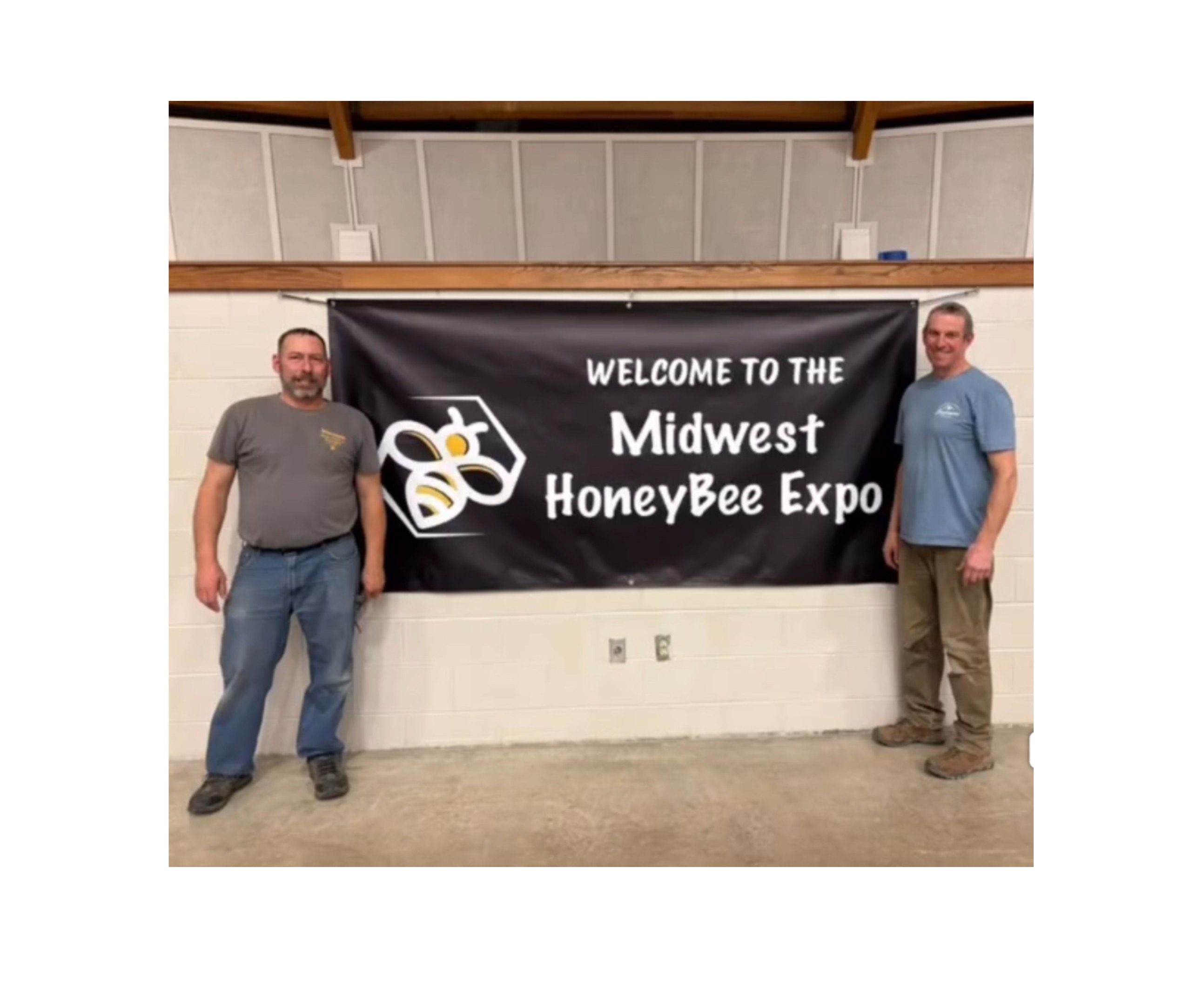
Co-creator Midwest HoneyBee Expo
After a rewarding career in business ownership, Doug ‘retired’ and became a hobby farmer and caring for his Honey Bee’s quickly became his passion. Doug believes that every beekeeper should strive to be the best beekeeper they can ‘bee’ through continued education, networking and organizational involvement. He also believes that we have a lot to learn from these fascinating super-organisms that we care for. Doug is a co-creator of the Midwest HoneyBee expo and currently he is on the Board of Directors for the WI Honey Producers Association, acting as the Legislative Chairman and he is the acting President of The Walworth County Beekeepers Association. Doug also mentors youth and adult beekeepers through the Wisconsin Honey Producers Association youth scholarship program and the Wisconsin Hero Outdoors program. Doug strives to continually learn, educate, network and promote the fascinating world of the Honey Bee. Doug lives in Mukwonago, WI and currently maintains approximately 80 hives and has successfully overwintered 85% - 95% of his hives during his beekeeping endeavor. Doug has also won numerous awards in honey shows at the local, state and national level. Most recently he was awarded the Blue Ribbon at the 2024 North American Honey Bee expo and the 2024 WI State Fair honey products contest for his amber class honey entry.
