Receive our newsletter and announcements from Beekeeping Today Podcast! We do NOT sell email lists.
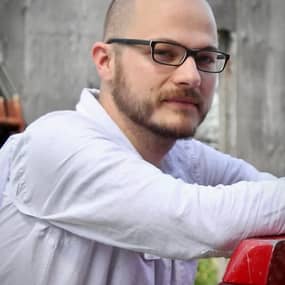
Ph.D., Director of Research & Education
David is the Director of Research and Education at Betterbee in Greenwich, NY, where he assists in product development and research, and teaches classes and develops scientifically-sound educational materials. His doctoral work in Cornell University's Department of Neurobiology and Behavior was supervised by Professor Tom Seeley. His dissertation research focused on the transmission of mites between bee colonies, as well as the mite-resistance traits of the untreated honey bees living in Cornell's Arnot Forest.
After earning his degree, he has continued to research varroa/bee interactions, including fieldwork in Newfoundland, Canada (where varroa still have not arrived) and Anosy Madagascar (where varroa arrived only in 2010 or 2011). He has served as a teaching postdoctoral fellow in Cornell's Department of Entomology, and is still affiliated with Cornell through the Honey Bee Health program in the College of Veterinary Medicine. David has kept bees for more than a decade, though his home apiary is often full of mite-riddled research colonies, so he doesn't usually produce much honey.
A thoughtful end-of-year conversation with Jeff Ott, Becky Masterman, and David Peck reflecting on the challenges and lessons of beekeeping in 2025—from varroa and viruses to smarter management and reasons for optimism heading into 2026.
In this Beekeeping Today Podcast Short , Jeff and Becky continue their special series on Varroa treatments and control strategies with Dr. David Peck of Betterbee. In this installment, they explore one of the hardest realitie...
In this Beekeeping Today Podcast Short , Jeff and Becky are joined once again by Dr. David Peck of Betterbee to explore non-chemical strategies for managing varroa mites. While miticides remain the backbone of many treatment ...
In this Varroa Treatment Short, Jeff and Becky are joined once again by Dr. David Peck of BetterBee to discuss two thymol-based mite control options: ApiLife-Var and Apiguard . Both products rely on the essential oil thymol, ...
In this Varroa Treatment Short, Jeff and Becky are joined by Dr. David Peck of BetterBee to discuss HopGuard 3 , the latest version of this organically derived mite control option. The conversation covers the product’s evolut...
In this Varroa Treatments short, Jeff Ott and co-host Dr. Becky Masterman welcome Dr. David Peck from Betterbee to discuss formic acid—a powerful tool in the fight against varroa mites. David explains how Formic Pro, the most...
In this installment of the Varroa Treatment Series, Jeff and Becky welcome Dr. David Peck of BetterBee to discuss oxalic acid treatments, one of the most widely used organic options for controlling Varroa mites. The conversat...
In this BTPS Varroa Treatments short, Jeff and Becky are joined again by Dr. David Peck of Betterbee to explore amitraz—known commercially to most U.S. beekeepers as Apivar. As a synthetic miticide, Apivar has long been a cor...
In this Varroa Treatments Short, Jeff and Becky are once again joined by Dr. David Peck of Betterbee to examine two early weapons in the war against varroa: Apistan and CheckMite+. These synthetic miticides—fluvalinate and co...
In this episode of our BTP Shorts series on varroa treatments, Jeff and Becky welcome back Dr. David Peck of Betterbee to explore VarroxSan—an extended-release oxalic acid strip used to manage varroa mites. David explains how...
In this first episode of our Beekeeping Today Podcast Shorts series on varroa mites, Jeff Ott and Becky Masterman are joined by Dr. David Peck of Betterbee to lay the foundation for an important multi-part series. Varroa mite...
Kick off 2025 with an insightful conversation featuring Dr. David Peck, Director of Research and Education at Betterbee, as he joins Jeff and Becky to discuss the year’s hottest trends and challenges in beekeeping. From cutting-edge varroa control...
(#268) In the concluding episode of our four-part series on "How To Get Started With Bees," we explore the crucial topics of parasites, pathogens, predators, and pesticides—from this point on, to be collectively known as the “four Ps of...