Apple Podcasts
 Spotify
 YouTube
 Goodpods
 Amazon Music
 Overcast
 Castro
 PocketCasts
 Podchaser
 RadioPublic
 RSS Feed
 Queen Series: Honey Bee Queen Biology and Mating Behavior with Dr. Juliana Rangel (383)
Dr. Juliana Rangel joins the Queen Series to explore honey bee mating behavior, drone importance, and the science behind queen quality and longevity.
In this continuation of the Queen Series, Jeff Ott and Becky Masterman welcome Dr. Juliana Rangel of Texas A&M University for an in-depth discussion on honey bee queen biology, mating behavior, and the often-overlooked role of drones in colony success.
Juliana shares her journey into honey bee research, beginning with stingless bees in Brazil and leading to her current work on queen reproductive biology. The conversation explores the complexity of queen mating, from orientation flights to drone congregation areas, and the many variables that influence successful mating—especially weather, timing, and environmental conditions.
A key takeaway is how much remains unknown. Despite decades of research, fundamental questions—such as where queens consistently mate and how mating locations are determined—are still being revisited with new technologies like RFID tracking.
The discussion highlights the importance of drone quality and diversity, emphasizing that drones contribute half the genetics of a colony. Poor drone health or limited mating opportunities can directly impact queen longevity and colony productivity. Juliana also explains how pesticide exposure and contaminated wax can disrupt normal mating patterns, sometimes leading to excessive mating or reduced sperm viability.
Queen development is another critical factor. Queens raised from older larvae may appear functional but result in significantly reduced colony performance. Proper grafting practices remain essential, especially for small-scale queen producers.
The episode closes with practical advice for beekeepers: observe queen retinue behavior, maintain good records, and reconsider the value of drones within colonies. Juliana also shares updates on her current research in Colombia and a new international project investigating queen mating dynamics and environmental stressors.
This conversation reinforces a central theme: queen quality is multifactorial, and improving it requires attention to genetics, nutrition, environment, and management practices.
For additional information where honey bees mate, listen to our conversation with Dr. Gard Otis in episode 378.
Websites from the episode and others we recommend:
- Texas A&M Honey Bee Lab: https://honeybeelab.tamu.edu
- Honey Bee Health Coalition: https://honeybeehealthcoalition.org
- Project Apis m. (PAm): https://www.projectapism.org
- The National Honey Board: https://honey.com
- Honey Bee Obscura Podcast: https://honeybeeobscura.com
Copyright © 2026 by Growing Planet Media, LLC

______________

Betterbee is the presenting sponsor of Beekeeping Today Podcast. Betterbee’s mission is to support every beekeeper with excellent customer service, continued education and quality equipment. From their colorful and informative catalog to their support of beekeeper educational activities, including this podcast series, Betterbee truly is Beekeepers Serving Beekeepers. See for yourself at www.betterbee.com

This episode is brought to you by Global Patties! Global offers a variety of standard and custom patties. Visit them today at http://globalpatties.com and let them know you appreciate them sponsoring this episode!

As a beekeeper, you want products that benefit you and your bees. When you choose Premier Bee Products, you choose hive components that are healthier for bees and more productive for you. Because we believe that in beekeeping, details make all the difference. Premier Bee Products: Better for bees. Better for beekeepers. Use promo code PODCAST for 10% off your next online order.

APIS Tactical is a beekeeping brand focused on innovation. We create a wide range of gear for beekeepers of all types—whether you’re managing a few hives or working bees every day. We combine science and artistry to create purposeful, hardworking gear. We’re here to help you care for your bees with confidence, so you can focus on what matters most—your hive.

Thanks to Strong Microbials for their support of Beekeeping Today Podcast. Find out more about their line of probiotics in our Season 3, Episode 12 episode and from their website: https://www.strongmicrobials.com

HiveIQ is revolutionizing the way beekeepers manage their colonies with innovative, insulated hive systems designed for maximum colony health and efficiency. Their hives maintain stable temperatures year-round, reduce stress on the bees, and are built to last using durable, lightweight materials. Whether you’re managing two hives or two hundred, HiveIQ’s smart design helps your bees thrive while saving you time and effort. Learn more at HiveIQ.com.

We’d like to thank Vita Bee Health for supporting the podcast. Vita provides proven tools for controlling Varroa—from Apistan and Apiguard to the new VarroxSan extended-release oxalic acid strips—helping beekeepers keep stronger, healthier colonies.

Thanks for Northern Bee Books for their support. Northern Bee Books is the publisher of bee books available worldwide from their website or from Amazon and bookstores everywhere. They are also the publishers of The Beekeepers Quarterly and Natural Bee Husbandry.
_______________
We hope you enjoy this podcast and welcome your questions and comments in the show notes of this episode or: questions@beekeepingtodaypodcast.com
Thank you for listening!
Podcast music: Be Strong by Young Presidents; Epilogue by Musicalman; Faraday by BeGun; Walking in Paris by Studio Le Bus; A Fresh New Start by Pete Morse; Wedding Day by Boomer; Christmas Avenue by Immersive Music; Red Jack Blues by Daniel Hart; Bolero de la Fontero by Rimsky Music; Perfect Sky by Graceful Movement; I'm Not Running Away This Time by Max Brodie; Original guitar background instrumental by Jeff Ott.
Beekeeping Today Podcast is an audio production of Growing Planet Media, LLC
** As an Amazon Associate, we may earn a commission from qualifying purchases
Copyright © 2026 by Growing Planet Media, LLC

Queen Series: Honey Bee Queen Biology and Mating Behavior with Dr. Juliana Rangel (383)
Daniel Ransom
Hey, this is Daniel Ransom with the University of Wisconsin Whitewaters Beekeeping Club and want to welcome you to the Beekeeping Today podcast.
Jeff Ott
One take.
Daniel Ransom
Boom.
Jeff Ott
Welcome to Beekeeping Today podcast presented by Betterbee, your source for beekeeping news, information, and entertainment. I'm Jeff Ott.
Becky Masterman
And I'm Becky Masterman.
Global Patties
Today's episode is brought to you by the Bee Nutrition superheroes at Global Patties, family operated and buzzing with passion, Global Patties crafts protein-packed patties that'll turn your hives into powerhouse production. Picture this: strong colonies, booming brood, and honey flowing like a sweet river. It's super protein. For your bees and they love it. Check out their buffet of patties, tailor-made, for your bees in your specific area. Head over to www. globalpatties. com and give your bees the nutrition they deserve.
Jeff Ott
A quick shout out to BetterBee and all of our sponsors whose support allows us to bring you this podcast each week without resorting to a fee-based subscription. We don't want that and we know you don't either. Be sure to check out All of our content on the website. There, you can read up on all of our guests, read our blog on the various aspects and observations about beekeeping, search for, download, and listen to over 300 past episodes, read episode transcripts, leave comments, Comments and feedback on each episode and check on podcast specials from our sponsors. You can find it all at www. beekeepingtoday. com. Thank you, Daniel Ransom from the University of Wisconsin Whitewater Beekeeping Club, are you familiar with that, Becky?
Becky Masterman
Yes, I I met Daniel at the Midwest Honey Bee Expo and they are doing some great things. And it's a great group of young beekeepers and I really look forward to having a conversation with them in the future
Jeff Ott
Fantastic. Well he did a great job of the opening. Thank you, James, for stopping by and leaving that for us and our listeners. Becky, today we continue our Queen series with Dr. Huliana Rangel out of the University of Texas I'm looking forward to talking to her about queens and the research she's been doing with them.
Becky Masterman
She has a long history of doing really great work with queen research, so I I can't wait to get an update.
Jeff Ott
Yeah, and before we invite Juliana into the uh studio, we have our ongoing high VIQ listener question, and we have a really good one today. From hold on, let me call it up.
Becky Masterman
But are you ready? I've got it. Caleb J. There we go. Would you like me to read it, Jen?
Jeff Ott
Yeah. Since you're you're on the ball more than I am today, why don't you give it a shot
Becky Masterman
Caleb's question. When combining colonies, most advice I hear tells me to separate the boxes with newspaper so the colonies mix slowly. Caleb goes on to write, I can't tell you the last time I saw a non-digital newspaper. I don't have that kind of paper readily available around my house. Is there an alternative material we can use? I love that question because newspapers they used to be very inexpensive. I actually stopped at a gas station to purchase a daily paper because I knew I needed to to combine some colonies and the price point was shocking. So and and I support newspapers, I support journalism. But when you're going to take it straight to the colony and then not read it in between not read it and and slash it too with your hive tool It is is a little bit of a surprise. But that that's a great question.
Jeff Ott
It is a great question. Caleb, the quick answer for you on my standpoint is get a parrot. Because if you get a parrot you will always have newspaper around and it's usually on the floor, but you can take the extras out to you hire.
Becky Masterman
So you think a lifelong commitment to a bird That's right.
Jeff Ott
Caleb, that's a really good question, and it's really timely. Combining colonies is a common activity. Like Becky was saying, I think it's worthwhile stopping by and getting a paper, it'll last you a season. Especially if you get a Sunday paper And you can use it for smoker fuel. Uh smoker it's to start the smoker, not not the not the entire smoker fuel.
Becky Masterman
Yeah.
Jeff Ott
So I like the newspaper I and that's what I typically use. I have plenty of it around.
Becky Masterman
I do prefer the newspaper. I also agree with you. There are some opportunities. I I bet if you went into like a Facebook Facebook free group, you might find somebody who would be very excited to share their paper with you to know that it's going to a good cause. In a pinch, I will tell you some of the things that I've used. This is kind of a confessional. I've used notebook paper. I've torn out pages of a notebook and spread them on the top of the deep and then and then put it over the top. It's it's not as good because you don't have that gradual chewing through the slits But it's in my opinion it was better than nothing. Okay, and this is the confession. Are you ready for this?
Jeff Ott
Yeah, yeah, this is gonna be interesting.
Becky Masterman
I've used Fondant before. So like a hive alive fondant pack.
Jeff Ott
Yeah.
Becky Masterman
would kind of hide each other's odor because it is it's it's got a nice attractive odor that that literally does attract them. So I I've used a a a fair amount of fondant to actually distract them. And that is not scientific. It has not been studied. And so do so at your own risk. But the other thing too is that depending upon the time of the year, if you go if you're in a northern climate, if you go later in the season, you're just not going to use anything for the most part because they won't chew through it if it's later in the season and I would use some smoke and put put them together.
Jeff Ott
Yeah, you'd have some problems. I think I've used uh the craft type packing paper once. And it just it takes forever for them to chew through that and I wouldn't recommend it. So I I would, you know, invest in a Sunday paper, keep it in the back of your B truck or B vehicle or family car and uh you don't find a lot of uses for it. That's a really good question, Caleb. And thank you for it. We will be sending you a hive IQ hive tool In the mail, watch for it. And if you would please, Caleb and everybody else who's received a hive tool, post a picture of your hive tool in the bee yard after you've received it We'd love to see that and then tag us on Facebook or Instagram or wherever your social media is and let us know that you've received it and are enjoying it. Well coming up is Dr. Juliana Rungel and we will be talking to her about Queens right after these words from our sponsors
Betterbee
Swarm season's here. Are you ready? Get the Colorado bee vac made just for Betterbee. The CBV, as beekeepers call it, is the top high relocation. Vacuum out there. It's built to gently collect up to 10 pounds of bees with very little loss. Don't miss out! Grab your Colorado bee vac today at betterbee. com. That's betterbee. com.
Apis Tactical
This episode of Beekeeping Today podcast is brought to you in part by Apis Tactical, a beekeeping brand focused on. Innovation. They use new designs, new materials, and new ideas to bring more joy to beekeeping. Apis Tactical creates a wide range of gear for beekeepers of all types. They use new designs, new materials, and new ideas. To bring more joy to beekeeping. Their products are built with purpose and they're already getting attention well beyond the US, with beekeepers in Europe discovering them through this podcast. If you're looking for well-made beekeeping gear from a company that understands the work. Take a look at Apis Tactical. You can learn more at apis-tactical. com
Jeff Ott
Hey everybody, welcome back. Sitting around this great big virtual global beekeeping today podcast table. We have sitting down in Columbia. Doctor Williana Rangell, Ranghell, Rangel.
Dr. Juliana Rangel
Yes, or Juliana Wrangell.
Jeff Ott
Whatever you want to
Becky Masterman
Say it is fine. The Minnesota pronunciation is Juliana Wrangle, just so you know.
Jeff Ott
Oh, thank you Williana for joining us. Uh sorry for butchering your name out now. I was sitting there practicing it. It just didn't help. But thank you for joining us. Been looking forward to this interview for a long time. You are A leader in the field of honey bee queens.
Dr. Juliana Rangel
Or so they say.
Becky Masterman
Thank you. Liliana, thank you so much for for being a part of this queen series. My pleasure. Thank you. Your work is is just so important, and I I'm very excited that our listeners will get a chance to meet you and hear about what you've been up to.
Jeff Ott
So if you would please tell us a little bit about yourself, how you got interested in honey bees, and what led you down this path where you are today.
Dr. Juliana Rangel
Interestingly, I'm currently on a sabbatical semester in my home country of Colombia. So I grew up in Colombia. and when I was sixteen I moved to the US after finishing high school. So I did all of my university studies in the US. First at the University of California, San Diego, where toward my junior year I met a freshly new Assistant Professor, Dr. James Nye. So you probably recognize that name. I was his first ever student And he's uh now like associate dean and you know has received all sorts of accolades, but I was his first ever student and he was studying at the time stingless honey bees in Brazil. And so I helped him with a project where he was trying to decipher if if if this particular species in the genus Nelipona could communicate food location just like similar to a waggle dance. And so he took me to Brazil and to to help explore whether these species would perform any kind of vibrations or signals that could communicate distance to a food source That's how I got started, 2001, working with stingless honey bees in Brazil. Then I had to graduate and uh oh I did an uh uh an undergrad project with stingless bees in Costa Rica, fell even more in love with bees and then for graduate school I just basically applied to a couple of programs that had the research, including Cornell University, and that's where I ended up going for my PhD working under Tom Seeley Who, by the way, was also James Nye's PhD advisor. So we're all kind of interconnected. Yeah, because I worked with Tom, but I was still interested in working with Stingless bees. And so I continued my work with Stingless Bee Communication in Costa Rica for a couple of years, but things weren't really moving. very fast or fast enough to to finish a degree so we kind of decided to switch gears and focus on reproduction. And back then it was colony level reproduction or swarming. And basically the whole topic of my dissertation was looking at the behavioral ecology of swarming in the Western honey bee, Apis Nolifera. And out of that came six papers, which is crazy because I considering that I worked with the Steam Les Bee project for two years, I managed to do all kinds of work with with storming. that we can talk about in a moment if you want. And then and then I was looking for a postdoc and David Tarpe, who was Tom Seeley's postdoc at a t at at some point at North Carolina State University. was looking for someone, but he only had one year of funding and that was to it was more like a a a an applied project to look at Or or to to uh head his queen rearing program. He called it born and bred in North Carolina and had received some funding to travel across the state of North Carolina giving queenering workshops to beekeepers. And I knew it was only for a year, but during that time I also applied for the NSF graduate research Fellowship which I received, and he was to look at supersedure and the causes of premature queen replacement in in honey bees And so that allowed me to stay with David for three years instead of one. And we can talk about those projects later. And so that was that was queen level reproductive biology and then I got my job here at Texas AM University in January twenty thirteen and I've been at Texas AM since then. Uh moved up the ranks. I'm now professor in the Department of Entomology and Currently every five years they allow you to do a what they call now faculty development leap instead of sabbatical. And so I've been here since late December And we'll be going back in a couple of months back to Texas to continue our work.
Becky Masterman
You're now a full professor at Texas A and M? Yeah. That means they love you, Uliana.
Dr. Juliana Rangel
They can't get rid of me as easily, that's for sure. Yeah, that happened. That happened three years ago now. So I actually moved rather quickly through through the ranks, I think a little early in both occasions because you have to you start at assistant level and then you have to apply for tenure and promotion to associate and then to full professorship
Becky Masterman
They just don't hand those out. You have to earn them. So congratulations. Thank you.
Jeff Ott
Our series has been focusing on honey bee queens. I'd love to delve into the whole topic of swarming, but maybe we'll have to save that for another another time or later in the episode. But I do want to focus on the queens and your research on queens. and maybe queen mating behavior and we are told as beekeepers and as beekeepers get into the hobby or the profession, we're told a lot of different things about how bees mate and and queens what is Typical queen mating behavior and biology. How does that happen? Where does it happen? And from a beekeeper's perspective, maybe what defines a good mating? Just all in five minutes. I was gonna say that's a all in five minutes, right.
Dr. Juliana Rangel
That's a big question. That's a huge question and The answer is not easy because we don't know a lot of we assume a lot, yeah, we have assumed a lot of information about mating biology that I think in the next ten years or so we're gonna start redefining or or or so with better technology. But but if you read the books which are old, outdated literature on on mating behavior honey bee queens take about sixteen days for meg to emergence. Uh depending on the strain and temperature conditions, they can take a little longer or or shorter developmentally. But anyway, they emerge and they They roam around the colony as virgins for maybe about a week, sometimes less, sometimes more, depending again on weather.
Weather is very critical actually. And then they undertake orientation flights just like workers and drones do to learn their local landmarks for a couple of days and once they kind of feel ready and and know The what their home looks like so that they can come back. They undertake what we call nuptial flights. The old literature anyway says that above 50% of queens take one nuptial flight in their lives. It can take anywhere from above five to thirty minutes. Forty-five percent of queens take two Medifights and they can occur either during the same day or consecu during consecutive days. And then only about five percent of Queens supposedly take three or more mating flights. And again, they can be in the same day or the the uh in subsequent days. And during this time, they will go and locate what in behavior ecology we would call a lek, which is kind of a playground of males that are waiting to to to get an opportunity to mate. L E K. It happens a lot in nature. There's no competition for food resources or anything. They're just there to mate.
In in the case of bees it's called the drone congregation area And it's the cloud of drones from nearby colonies that moves around looking for virgin queens. And so The Virgin Queen probably is the one that looks for the DCA, which is that cloud of bees, because visually it's more possible to to locate a huge cloud than just one individual. And then when she gets there, then it's her pheromones that attract the drones toward the queens and then they mate. And as we probably all know, the drones insert their endothalis and the tip of the bulb of their penis inside the queen and to increase sperm sperm transfer. So because the the bulb breaks off the drone drops to the ground and dies from dismemberment. Then the next drone comes with their mandibles and legs, removes what we call the mating plug and then repeats the process. And until the very last mating, in which case the mating plug gets removed by workers, not a drone, upon her return to the hive And then she will never mate again and her within the next few days the pheromone composition of of the mandibular glands among others changes completely from that of a virgin queen to that of a mated queen and that's it.
Then roughly a few days later she will commence egg laying And she will store the sperm that she collected from her twelve to fifteen to eighteen drone partners in the organ called the Spermatica and she will maintain most of that sperm alive and viable in her sperm decontil she basically runs out and then she needs to get replaced so that there's a more vigorous queen with uh viable sperm in the sperm thica. Wha how did I do? Was that five minutes?
Jeff Ott
You know, I was so interested in what you're saying, I wasn't even looking at the clock.
Becky Masterman
I kept thinking, no wonder so many things can go wrong. This is such a complex process.
Dr. Juliana Rangel
Weather plays a huge part, so if there's a storm front coming during the time that a virgin's gonna go out. Uh she may get lost. She may, you know, get eaten by birds. I've heard of that happen. She may drift into another colony 'cause, you know, nowadays we have such hugely densely populated apiaries that it's e easy for a queen to get lost and get get into the wrong hive Or just not find her hive at all and and then get lost in the process. Or she may not be able to mate at all. If you have like one of these storm fronts that lasts several days, there's only so many days that they can ho uh wait for uh mating. Sometimes they just under p under mate because there's either not enough mates or Or the weather just didn't allow them to mate successfully.
Jeff Ott
If they were uh stuck in the hive for a week, is there a time frame from the time that they hatch to the time that they are able to mate successfully?
Dr. Juliana Rangel
That's a good question. We don't know the answer to that, so that could be a cool experiment. But uh we do know that they can mate from anecdotal data of of banking version queens. So, you know, I we hold an annual Queen Rearing workshop at my lab with Sue Kobe as as the main guest and And when she's giving her talk about banking, she they always ask her how much can you bank and a queen and she banks virgin queens and for up to a couple of months. But if you bank a queen virgin queens for a week or so and then release them, they can still mate. So I would say that the critical time period would be between one and two weeks, after which they may attempt to mate, but they may not mate as well. as a freshly emerged Virgin Queen that mate within the next maybe three or four days to to a week post emergence
Becky Masterman
On the other end of that time frame, can you talk a little bit about Intercast Queens?
Dr. Juliana Rangel
There's a critical time period during which queens can be produced in during Marvel development. If you're talking about commercial queen production, we all know that queen producers use freshly hatched larvae. They're in the egg stage for three days and then roughly within a three day period the the egg hatches into a larva and that's within that first twenty four hour period is what we call the first instar larva and that's when you should be grafting and grafting if you don't know what that is is the physical transfer of of young worker destined larvae into a queen rearing cup that will then be placed in queen cell builders that are queenless for the mass production of queens. Anyway, so queen producers are well aware that they should graft only the youngest possible larva, which is within that twenty first twenty four hour period.
But in nature sometimes, let's say for emergency querying or supersedure, the queen the workers in the colony don't select necessarily the youngest larva But maybe a slightly older larva, two day old or even a three day old larva. And that's maybe because that's all there is, you know, 'cause if the queen is gone and that they within at the time that she's gone and they're they they feel queenless then there may only be the two or three day old larvae. Or in our case we did it artificially with doing the experiment just to look at what would happen when you grabbed old larvae. You can only graft larvae within the that third, first, second or third instar period and still get queens out of those. But the queens from really old larvae emerge much much smaller in size and they almost look like more like workers than than queens. They're small, they're not as vigorous, and their colonies are way less productive than queens that come from first instar larvae.
If you graft a four or five day old larva Its developmental stage ha pathway has already been determined at age three of laurel development and so they will not turn into a queen anymore. they become potentially large workers that have been fed more royal jelly than they normally would, but they don't have the reproductive organs, the the spermatica and the the other organs are needed for an actual Qui to succeed.
Jeff Ott
So that first three days uh that first N star larva is the key to the successful Yeah, and we showed doing this experiment
Dr. Juliana Rangel
when I was at North Carolina State that queens that come from three day old larvae are roughly I'll generalize the results because we looked at a lot of stuff like amount of comb built, alo amount of brood production, worker population, food storage, etc. drone comb production, drone sales started, etcetera. It's about roughly between twenty and thirty five percent. of a decrease in the production of all of those metrics in colonies that are headed by the older queens. So it's it's it's of huge importance that Queen producers, which they already do, 'cause they're great at a graft from v newly hatched larvae. The I guess that That take-home message was even more important for hobby beekeepers that do small scale production of queens. Just so that they are so they know that they have to improve their grafting skills so that they can ultimately produce the best possible queens up there. The other part of this though that we can talk about later too is is the drones, right? So we're focused all the time on queen quality But her quality is not just her physiological phenotype, her age, environmental conditions, but that of her Drone partners when she mates.
Jeff Ott
Hold that thought and we'll come back to it right after these words from our sponsors.
Premier Bee Products
Beekeeping is demanding work. The last thing you need is equipment that can't keep up. That's why Premier Bee Products builds every frame and hive body in our South Dakota factories with one goal in mind. reliability when it matters most. From our beefy pura frames to our natural profila hive bodies with rough interiors, we design for long life in the field and in the colony. Because we believe that in beekeeping, detail Make all the difference. Premier Bee Products better for bees, better for beekeepers. Visit online at PremierBeeproducts. com or call us today. Use promo code PODCAST for 10% off your next online order.
Vita Bee Health
We'd like to thank Vita B Health for supporting this podcast. Vita provides proven tools for controlling Varroa, Apistan, and ABIGURD to the new Varroxsan extended release oxilic acid streps, helping beekeepers keep stronger, healthier colonies.
StrongMicrobials
Beekeepers, if you're looking for a smarter way to support colony health, take a look at bee bites from strong microbials. Bee bites are a new protein patty made with spirulina, chlorella, and targeted probiotics. To support nutrition without creating new problems in the hive. With 15% protein, bee bites are unique because they do not attract small hive beetles, a big deal if you've ever battled infestations during feeding. Strong microbials has been supported. Beekeepers and farmers since 2012, developing high-quality commercial probiotics and nutritional supplements you can trust. Learn more about Bee Bites and their full line of bee nutrition at strongmicrobials. com.
Becky Masterman
Welcome back, everybody. Okay, let's talk about the boys. Juliana, can you we're gonna give them just a few more. We want our due time.
Jeff Ott
We want our due time
Becky Masterman
Could you talk about drone quality?
Dr. Juliana Rangel
Well, I I actually I I'm very um passionate about drones because they are the underlooked sex in in honey bee biology. Or they were uh up until maybe a decade ago. There's a lot more work being done on drone biology now 'cause I think uh both scientists and beekeepers are more aware now of the importance of drone health. for successful productive quality of queens and therefore productivity of colonies. When I first started talking I I mentioned that there's a lot of things that we don't know. that are kind of assumed. And I want to bring up a paper that just came out because I I kind of brings home that point. It's by Gard Odes and it's open access so people can find it. It's called and it's a simple title, Where Do honey bees Mate? Uh in Apidol in Apidology. He basically c does like a review of the literature out there of mating biology and comes up with with basically the the final outcome that we don't know where bees mate. We assume that they that all queens mate in DCAs Which apparently they not always made in DCAs, that we don't know where these DCAs get formed or why Or how because we do know that DCAs are formed kind of this in the same general location year after year. And there are people who focus on on detecting and looking for these DCAs And that's definitely a topic for a different uh another podcast. But but what we basically know right now, based on this new paper, is that we don't know much about the mating of of bees. And with the newer technologies, we hopefully will be able to put some RFID back tax on on the queens and the drones so that uh we can get granular information of how far these queens are traveling. And maybe there's will detect differences among races or among strains, like Africanized versus Europe and B's at different times of years, depending on the availability of of uh managed apiaries or feral environment, etcetera. And incidentally, 'cause I wanted to make this pitch, we just got a new grant. And and the name of that grant is Swarm, which is a a great title, I think. And and it's by it's it's a collaboration with Grace McCormack. at Galway, University of Galway in the Republic of Ireland, and Dr. Nikki Marks, who is at Queen's University in Belfast, Northern Ireland to look at these questions of where do queens mate, how do environmental stressors affect the reproductive quality of queens, both in Texas and in those two in the island of Ireland. Just got a huge five year grant from the USDA looking at this. So I'm getting back into Queens after a like a five year hiatus because you know you work with what you've got in terms of funding So we're going back to Queens this year and I'm really excited about it.
Jeff Ott
If there was one thing you wanted beekeepers to understand about drones and their importance to the next generation of queens or honey bees, what is it? What would you like to make sure that beekeepers understood?
Dr. Juliana Rangel
Draws contribute basically 50% of the genetic composition in a colony. The productivity of a colony is largely dependent on the genotypes of of the drones that the queen made it with. We have found in some of our studies that Queens either don't mate with a sufficiently high number of of drones. Or sometimes actually they overmate and mate with way too many, probably because of issues with physiology, which is not right either. But sometimes they will store sperm of drones that were substandard and therefore the sperm dies within the spermatica And so the viability of the sperm is reduced and therefore the queens dome long as don't live as long 'cause they don't have as much viable sperm to fertilize eggs. So drum production is important, especially for people who focus on queen production. drone diversity is important. And the production of drones in a colony is showing us that a colony is productive and and has the resources to produce drones. So I I like to see them as a positive thing. I know that they can they are basically that there's higher Varroa levels in drone comb and and people basically get rid of drones altogether, but if you think about your best possible colonies and what colonies you would like to perpetuate the genetics of, you might want to rethink about the the contributions, genetic contributions of the drones in those colonies, not to your own colonies because queens mate far away trying to avoid inbreeding. to try to out outbreed with drawings from other apiaries or or locations, but to increase the availability of your drones genetic makeup with queens from your neighbors. So drones are just highly important. And the presence of drones shows colony health availability of resources. If your colony is starved, they won't produce drones. If they're too small, they won't produce drones. Things like that. So Drones are important to the overall health of a colony and and I'm glad that we're now paying closer attention to drones than we used to
Jeff Ott
When I got started in beekeeping I mean cutting out drone comb and y just didn't wanna s have those drones around because the general thought was they were a drain on the resources of the colony and you didn't want drones in your in your hive and it's nice to see now that that mentality has changed and It's a good thing to have drones in the colony and and it's a sign of health and a viable population of bees.
Dr. Juliana Rangel
That's right. And again, we're gonna learn more about these drones and their role and where they go with the newer technologies. Part of our project, uh the Swarm project with Ireland is looking at that. We're gonna try to use the these newer technologies are now cheaper. to try to detect where these bees are mating. In Ireland, for example, they have an issue with under mating in Queens because of the poor weather condition during the summer when drones are produced and the w the period the very short window of time when queens can mate. is when it rains really heavily and so the queens can't go very far to mate, uh, because otherwise they will die, you know, in the middle of the storm. And so they don't go very far They're likely to be more inbred with drones that are more closely related to them than those that are far away And or they might be in the in if you think about maybe conservation issues in areas in Europe where the honey bee is native, they could be also mating with drones from other subspecies that are not the native ones that the the beekeepers will want to preserve. So there's all kinds of questions that hopefully we'll be able to answer in the next few years that we didn't have the resources to before or interest. People were not as interested in drones until recently. And I'm glad that we are paying attention to that now.
Becky Masterman
You mentioned overmating. I've seen one just one paper where the n number of times they counted the queen having mated was it was ridiculous. It was so, so high. And then you said physio it could be a physiological issue
Dr. Juliana Rangel
Yeah, and I haven't been able to answer that question yet. You might be thinking about the work where they actually instrumentally inseminated queens with the semen of like forty-five drones
Becky Masterman
Yeah, it was definitely natural mating and it I I was like, why aren't we yelling about this? This is so crazy.
Dr. Juliana Rangel
Yeah, uh so we found one, two papers actually that have s very similar results and they showed so we had done the work on the effects of outrochemical exposure during development. So exposure of the wax, so contaminated wax with all of these chemicals, including mitocytes like fluvalinate, cumafos. Amatraz and the effects on Queen Health and also on drone health and for two Papers that were done one in North Carolina and the other one in Texas, we found that when queens were reared in wax that was contaminated with fulvalinate and cumophoss which we don't use anymore, but still very highly present in wax, they had unnaturally high mailing frequency of like 25 to 28 drones compared to the average in the controls, you know, twelve to fifteen, which is what you typically see. So We think that it might be a physiological defect of these queens in which potentially the queen 'cause they don't mate as I mentioned at the beginning, they only mate with with the that number of drones let's say fifteen in a matter of thirty minutes or so, somehow they know when to stop. So there's probably something like a stretch receptor or something of the vaginal cavity that tells them, you know, it's enough. The spermatica's full. There's no more room. Although n not the spermatica, sorry, the the vaginal cavity, 'cause it takes about two days for the sperm to migrate up to the spermatica upon or post mating. Something in the vaginal cavity is like stretched to a point where it's sufficient. But in the in these queens that uh mate with an alarmingly high number of drones that doesn't happen. So it probably is like there's no signal of stopping, right? Like when you overeat and you just keep eating and eating and eating, you just can't stop. And some they've shown some in in some other animals where they the animal can kind of pop, right? 'Cause they just can't can't eat when they block some of those Receptors or stretch receptors uh in the gut. That's what we think might be going on, but we don't we don't have the answer to that yet
Becky Masterman
You mentioned Queen Health and that's been a big part of your work is trying to kind of unlock the mystery of of how how do we keep our our queens healthy or what is going on with queens that that are are needing to be replaced sooner than than usual. Where are you on your thoughts on the industry? Are you feeling optimistic? Are you feeling like progress is being made?
Dr. Juliana Rangel
I feel very optimistic. I think that uh we are continuously working with the industry on on finding more about what makes a good queen, a good queen. The work by David Tarpey has shown that most commercially produced queens did like he I like that he makes things difficult concepts be easily understood by beekeepers and so he just gave m created that rating scale like in school, you know, from a D to an A plus and the Queens that he has tested generally you receive a B or B plus score. So and the in the average mating number is usually appropriate, you know, anything above ten Mates for queen is uh an acceptable number and I think we're at that point. I think what we might be looking for More in the future is probably either increased longevity, right? Because now queens are not living as long anymore So trying to increase longevity and going back to the not necessarily the old time where they used to live five years, but but not queens that live only six months to a year And finding why these queens are being superseded so prematurely is is like the most important basis of research, I think, right now. We have shown that pesticide exposure m has an effect. Erratic weather patterns are likely having an effect more so now than before you know, if you have really extreme temperature fluctuations during queen earring, like really cold snaps at night, that has shown in our in our work to delay Queen production. And so queens instead of emerging on day sixteen, they emerge on day seventeen or even eighteen And now we're doing some work on what they get fed when they're growing as larvae. And so we'll have some cool, interesting results hopefully in the next year or so. Because nutrition is now the big topic, right? One of the bigger topics in apiculture. And finding the appropriate supplements when we are doing things out of sync, like when there's not uh enough food having appropriate supplements is a huge topic right now. And so Very few people have focused their efforts on the nutrition front of queen nutrition So how and what they get fed during development is likely a huge factor in their outcome as a virgin and then how they get fed during adulthood is also probably important and an underlooked Aspect of queen health.
Becky Masterman
We don't even talk about that about worrying about what they're fed while they're adults.
Jeff Ott
As adults, yeah.
Becky Masterman
Right.
Jeff Ott
So Boy, this has been a really fascinating discussion and obviously we could go on for another hour and still leave a lot on the table. Is there anything you would like to leave our listeners with regarding their queens this year as they're going through their colonies? Is there anything that They should know about the Queens that you'd like to either correct in common knowled common I use in air quotes, common knowledge, or misbelief.
Dr. Juliana Rangel
Every time I give these talks about our findings with queen behavior, for example, our findings on egg laying capacity and attractiveness of the queens. uh but to the workers. We we look at the retinue size. So the retinue is the number of bees, nurse bees that are tending the queen dating her and there i and also picking up her pheromones to then pass around the rest of the colony. So people don't have access to observation, they don't have time. But for example, one simple thing that has proven to be effective with zombi keepers even like just anecdotally is just looking spending a little bit of time looking like your queen when you find a frame and seeing how the workers are treating her, roughly estimating how attractive they are in terms of number of bees around her, feeding behavior, etc. That can give you information about how attractive that queen is, right? And then an another thing is because people wouldn't have time to do an egg laying happy, but if they have an hour, they can probably just look at the Queen and look at egg laying behavior to determine how often they're laying. And but you know, most people don't. But looking at that retinue and just for a five minute count Can give you some idea and you will see differences among your colonies. If you're if you have ten colonies you will have differently sized retinues There's a trend that larger queens are more vigorous, but that's also not necessarily always the case. So you can have really productive queens that are smaller than you would think. And if you are dealing with Africanized queens, sometimes those are small just by the nature of the strain. So that's another misconception that sometimes the smaller queens are s are just as good or better than your bigger queens, right? 'Cause I that all depends Since you can't look at them and say how old they are, that could also depend on on age, right? You can have a a large queen but she's running out of sperm 'cause she's two years old and a small queen that just recently m made it. So she has a bunch of sperm. So Th th these misconceptions are you have to put everything kind of under that lens of keeping good records Having more the more information the better about the when your queen made it, how old she is, what strain, if you have any data on that. will will keep you well informed as to whether you should be doing prophylactic queen replacement Or if you should just let the queens go go for another season and then looking at your drones. If if your colonies have drones, then likely your neighbors have drones, so you know when to do your queen rearing if it is what you're doing because your queens are not gonna make with your own drones most likely but They will be mating with drones in the vicinity that are probably in the same sink, right? Time because of seasonal sink So that can get you better prepared for your queering regardless of of size of your operation. You could be just rearing ten queens or a thousand queens, but similar scenarios. So don't disregard drones, uh is my other comment. And of course you have to think that in the IPPM integrated pest impollinator management paradigm of We know that drones are ferocinks, so think about that as well, but especially during the beginning of the mating season, having sufficient numbers of drones that are healthy. And genetically diverse is quite important to the health of your queens. Yes, so I'm as I mentioned in my introduction, I'm on sabbatical leave in Colombia, where I'm from. I'm in the city of Medellín, which is near where I'm originally from. And because I'm here and doing a very interesting project, which is looking at the health of managed colonies in Colombia So I'm going across several regions in the country, sampling apiaries, doing viral accounts, and then keeping samples for both DNA and RNA extraction. So DNA extraction will give us information on the genetic composition of these populations, but also things like Nozema apus and nozema sarana levels. And then the RNA is gonna give us information on honey bee associated viruses and how whether we can do a correlation of varroa levels with the levels of viruses. What we found so far is that a lot of colonies Well, first of all, people don't do much against varroa here in Colombia. They just let it ride. And most bees are likely to be Africanized anyways, which have tend to be more tolerant to varroa parasitization. But we found colonies with such high levels of Varora they that they would be dead in the US. So I am looking at we will later find out What makes them be alive when they have thirty mites per hundred bees in the adults? So a thirty percent, you know, level It can be that they're Africanized as I mentioned. There's a lot of propolis being used in colonies here. Their nutrition might be a big important factor. But in any case, because of all of this very interesting project, we've sampled twenty-two apiaries, for chambling like three this weekend, and I hope to do at least thirty by the time I leave. I've gotten to know a lot of people and they invited me as the plenary speaker for the third International Conference of Apiculture in Colombia. It's called the the awakening and it's um the twentieth through the twenty third of May in the city of Cali, Colombia. Ernesto Guzmán is the other international keynote speaker. So it's gonna be the two of us and while we're there I'll get to chat more about this project that I could I hope to continue because I just found out this week that I w received a Fulbright scholarship and my what I what I propose was basically to do what I'm doing now, but uh over a more extended time period. So I would like to sample these Apiaries again in a different time of year to look at fluctuations in the levels of varroa and eusema and the viruses. just like they fluctuate in the US and everywhere else, they probably have a peak in a low number seasonally here in Colombia Which there was a paper in twenty twenty four that showed that Colombia has the highest colony losses in Latin America. And so that's why I want to help improve our understanding of why that is the case. And one of those things is that people don't ever measure Varroa levels here. They don't and so they lose colonies and they don't know why. Well, they probably ask to do at least partly because of Aurora, right? High Varraw level.
Becky Masterman
Oh congratulations.
Jeff Ott
Juliana, it's been a total pleasure having you here. with us today and and look forward to having you back in the future because I know there's so much more we could talk about regarding queens and beekeeping Latin America, uh drones. There's a lot on your plate. Nutrition. Oh yeah Yeah.
Dr. Juliana Rangel
Yeah. Very busy. Yeah. So it was a pleasure. Yeah. Thank you so much for inviting me. Thank you so much for being here.
Becky Masterman
Jeff, that was impressive. Impressive? Is that is that the word for it?
Jeff Ott
Impressive. That's a E-I-I-I. Impressive. Oh no. Juliana was so good And it's no surprise that she has advanced so quickly and she is so highly regarded within the research community and and beekeepers in general.
Becky Masterman
She's I mean, in such an important beekeeping state. She's in Texas and so it makes sense that she is um up to the task and is got a just a world class program and how exciting about that work in Columbia. That's we could have talked to her for hours, which is which is a lot Like a lot of our guests, they're just they know so much and it's so fascinating. But I mean this is so exciting. And then another project in Ireland with Apis Millifera Millifra, I mean this is this is some cool stuff.
Jeff Ott
I look forward to having her back.
Becky Masterman
Me too.
Jeff Ott
And that about wraps it up for this episode of Beekeeping Today. Before we go, be sure to follow us and leave us a five-star rating on Apple Podcasts. or wherever you stream the show. Even better, write a quick review to help other beekeepers discover what you enjoy. You can get there directly from our website by clicking on the reviews tab on the top of any page. We want to thank Better B, our presenting sponsor, for their ongoing support of the podcast. We also appreciate our longtime sponsors, Global Patties, Strong Microbials, and Northern Bee Books for their support in bringing you each week's episode. And most importantly, thank you for the next one. for listening and spending time with us. If you have any questions or feedback, just head over to our website and drop us a note. We'd love to hear from you. Thanks again everybody
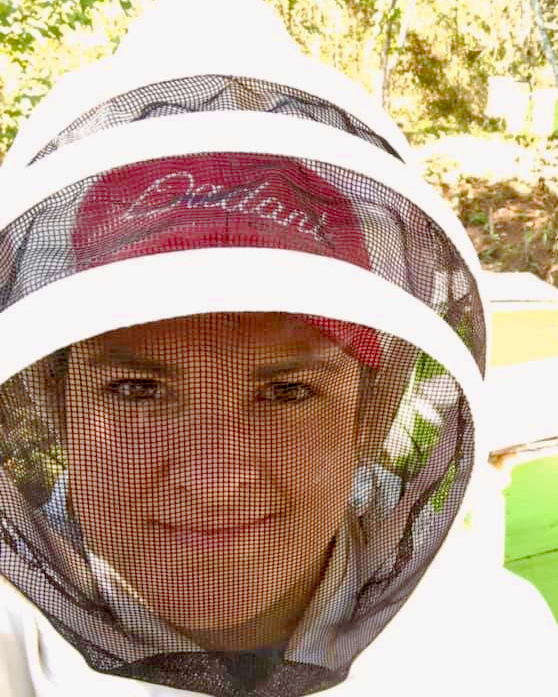
Born in Colombia, South America, Juliana obtained a B.S. in Ecology, Behavior, and Evolution in 2004 from the University of California, San Diego. In 2010 she obtained a Ph. D. in Neurobiology and Behavior from Cornell University in Ithaca, NY. She was an NSF Postdoctoral Research Fellow from 2010 to 2013 at North Carolina State University.
In January 2013, Juliana became Assistant Professor of Apiculture in the Department of Entomology at Texas A&M University (TAMU) in College Station, TX. She was promoted to the rank of Associate Professor with tenure in 2018 and Professor in 2023. Her research program focuses on the biological and environmental factors that affect the reproductive quality of honey bees (Apis mellifera), the behavioral ecology and population genetics of feral honey bee colonies, and the quality and diversity of honey bee nutrition in a changing landscape.
She is an active member of the Texas Beekeepers Association and has been invited to speak at dozens of scientific conferences and beekeeping association meetings across the USA and internationally. She teaches the courses Honey Bee Biology, Introduction to Beekeeping, and Professional Grant and Contract Writing. Since 2014 she has been the coach of TAMU’s undergraduate and graduate teams of the Entomology Games at the branch and national games of the Entomological Society of America (ESA), earning first and second place nationally four years in a row. She was the 2023-2024 President of ESA’s Southwestern Branch and is the past elected chair of the National ESA’s Diversity and I… Read More