Apple Podcasts
 Spotify
 YouTube
 Goodpods
 Amazon Music
 Overcast
 Castro
 PocketCasts
 Podchaser
 RadioPublic
 RSS Feed
 Instrumental Insemination of Honey Bee Queens with Dr. Jack Rath (391)
In this episode, Jeff Ott and Becky Masterman welcome Dr. Jack Rath, former owner of Betterbee, veterinarian, beekeeper, and queen breeder, for a detailed conversation about instrumental insemination of honey bee queens. Jack explains how the process is used in selective breeding programs, why instrumentally inseminated queens are typically breeder queens, and how queen producers use them to develop traits such as Varroa resistance, gentleness, overwintering ability, and honey production. The discussion covers queen and drone timing, semen collection, equipment, aftercare, queen acceptance, and the complexity of maintaining multiple breeding lines. Jack also shares how his background in veterinary reproductive work helped prepare him for this highly technical aspect
In this episode of Beekeeping Today, Jeff Ott and Becky Masterman continue the Queen Series with Dr. Jack Rath, former owner of Betterbee, veterinarian, beekeeper, and queen breeder. The conversation focuses on instrumental insemination of honey bee queens, a highly technical process used to support selective breeding and maintain valuable honey bee genetics.
Jack explains how he moved from beekeeping as a high school student to veterinary medicine, queen rearing, and eventually instrumental insemination. Drawing on his experience with reproductive work in cattle and horses, he describes both the similarities and major differences between livestock breeding and honey bee breeding.
The discussion explores why instrumentally inseminated queens are usually considered breeder queens, how queen breeders select for traits such as Varroa resistance, gentleness, honey production, and overwintering ability, and why drone selection is just as important as queen selection.
Jack also walks through the timing required to produce virgin queens, collect drones, harvest semen, inseminate queens, and provide proper aftercare. He explains why the process requires careful colony management, strong organizational skills, good timing, and a steady hand.
The episode also touches on the importance of genetic diversity, the limits of selecting for a single trait, and why queen breeders must balance desirable characteristics without narrowing their breeding stock too far.
Whether you are a backyard beekeeper curious about where queens come from or an experienced beekeeper interested in breeding programs, this conversation offers a clear, practical look at one of the most specialized skills in modern beekeeping.
Websites from the episode and others we recommend:
- Honey Bee Health Coalition: https://honeybeehealthcoalition.org
- Project Apis m. (PAm): https://www.projectapism.org
- The National Honey Board: https://honey.com
- Honey Bee Obscura Podcast: https://honeybeeobscura.com
Copyright © 2026 by Growing Planet Media, LLC

______________

Betterbee is the presenting sponsor of Beekeeping Today Podcast. Betterbee’s mission is to support every beekeeper with excellent customer service, continued education and quality equipment. From their colorful and informative catalog to their support of beekeeper educational activities, including this podcast series, Betterbee truly is Beekeepers Serving Beekeepers. See for yourself at www.betterbee.com

This episode is brought to you by Global Patties! Global offers a variety of standard and custom patties. Visit them today at http://globalpatties.com and let them know you appreciate them sponsoring this episode!
As a beekeeper, you want products that benefit you and your bees. When you choose Premier Bee Products, you choose hive components that are healthier for bees and more productive for you. Because we believe that in beekeeping, details make all the difference. Premier Bee Products: Better for bees. Better for beekeepers. Use promo code PODCAST for 10% off your next online order.

APIS Tactical is a beekeeping brand focused on innovation. We create a wide range of gear for beekeepers of all types—whether you’re managing a few hives or working bees every day. We combine science and artistry to create purposeful, hardworking gear. We’re here to help you care for your bees with confidence, so you can focus on what matters most—your hive.

Thanks to Strong Microbials for their support of Beekeeping Today Podcast. Find out more about their line of probiotics in our Season 3, Episode 12 episode and from their website: https://www.strongmicrobials.com

HiveIQ is revolutionizing the way beekeepers manage their colonies with innovative, insulated hive systems designed for maximum colony health and efficiency. Their hives maintain stable temperatures year-round, reduce stress on the bees, and are built to last using durable, lightweight materials. Whether you’re managing two hives or two hundred, HiveIQ’s smart design helps your bees thrive while saving you time and effort. Learn more at HiveIQ.com.

We’d like to thank Vita Bee Health for supporting the podcast. Vita provides proven tools for controlling Varroa—from Apistan and Apiguard to the new VarroxSan extended-release oxalic acid strips—helping beekeepers keep stronger, healthier colonies.

Thanks for Northern Bee Books for their support. Northern Bee Books is the publisher of bee books available worldwide from their website or from Amazon and bookstores everywhere. They are also the publishers of The Beekeepers Quarterly and Natural Bee Husbandry.
_______________
We hope you enjoy this podcast and welcome your questions and comments in the show notes of this episode or: questions@beekeepingtodaypodcast.com
Thank you for listening!
Podcast music: Be Strong by Young Presidents; Epilogue by Musicalman; Faraday by BeGun; Walking in Paris by Studio Le Bus; A Fresh New Start by Pete Morse; Wedding Day by Boomer; Christmas Avenue by Immersive Music; Red Jack Blues by Daniel Hart; Bolero de la Fontero by Rimsky Music; Perfect Sky by Graceful Movement; I'm Not Running Away This Time by Max Brodie; Original guitar background instrumental by Jeff Ott.
Beekeeping Today Podcast is an audio production of Growing Planet Media, LLC
** As an Amazon Associate, we may earn a commission from qualifying purchases
Copyright © 2026 by Growing Planet Media, LLC

Instrumental Insemination of Honey Bee Queens with Dr. Jack Rath (391)
Bridget Hawthorne
Hello, I'm Bridget Hawthorne, Hawthorne Hunting Farm from Cobden, Illinois, and welcome to Beekeeping Today Podcast.
Jeff Ott
Welcome to Beekeeping Today Podcast presented by Betterbee, your source for beekeeping news, information, and entertainment. I'm Jeff Ott.
Becky Masterman
And I'm Becky Masterman.
Global Patties
Today's episode is brought to you by the Bee Nutrition superheroes at Global Patties. Family operated and buzzing with passion, Global Patties crafts protein-packed patties that'll turn your hives into powerhouse production. Picture this. Strong colonies, booming brood, and honey flowing like a sweet river. It's super protein for your bees and they love it. Check out their buffet of patties, tailor-made, for your bees in your specific area. Head over to www.globalpatties.com and give your bees the nutrition they deserve.
Jeff Ott
Hey, a quick shout out to Betterbee and all of our sponsors whose support allows us to bring you this podcast each week without resorting to a fee-based subscription. We don't want that and we know you don't either. Be sure to check out all of our content on the website. There, you can read up on all of our guests, read our blog on the various aspects and observations about beekeeping, search for, download, and listen to over three years.
300 past episodes, read episode transcripts, leave comments and feedback on each episode, and check on podcast specials from our sponsors. You can find it all at www.beekeepingtoday.com. Thank you, Bridget from Illinois, for that wonderful opening from the floor of the North American Honey Bee Expo.
Becky Masterman
Bridget, St. Bridget has some kind of a relationship withe bees. I don't remember what it is, but It's a be worthy name. There you go. That's nice. That's nice.
Jeff Ott
I can't believe we're midway through June and this year is just flying by and I've still not ready for it.
Becky Masterman
I was telling somebody just because I've my equipment I'm usually a little bit better prepared and I do some painting, but because we wrote that book last year, like my equipment wasn't touched. and so I have been just fixing and painting as I go and I think it's gonna be it'll extend my season. How how long it feels.
Jeff Ott
One of the things about this time of year, depending on where you are in the country, you're either just finishing up your major honey flow or your pasture honey flow, and a lot of areas of the country were hitting a dearth For a beekeeper after rush, rush, rush through all the spring and early summer, hitting that dearth is is like coming to a screeching stop and you have to change your mentality.
Becky Masterman
I just I it's a plug for Minnesota, but I you know I learned about dearths when I go to other states. But I'm just sorry. I'm sorry. But but yeah, the dearths are so important to to learn about and understand. and most states will well, at at some point you always have a nectar dearth, but it seems too early to start talking about it for for me. But we can consider that other people listen. and dearths are you wanna make sure you're taking care of your girls.
But you don't want to feed your bees if you've got honey supers on. That's a That's a pro tip.
Jeff Ott
Yeah. That's an important point to bring up. Dearth is really seen almost immediately after you pull your honey supers and then all of a sudden you think, Well, jeez, the bees aren't gaining any weight and the queens are maybe shutting down depending what line of bees you have you find yourself in a bad situation. I know here in the Pacific Northwest As soon as the blackberries end, there's nothing till next spring.
Becky Masterman
You literally will pull your supers in June and then Not have any on your colonies?
Jeff Ott
Yeah. End of June, beginning of July, pull supers. Now, I'm not speaking for the entire state. This is just for my general location.
Becky Masterman
And part of our problem is that some beekeepers in Minnesota won't pull their supers until September because we go right into a nectar flow with Goldenrod. But if you're not managing what's going on in the brood nest meaning varroa mite testing, I think in July, then you're you're kind of in in big trouble.
It's really hard to get those those bees through the winter if they your winter brood are raised with a lot of mite pressure, which we have a lot of we have a lot of nectar flow and we have a lot of mite pressure in Minnesota.
Jeff Ott
Two points there. One is in Ohio we pulled honey in the beginning of September.
Becky Masterman
Oh you did, okay.
Jeff Ott
Yeah, and just left the fall flow on for the winter. It's really important to keep in mind that about the same time you're pulling honey supers, your summer bees is there, your varroa is the highest levels and you have to balance and weigh w how are you going to treat for the high varroa that your colonies are facing. versus getting your honey off and managing your way through that. It's just a completely different problem.
Becky Masterman
That's why we have the Honey Bee Health Coalition's Varroa Management Guide. honey on, honey off, Dearth, Nectar Flow.
Jeff Ott
Which should be coming out this month. The updated guide. It is managing the dearth, pulling your honey supers, and then on top of that, managing the varroa load and the varroa pressures that you may or may not be facing based on how you've prepared your bees. It is a juggling act for beekeepers.
Becky Masterman
That it is.
Jeff Ott
Managing through dearths is important, so you want to make sure you have either frames of honey that you want to feed the bees or most beekeepers will start adding a feeder to their colonies to g help feed 'em, help get him through the rest of the season.
Becky Masterman
And recognizing those signs. of a colony that needs food. Like looking in the corners of brood frames are their empty cells. Like you never want to see that. The bees always want pollen and carbohydrates, so honey or or nectar, open nectar by their brood. So you want to make sure that you're recognizing the signs in those colonies.
Jeff Ott
an amount of food in the cells withe larvae, you know, are they swimming in food or are they kind of squeaking along? Dry, yeah. You know what then help 'em out. It's the end of June. Where are we gonna be next month, Becky?
Becky Masterman
We are gonna be in the number one honey producing state in this country, which is Otherwise known as North Dakota, the tri-state beekeeping meeting, which is Minnesota, North Dakota, South Dakota.
Jeff Ott
Pass through Fargo, I've never spent time there.
Becky Masterman
It's a charming town, but I what I'm excited about because I'm in on all these registration emails. Here's some heavy hitters who are gonna be at this convention. So we're gonna have a lot a lot of the bees managed in the US. Their owners are going to be at this convention. So it should be really fun. We have a lot of different great speakers and you are one of them, which you're gonna be talking about technology. That's fantastic.
Jeff Ott
Technology in the Bee Yard.
Becky Masterman
Yeah. If you always want to steer the conversation to technology, so I think this is gonna be perfect to give you a full forty-five minutes on it. But Randy Oliver is going to be there, so is Dr. Brendan Hopkins. Katie Lee Rogentorksh.
Jeff Ott
I look forward to being there. How can beekeepers find out how to attend that meeting?
Becky Masterman
That's an excellent question. All the information is at MinnesotaHoneyProducers.com.
Jeff Ott
Did you ever do any artificial insemination or is it instrumental?
Becky Masterman
Artificial insemination is, I think, what everybody thinks about, but in beekeeping, instrumental insemination is common too.
Jeff Ott
And we have to be careful these days using the term AI too. Right? It's AI and B.
Becky Masterman
It's a totally different meaning.
Jeff Ott
Today's guest is Dr. Jack Rath. He is one of the original founders or the original founder of Betterbee our primary sponsor. I look forward to having him on to talk to us about artificial insemination or instrumental insemination. We'll have to ask him which way that goes
Becky Masterman
It'll be very interesting to talk about it. It is not an easy skill to acquire. So I can't wait to hear his journey
Betterbee
Looking to re-queen a hive, make a split, or build your own nucs this season? Betterbee has mated queens available for shipment or pickup in Greenwich, New York. Choose from Kutik's Carniolan queens, bred for hygienic mite resistance and strong honey production, gentle carniolan queens, known for managing hive populations withe flow, or Betterbee's locally raised northern queens. Selected for winter hardiness, disease resistance, temperament, and honey production. Order your queens today at betterbee.com
Apis Tactical
This episode of Beekeeping Today Podcast is brought to you in part by Apis Tactical, a beekeeping brand focused on innovation. They use new designs, new materials, and new ideas to bring more joy to beekeeping. Apis Tactical creates a wide range of gear for beekeepers of all types. They use new designs, new materials, and new ideas to bring more joy to beekeeping. Their products are built by the new. Built with purpose and they're already getting attention well beyond the US, with beekeepers in Europe discovering them through this podcast.
If you're looking for well-made beekeeping gear from a company that understands the work, take a look at Apis Tactical. You can learn more at apis-tactical.com.
Jeff Ott
Hey everybody, welcome back. Sitting around this great big virtual beekeeping today. cable. We have Dr. Jack Rath sitting out in y I think you're in north northern New York, right, Jack? No, Vermont. Vermont. In Vermont.
Becky Masterman
Oh, we're in Vermont. This is exciting.
Jeff Ott
Becky in in Minnesotand I'm in Washington State. Jack, welcome to the show. It's a pleasure to be here. Thank you so much for joining us. We have invited you to the show because of your background in artificial insemination of queens. and as part of our Queen series this spring, we wanted to delve into this topic and find out what is artificial insemination. I have to be careful using AI in today's lingo because it means a whole different thing Bees of AI, oh my gosh. Artificial insemination for the bees.
How it's used in in commercial queen breeding and why it's used and how it's done. and we'll just kind of go into that because I think it's discussed a lot. There might be a picture or two on the internet, but we've not had anybody on the show who actually talked specifically to it. So Thank you for joining us today.
Dr. Jack Rath
My pleasure.
Becky Masterman
And maybe we call it instrumental insemination today.
Jeff Ott
Yeah, I. All right. Jack, if you would please, tell us a little bit about yourself and your background with bees.
Dr. Jack Rath
Well, I started with bees in high school, bought my first beginner's kit from Montgomery Ward. and I guess that ages me a little bit.
Becky Masterman
Ah, Montgomery Wards. Okay.
Dr. Jack Rath
Yeah. these came in the mail and That was in the good old days when Varroa was not even on the horizon and I started with a single package and Oh, by the time I went to college a couple years later, I was up to oh, six or eight hives. and I don't know that I ever lost a hive. It just seemed that you'd catch swarms and people don't want to hear how good it was in those days. Right. It truly was a different beast than we have today.
But I you know, always have been a hobby beekeeper, you know, through college and high school and I had planned on going to vet school, but in the seventies getting into vet school was was pretty tough and my alternate career path and I had talked to Roger Morse about going to Cornell and doing a PhD with him, but I told him I really wanted to go to vet school so that if I got in I wasn't gonna do the bee course and that's how it worked out.
I did get into vet school and was a large animal practitioner, so working with bees now, I've gone from working with animals that weighed between a thousand and two thousand pounds and had four legs to ones that there were about three thousand per pound and they have six legs
Jeff Ott
Yeah. Love that perspective. Yeah, that the visuals are completely different, aren't they?
Dr. Jack Rath
They are. and the fact that we're talking about instrumental insemination, which is usually the term used with honey bees, for reasons I don't understand. I did quite a lot of reproductive work in cattle and in horses. and we called it artificial insemination. and there's no distinction that I'm aware of, but the generally accepted term for bees is instrumental.
Becky Masterman
So, Jack, did you have honey bees throughout vet school? Pretty much.
Dr. Jack Rath
Yeah.
Becky Masterman
Yeah.
Dr. Jack Rath
I remember it's taking a final in something and I got a call that there was a swarm and I think that one got away. I wasn't able to to leave the final but but yeah, it'd be pretty much most of the time.
Jeff Ott
At what point did you start getting into breeding queens and then that leads you, I assume, to the artificial insemination?
Dr. Jack Rath
You know, the fact that working with registered dairy cattle and working with registered horses, you know, breeding quality stock was always an interest, you know, for my clients as a veterinarian. and with bees, you know, by that by this time, you know, there were some problems on the horizon. and I thought that, you know, doing some selective breeding with honey bees would be really interesting. I think I took a queen rearing class from Marla Spivak in Minnesota back probably twenty twenty ten or something like that.
I don't remember the year exactly. and Did that for a couple years and thought, boy, we've got to up the game. and I thought that, you know, instrumental insemination. I had some experience with some of the things that you have to do when you do instrumental insemination in bees. You work with a stereo microscope, which is a low power microscope.
We usually work somewhere between six and ten power, but I had handled quite a few equine and bovine embryos and stuff, so I was comfortable working under the stereoscope and I had one so I thought that you know I'd be interested in in giving instrumental insemination a try. and my goal was, you know, the same as I had hoped for with horses and cattle that to get increased quality through selective breeding and the idea of something being purebred. and as I learned, bees have a much more Creative way of breeding than mammals do, and that is the queens are able to mate with multiple drones so that A good mating has several drones with different pedigrees, different strengths, and the strength of that queen part of it at least is in the diversity of her offspring.
So that as soon as I started II, I had to rethink everything. You know, you certainly don't want one drone source. You want to select from multiple lines to try to get, you know, different strengths in the stock that you produce. So so that's a huge difference in the way you know we do it in in animals, you know, trying for purebreds.
But I learned instrumental insemination from Joe Latshaw, took a class from him out in Ohio. and the technique is it's not that difficult, but it it takes a lot of practice to become competent with it. and the thing I think that people often don't realize is there's much more to it than just the act of inseminating the queen. There is some prep work.
The queens are typically one to two weeks old when they're inseminated, and you have to either keep them caged in a queen bank or in a mating nuc where she is confined so that she cannot go out on a mating flight So and then there's some aftercare after insemination. You can't just say there your bred, go ahead and go into a hive and do your thing. There's like a couple weeks after. So there's there's quite a bit involved and I don't think that is always apparent to people.
Becky Masterman
I think that it's apparent to people if they try to buy an inseminated queen because of the price tag. Yes, yes. So seven-aided queens are not something that a backyard beekeeper would buy one and put in in their colony. It's a very different purpose.
Dr. Jack Rath
Right, right. and there was a time, I think the first instrumentally inseminated queen that I bought was quite a while ago, and I don't remember what I paid for, but it wasn't a crazy amount. I don't think that they continued that program and to my knowledge most of those that are being sold now are are breeder queens and they are pricey.
Jeff Ott
In common literature they call 'em breeder queens.
Dr. Jack Rath
Right, right. I think withe assumption being nobody would pay that kind of money unless they were going to you know, capitalize that investment and produce more queens from from her.
Jeff Ott
I was just thinking about all the mishaps everyone has with Queens, just a regular queen, and I can't imagine spending a lot of money on a breeder queen and then rolling her in a frame or something. It would just it would just be a heartbreak. You might say a bad word or two Let's talk about that. So what is the purpose of a breeder queen?
Dr. Jack Rath
Okay, the breeder queen is has the traits that you are trying to to propagate. and I think right now a lot of people are looking for Varroa resistance. But it's a queen that has the traits that you feel your customers are gonna want in the queens that they buy from you.
Jeff Ott
Varroa resistance is a big one today. Honey production and gentleness would be th maybe the top three.
Becky Masterman
You mentioned drones already, but what do you think like the minimum size of an operation you would you would need to have if you decide to invest in instrumental insemination and you decide that you're going to try to control the stock and then like you said, capitalize on the investment and sell those queens.
Dr. Jack Rath
Well I would think that i in in general you want at least two or three different lines that you can harvest drones from In addition to the stock that you're going to use to produce the Virgin Queens that you're going to mate So, you know, probably at least four different lines of of stock.
One other challenge about this is that drones do not have a great sense of finding their way home. and studies have been done that show that many of the drones in a hive did not originate in that hive.
So there are people, and I have not done this much, but there are people that are doing things like marking drones at birth. you know, with a paint dot just like a queen is marked, so that you know that the queens that you are collecting semen from are those that you think they are. I have not done that yet. I guess I really haven't worried about that one. I probably should
Becky Masterman
When I was a graduate student at the University of Minnesota, it was the same time that Marla was raising selecting for the hygienic line and she did instrumental insemination and I did paint a lot of drones I really remember though collecting those drones because you know how old they are, which is is good. You know you can you'll have sexually mature drones when you when you go to collect them. But It's a very beautiful colony when you do that. Yeah.
Dr. Jack Rath
Yes, right.
Becky Masterman
But usually when you're when you're doing the marking though, you're taking that frame of brood into an incubator and then the drones are being released so that you can kind of mark them in mass. Otherwise you're you're gonna otherwise you could go for maybe their hair pattern, but that's yeah.
Jeff Ott
We're selecting queens for the we called the big three the specific traits. So we're also selecting drones for specific traits from them as well? Yes. There is a lot to keep track of then. Right, right. and then because of the way that genetics works with honey bees, do you have to Then if you're selecting for three or four different traits and you're working withree or four different lines of bees, well, it becomes very complicated in my mind really quick.
Because you have to make sure you have correct drone yards and your breeding yards.
Dr. Jack Rath
Right. Th there there's quite a lot of organization to it and So if you really don't you're you know the queens that you want to use as queen mothers you know, you're looking for a queen that has those several traits that you're you're interested in. and likewise withe drones, you're just looking for colonies that are exhibiting the traits that you're interested in in propagating.
The other big challenge is when your customer gets these queens you know, that queen may have the traits that you're you're hoping for, but her daughters you know, the jury's still out. So that you know that's another challenge that well I look at it that you're going to be improving the stock in that area because the neat thing about queen genetics is that the drones Are carbon copies of the Queen's genetics.
You know, drones in that they're haploid, they only have one set of DNA. which came from their mother because they they have no father so that those drones will have what their mother had so that you can be even though you know you don't have any assurance that her offspring are going to have all the traits she does, you're going to be introducing genetics of those traits into your area
Becky Masterman
Just to put it into context, this is a livestock thing. This is something that we've been able to do with livestock and you have a lot and you already mentioned horses and cattle, but But could you speak on that a little bit more as far as how livestock has used these methods in the past?
Dr. Jack Rath
Yeah. You know, be because the you don't have the multiple meetings and everything. It it's far simpler in in livestock. and really you're just selecting the traits that you want the advances that they're making with dairy cattle today are just astounding. You know, milk production is probably at least twice what it was when I started practicing Well, quite a few years ago.
Becky Masterman
The Montgomery Ward days, you said.
Dr. Jack Rath
Yes, yes. but it it is simpler too in that y they are going to breed true much more readily because you don't have the multiple offspring that she can produce.
Jeff Ott
You have the breeder queen, then you have the daughter queens that are produced from the breeder queens. So when I buy a queen from my local queen breeder, am I buying that first generation from the breeder queen or am I buying like a third generation from the breeder queen?
Dr. Jack Rath
No, you're probably buying daughters of that instrumental queen. and you'll see different advertisements. I've seen a few. Where they're advertising that they use Joe Latshaw's stock, his line of Carniolans, he calls it his Carniolan line. and I can't recall the name of his Italian line, but yeah, you would be getting daughters of that instrumental queen.
Jeff Ott
Let's take this opportunity to take a quick break and we'll be right back after we hear from our sponsors.
Premier Bee Products
Beekeeping is demanding work. The last thing you need is equipment that can't keep up. That's why Premier Bee Products builds every frame and hive body in our South Dakota factories with one goal in mind: reliability when it matters most. From our Bee Smart frames to our natural Propolis hive bodies with rough interiors, we design for long Life, in the field, and in the colony. Because we believe that in beekeeping, details make all the difference. Premier Bee Products, better for bees, better for beekeepers.
Visit online at premierbeeproducts.com or call us today. Use promo code Podcast for 10% off your next online order.
Vita Bee Health
We'd like to thank Vita bee Health for supporting this podcast. Vita provides proven tools for controlling Varroa with Apistan, and Apiguard to the new Varroxsan extended-release oxalic acid strips. Helping beekeepers keep stronger, healthier colonies.
StrongMicrobials
Beekeepers, if you're looking for a smarter way to support colony health, take a look at bee bites from strong microbials. Bee Bites are a new protein patty made with spirulina, Chlorella, and targeted probiotics, designed to support nutrition without creating new problems in the hive. With 15% protein, bee bites are unique because they do not attract small hive beetles. A big deal if you've ever battled infestations during feeding. Strong Microbials has been supporting beekeepers and farmers since 2012, developing high-quality commercial probiotics and nutritional supplements you can trust.
Learn more about Bee Bites and their full line of bee nutrition at strongmicrobials.com.
Becky Masterman
I think that listeners can understand that this is already a challenging process in order to find the drones, collect the fluid and then inseminate the queens. But it's even more complicated than that because of the you have to time all of these events. So Jack, can you run us through if you're going to inseminate on a certain date just all of the different balls you have to throw in the air and juggle in order to make that happen? Okay.
Dr. Jack Rath
if if were going to inseminate or you know if I got out my calendar decided I wanted to inseminate on we'll say July 1st. the first thing I'm gonna have to do is decide when to Graft to produce those virgin queens to inseminate. and if were gonna wanted those queens to be inseminated on July 1st I would want them to be between one and two weeks old on July 1st. We'll say, let's say One week just for to give you a single number.
That means I want those queens to emerge on about the 23rd of June, which means I want to graft them 16 days prior to that. which is the so I would be grafting about the 6th of June to have those queens ready. to be inseminated about the first of July.
I'd also have to and this time of year and at least in the Northeast, we're fortunate some areas that have profound dearths, there will be inadequate drones. and we're pretty fortunate most of the time when I'm inseminating, and I do it generally June and July.
There's plenty of drones, so I don't have to do any pollen supplementation to try to incur or feeding to try to encourage drone production But you do need to be sure that you know in for queen rearing in general, we say you want to see that there is capped drone brood at the time you're grafting. because drones need to be about two weeks old to be sexually mature so that they could be collected at the time of insemination. But you know, that generally is not an issue in our area.
Other areas where you've got dearths, there are times that you're gonna be real hard pressed to to get drones. Now in collecting the drones for semen harvesting, I typically do that by putting excluders, leaning them against the front of the hive. and catch those drones as they're returning from the hive or returning from failed mating flights. The advantage to that is that they are not full of feces and it's a much neater job to collect them if you're collecting them that way.
But drones are fussy if it's not a sunny day You know, if it if I decide I told you I was going to do it July 1st, if it's a rainy day, then I either have to collect the drones ahead of time. and you can do that.
There are I have cages which are drone confinement cages where I could catch them the day before. and then basically it's a cage with clean queen excluder on both sides. that you can put into a bank hive and those nurse bees will take care of drones pretty well I generally try to do it, you know, immediately after collecting them, but that requires a sunny day to do it that way. and you know, we'll use the drone cages otherwise.
Jeff Ott
And your calendar is even complicated more, I would suppose, if you had a specific date that you needed the breeder queens. So if you need if you had a customer or if you had a production plan, then you have to count backwards from that date. Right, right.
Dr. Jack Rath
and so we should mention that There there's quite a bit of aftercare. You know, they've been in the bank for, like I said, a week to two weeks. After insemination, what I what I'm doing is The Virgin Queens emerge in queen cages in a bank. and I use the wooden California mini cages. withat have the candy plug that goes in the end. If you drill those out to 9/16, a queen cage will fit or excuse me, a queen cell will fit into the cage readily.
I think Marla uses wire mesh cages, but I used used the JZ-BZ or the not the JZ-BZ, the California mini cages. and those go on a bank frame and you can you know have like 30 there and there's a little bit of a catch to that too.
You have to put a little bit of candy in the bottom of that cage Because when the queen emerges, she's hungry, and if the nurse bees are not really attentive, the queen will crawl back up into her queen cell. to try to eat the remaining royal jelly. and they're smart enough to crawl back up in, but I have rescued countless queens stuck in their own queen cell because they went in headfirst to try to eat the remaining royal jelly.
It is a huge difference rescuing a queen from her cell than delivering a calf, but have have done both. I think, well, I'm I'm doing obstetrical work now. Oh that's funny. So you Yeah.
So you really need to, as these queens are emerging, I try to go in twice a day and just say you're out. and if she's out, I'll pull the queen's cell, crush the wax, and then push it back down in, and the wax will hold it, and then she's not she can't get back into her cell and get in trouble
Becky Masterman
Oh, that is so cool.
Dr. Jack Rath
Also, after they're inseminated, you generally keep them in the queen bank for About two weeks, and at that point, what I like to do is I'm raising queens, so I've got mating nucs. They then go into a mating nuc. and there is excluder. I call them queen includers.
It's a little bit of little piece of excluder stapled to the small entrance of the mating nuc. that keeps the queen from attempting to go out on her mating flight, even though we have inseminated her She may not realize she's inseminated and she's not going to do well on a mating flight. The one that I go back and forth on is whether to clip a wing on inseminated queens or not. and I do both.
You'll get some aborted swarms with a clipped wing and if you find a puddle of bees on the ground close to a hive, it's usually a clipped wing queen who, you know, tried to go and she couldn't and the bees stayed with her on the ground. I've also had the I had one crawl underneathe hive that she left from. and so so there's there's some excitement there.
Becky Masterman
How do you introduce the queens to the mating nucs? Are you using push in cages?
Dr. Jack Rath
No, I d have them W what I do is they go into the mating nuc in the same California cage that you know that she developed in. But the candy plug is covered with tape. and you leave it for three or four days covered with tape. and then you can remove the tape and let them chew through the plug and release her. The other challenge, and there's there's different people do it different ways, I think Sue Cobey always does two doses of CO2.
As the during the insemination the queens are anesthetized with CO2 gas, people feel that you get quicker development and maturity. If you do a second dose of CO2 either before or after insemination. and I've I've don't do that very often. I've really not found it necessary.
I think it may have to do with if you're trying to inseminate queens real early, perhaps that second dose. is of benefit, but I generally don't find it necessary. and usually they are laying nicely within a week of being released and usually they'll start laying, you know, within a couple of days.
Becky Masterman
Do you know what your acceptance rate is for your inseminated queens?
Dr. Jack Rath
I'd say the acceptance rate, if you're going to call acceptance laying eggs in the mating nucs, is good. Probably 90% would be a guess. and then, you know, you'll you'll there'll be some attrition when you know when those queens go into a full size colony, you know, depending on whether you know the prep work has been done for that. I think that It it's always better queen acceptance if the queen is introduced into a smaller hive, a smaller number of bees.
So you know, introducing her into a nuc and then requeening with a nuc or something, I think is a good idea. You know, that she's with her bees that way and chances of being accepted are are are better.
Becky Masterman
Okay. I've got a checklist here, Jeff, but you've you look like you have a question.
Jeff Ott
Go ahead. I was gonna bridge off into equipment for those who are technically Curious, but we can we can save that towards the end because that's probably not much of a Yeah, mine is mine is much more interesting. Okay.
Becky Masterman
So you get the drones, but you have to collect the s the semen. So I think we just need to talk about that and the that process because it's absolutely fascinating and you have to have a very even hand to collect the semen
Dr. Jack Rath
Yeah, collecting from the drones is it's their goal in life, but it's terminal, whether it's done artificially or in the open sky and the the process to cause a drone to ejaculate is you crush the head and then it's a progressive crush of the body and they they evert the endophallus. They're it it it it's worth if people haven't seen this it's worth at least looking at the pictures. It's a complicated system of what happens.
Basically half of their abdomen appears to turn inside out. and what you do at that point is and you're doing this under the microscope You squeeze the head, then squeeze the body, they kind of evert, and then you look under the microscope to see whether there is semen there. and drones that are immature will and by immature I mean too young will have nothing Mature drones will have semen. and the semen is kind of a tan creamy tan color.
The challenge is there is also a large mass of mucus. and the mucus is a real challenge.
It will very readily plug the tip of the tiny pipette that we aspirate the semen into, basically what you're doing is and again, you're holding the drone, I'm right-handed, so holding her, him, with my left hand looking in the microscope. trying to get the drone and the semen in particular to come in contact withe tip of this micropipette and then with your right hand you're turning a dial to aspirate and you just you kind of want to make contact withe semen and then Pull away a little bit and pull that little bit of semen in. and you get about one microliter of semen from a drone A microliter is a thousandth of a milliliter, and it takes eight to 10 microliters to fully inseminate a queen.
So that you want, I generally figure on collecting if I'm gonna if I've got five or 10 queens to inseminate I will go out and get 200 or 250 drones because I would say maybe depends on the day, but You seldom get semen from more than 50 percent of the drones that you are are collecting.
Becky Masterman
Was it harder to learn how to actually inseminate the queen or to collect the semen?
Dr. Jack Rath
I that's a that's a great question. I think that collecting the drones is is quite a learning curve. Because the thing that's just heartbreaking is if you have a significant amount of semen collected, and then you plug that tip with mucus, you may be all done for the day. and all of that may go to waste.
What you try to do is periodically pull the semen a little bit up into the pipette and then you've got a little tiny vial of saline that you rinse that tip periodically periodically with just to get rid of that mucus. The mucus is a real challenge. There's also different techniques of insemination. I think Sue Cobey's video is available on YouTube and people can watch that.
She is using a Schley apparatus, named for Peter Schley, who is a German. and that technique, the queen is grasped, her her sting is grasped and pulled in one direction, and A hook is is used to pull the ventral fold back to open the queen up. So it's done with micromanipulators on both sides.
The technique that I use, and it's Joe Latshaw's technique, it's a simpler instrument where you use a small pair of forceps to pull the sting and then you use a hook which is fixed on the queen tube to to hold the ventral part of the queen open so that you're you're continually you're you're manually holding that sting and that does take some practice because you know just getting that sting grasped and the trick is you gotta do it with your left hand because you need your right hand to direct the pipette as you put it in.
So it's I think the fact that I had done quite a bit of pipetting and stuff you know, with embryos and cattle maybe made that a little easier.
Becky Masterman
And when the pipette is inserted, are you dialing it in?
Dr. Jack Rath
Yes.
Becky Masterman
to her.
Dr. Jack Rath
Right, right. and the the one other hurdle that you've got to get past there is a barrier that you have to get past. and using the forceps technique it it works out if you're putting just a little bit of traction on that sting opposed withat fixed ventral hook and if your pipette goes in at an angle you'll usually bypass that valve fold is the name of that structure pretty readily and we always have maybe an eighth of an inch of saline in the tip of the pipette and you inject that and you don't want to see anything spurting out around the pipette.
If it does, you know your positioning is wrong and you've got to reposition. But if that goes readily, then you just dial your dose in and that part is is pretty straightforward.
Becky Masterman
Because I think withe other method you have to I think I remember you go down a little you go in down.
Dr. Jack Rath
Right. There's a zag, if you will. It's not a straight. and that just looked really tough. and so I lear I learned with Joe's apparatus and I like it and I'm very comfortable with it.
Becky Masterman
One of the kind of the cool things about this is that You do need the drones. It's it's helpful if the queens are close to you and the drones are close to you, but you can also bring in the different colonies. So instead of having to go to different yards for the colonies, you can bring all that into close by geography. Is I is your queen bank close to where you're doing The inseminations?
Dr. Jack Rath
It is, it is. A and and generally the drone colonies are also. So I'm not driving all over the place collecting drones. that's all done at home here.
Becky Masterman
You might locate the like choose your colonies and then you might have to make a move make Move them in just so that they're close. But once they're all close by, then you're good to go.
Jeff Ott
Yeah. When you're doing this Is it all in one day in one sitting, or can you collect a semen on one day and then the next day you do the insemination?
Dr. Jack Rath
I try to do it all on one day because I'm not using I'm not using any extender withe semen and I'm not using antibiotics and I just have concern and you know being a veterinarian doing surgery in barns I'm I'm very very comfortable with clean as opposed to sterile Well we can't we can't accomplish sterile, but we can accomplish clean and that works quite well. and but I feel that 12 or 24 hours that and the semen will keep for long periods. It'll keep a couple weeks at room temperature.
But I really worry without antibiotics. it it you may have some contamination issues. So I try to inseminate the same day. I will, I'll sometimes you know, get all my semen collected and then, you know, go have supper or something like that and then inseminate them afterwards. But I've not done it the next day.
Becky Masterman
You've done such a great job as far as talking us through something that is I think it's a hard thing to talk through, so thank you. But I have to ask you, what do you do with your inseminated queens?
Dr. Jack Rath
I am not selling them at this point and I don't know how many I did last year. I'm guessing fifty. They are in in hives and nucs and they're becoming the breeders for this year, but I just I don't feel that I'm there yet as far as having something that is, you know, so superior that it's going to be worthe kind of money that people are are charging for these queens.
Becky Masterman
Are you selling the queens that they're producing?
Dr. Jack Rath
Yes. Yes.
Becky Masterman
And could you tell us about that?
Dr. Jack Rath
Yeah, yeah, we're I'm trying for you know I think for many of us, you know, varroa resistance is the holy grail that we're trying to accomplish.
I think one concern that I have, and I work with a couple other queen breeders in Vermont and You know, we're all trying to accomplish the same thing. the the one concern I have is that if we focus too much on a particular trait, especially if we're using one method for selecting those animals, we may be eliminating stock that is accomplishing the same thing in another way that we don't under understand. and I strongly believe that's a mistake. because you're you're you're bottlenecking by by selecting just for one trait So that I think that I'm really intrigued by, you know, Randy Oliver's approach in not caring how the bees do it, just wanting that final product.
You know, and he's got he's got I don't have nearly the number of hives. to to accomplish that. But I do that I do have that concern that and we did UBeeO testing, which is a real interesting one. You've probably talked about that.
But I think that we've got to I do like to you know do a lot of mite testing To only treat when we get above critical levels, so we're able to identify colonies that are getting the job done you know, without selecting too much y using only one method. Does that make sense?
Becky Masterman
It does. But now everybody wants to know how to buy your queens.
Dr. Jack Rath
Okay, my queens are are sold Through Betterbee. You know, we infect I put cells into mating nucs this morning. But yeah, through through Betterbee, you can get get my queen's end. Queens from some of the other breeders in this Vermont program.
Becky Masterman
You're not a good salesperson here. What are your queens called?
Dr. Jack Rath
They they they don't have a name.
Becky Masterman
They don't have any so if So how would so if you go to Betterbee, how are they described?
Dr. Jack Rath
Yeah, I mean Betterbee is selling Northern Queens. That's what I thought. Okay. Yeah. That's what I was going for. I'm glad that you're able to edit sales person.
Jeff Ott
I think we're keeping the same. Oh okay, okay. Yeah, Northern Queens. Well Dr. Jackrath, that's been so much fun. I can't believe our hours passed so quickly. I enjoyed talking with you. I hope that you can come back to us again and talk to us a little bit more about the instrumentally inseminated queens and we didn't even get into the fun stuff like the techie stuff like the equipment.
Becky Masterman
Maybe next time we can talk about He he mentioned it.
Jeff Ott
He mentioned it mentioned yeah, hooks and grappling hooks and Spreaders and stuff. So very enlightening. and you know what? I'll leave the I to the professionals and those who have a dedicated space, time. calendars and clocks to do it properly because it it takes a lot of dedication and I'm glad you're doing it.
Dr. Jack Rath
I would add, in fact I'm I'm teaching a queen rearing class at at Betterbee I guess the 12th and the 13th. and one fellow that buys queen cells from me now took the class and called me afterwards and said, that's way too much work. and if you think that about queen rearing, just wait for instrumental. Yeah.
Becky Masterman
It it's a whole nother level, isn't it? Yeah.
Jeff Ott
Yeah. Well thanks so much. My pleasure. Thank you for having me. There are so many things about being I know that I'll never get to and that I want to. I'm gonnadd artificial insemination or instrumental insemination of Queens. Instrumental As as a list of things I know I will never get to. Man, oh man.
Becky Masterman
I almost want to say he didn't he didn't make it sound easy, but it's just even more complicated to that 'cause if you think about how hard it is to manage a colony of bees, you have to coordinate perfect management. You just you really do. You you need to you need to have colonies that you want to select from. So I mean like you have to be a good beekeeper. You have to have great stock. You just it's just it's funny.
This is one of those things where I've done very little of it, but in graduate school I was able to do it a little bit and it's one of those things you just don't forget. You really don't forget it. It's it's interesting, but boy, I would never in a hundred years decide that's what I'm gonna do now.
Jeff Ott
Well, talk about patience and a fine touch. The person who's a veterinarian who's done artificial insemination of cattle and horses, I mean this is just an easy step over other than the colony management and all the yard prep and everything else that you have to keep track of.
Becky Masterman
It it is it's amazing and it's exciting and I mean I don't know. It just makes you wanna order a Northern Queen.
Jeff Ott
In retrospect, the Queen series, I think we should have had Jack on before the Olivers so we could talk more about the selective breeding with more informed understanding of what it takes to produce those and for Randy Oliver's much appreciation to those people for doing what they're doing.
Becky Masterman
It is it's interesting, just the big picture and I love that beekeepers are invested in trying to have great stock, but the scale that people who are looking for these traits it's hard to do. I'm glad people are willing to spend time doing it
Jeff Ott
And that about wraps it up for this episode of Beekeeping Today. Before we go, be sure to follow us and leave us a five-star rating on Apple Podcasts or wherever you stream the show. Even better, write a quick review to help other beekeepers. discover what you enjoy. You can get there directly from our website by clicking on the reviews tab on the top of any page. We want to thank BetterBee, our presenting sponsor, for their ongoing support of the podcast.
We also appreciate our longtime sponsors, Global Patties, Strong Microbials, and Northern Bee Books for their support in bringing you each week's episode. and most importantly, thank you for listening and spending time with us. If you have any questions or feedback, back, just head over to our website and drop us a note. We'd love to hear from you. Thanks again, everybody.
Beekeeper
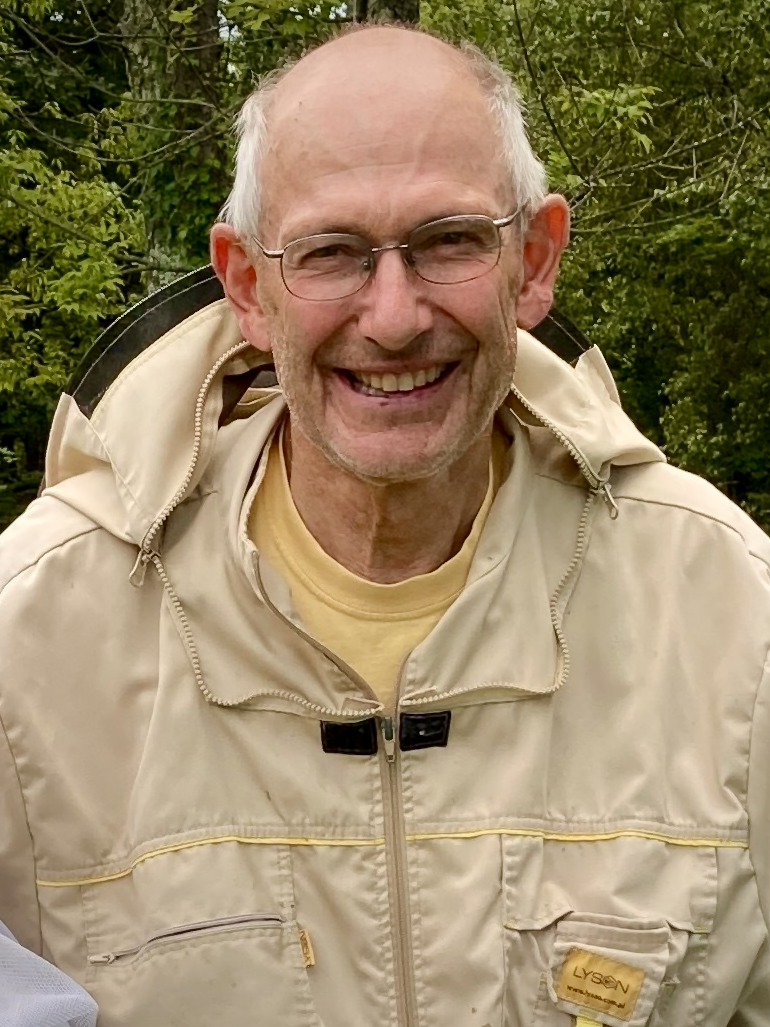
I started with bees in high school and have enjoyed working with them for almost 60 years now. My first career was as a large animal veterinarian, working primarily with dairy cattle and horses in Vermont and eastern New York from 1978 to 2012. At that time, I sold my practice and, along with two other veterinarians, bought Betterbee , a beekeeping supply company in Greenwich, NY. I sold my interest in the business in 2019 and now concentrate on queen rearing, producing queens for Betterbee and queen cells for their nuc program. I started queen rearing after taking Marla Spivak's class in Minnesota in 2008 and started working with instrumental insemination after taking a course from Joe Latshaw in Ohio in 2011. My goal in queen rearing is to raise productive, winter hardy bees that can manage Varroa with minimal treatments. I'm still searching for bees able to manage bears without assistance.
I live in southern Vermont along with my wife Sarah. When not working bees I enjoy restoring old farm equipment and running it with old hit and miss engines. I also enjoy repairing antique clocks.