Apple Podcasts
 Spotify
 YouTube
 Goodpods
 Amazon Music
 Overcast
 Castro
 PocketCasts
 Podchaser
 RadioPublic
 RSS Feed
 Beekeeping Success Around the World with Dr. Robert Owen (393)
Dr. Robert Owen joins Jeff Ott and Becky Masterman to discuss his new book Beekeeping Success, honey bee genetics, queen breeding, Varroa management, Tropilaelaps, Australian beekeeping, and lessons learned while working with beekeepers around the world.
What can beekeepers learn from Australia, Nepal, Bangladesh, Nigeria, Georgia, and Thailand?
This week Jeff Ott and Dr. Becky Masterman welcome Dr. Robert Owen, beekeeper, educator, researcher, author, and international consultant, for a wide-ranging conversation about honey bees, beginning beekeeping, queen breeding, honey bee genetics, disease management, and global beekeeping practices.
Robert shares the remarkable story of purchasing his first colony in Australia, building a successful beekeeping supply company, earning a PhD in honey bee genetics, and writing several influential beekeeping books.
The discussion explores his newest publication, Beekeeping Success: Start Right, Grow Strong Colonies and Harvest More Honey, which was designed as a practical field guide organized around the questions beekeepers most frequently ask.
Listeners will also hear Robert’s perspective on Varroa management in Australia, emerging concerns surrounding Tropilaelaps mites, international bee health programs, integrated pest management, queen isolation techniques, and the importance of collaboration among beekeepers worldwide.
From migratory pollination in Australia to beekeeping development projects in Africa and Asia, this conversation offers a fascinating global perspective on honey bee management and the future of beekeeping.
Websites from the episode and others we recommend:
- Robert Owen's Book on Amazon: Beekeeping Success: Start Right, Grow Strong Colonies, Harvest More Honey
- Honey Bee Health Coalition: https://honeybeehealthcoalition.org
- Project Apis m. (PAm): https://www.projectapism.org
- The National Honey Board: https://honey.com
- Honey Bee Obscura Podcast: https://honeybeeobscura.com
Copyright © 2026 by Growing Planet Media, LLC

______________

Betterbee is the presenting sponsor of Beekeeping Today Podcast. Betterbee’s mission is to support every beekeeper with excellent customer service, continued education and quality equipment. From their colorful and informative catalog to their support of beekeeper educational activities, including this podcast series, Betterbee truly is Beekeepers Serving Beekeepers. See for yourself at www.betterbee.com

This episode is brought to you by Global Patties! Global offers a variety of standard and custom patties. Visit them today at http://globalpatties.com and let them know you appreciate them sponsoring this episode!
As a beekeeper, you want products that benefit you and your bees. When you choose Premier Bee Products, you choose hive components that are healthier for bees and more productive for you. Because we believe that in beekeeping, details make all the difference. Premier Bee Products: Better for bees. Better for beekeepers. Use promo code PODCAST for 10% off your next online order.

Thanks to Strong Microbials for their support of Beekeeping Today Podcast. Find out more about their line of probiotics in our Season 3, Episode 12 episode and from their website: https://www.strongmicrobials.com

HiveIQ is revolutionizing the way beekeepers manage their colonies with innovative, insulated hive systems designed for maximum colony health and efficiency. Their hives maintain stable temperatures year-round, reduce stress on the bees, and are built to last using durable, lightweight materials. Whether you’re managing two hives or two hundred, HiveIQ’s smart design helps your bees thrive while saving you time and effort. Learn more at HiveIQ.com.

We’d like to thank Vita Bee Health for supporting the podcast. Vita provides proven tools for controlling Varroa—from Apistan and Apiguard to the new VarroxSan extended-release oxalic acid strips—helping beekeepers keep stronger, healthier colonies.

Thanks for Northern Bee Books for their support. Northern Bee Books is the publisher of bee books available worldwide from their website or from Amazon and bookstores everywhere. They are also the publishers of The Beekeepers Quarterly and Natural Bee Husbandry.
_______________
We hope you enjoy this podcast and welcome your questions and comments in the show notes of this episode or: questions@beekeepingtodaypodcast.com
Thank you for listening!
Podcast music: Be Strong by Young Presidents; Epilogue by Musicalman; Faraday by BeGun; Walking in Paris by Studio Le Bus; A Fresh New Start by Pete Morse; Wedding Day by Boomer; Christmas Avenue by Immersive Music; Red Jack Blues by Daniel Hart; Bolero de la Fontero by Rimsky Music; Perfect Sky by Graceful Movement; I'm Not Running Away This Time by Max Brodie; Original guitar background instrumental by Jeff Ott.
Beekeeping Today Podcast is an audio production of Growing Planet Media, LLC
** As an Amazon Associate, we may earn a commission from qualifying purchases
Copyright © 2026 by Growing Planet Media, LLC

Beekeeping Success Around the World with Dr. Robert Owen (393)
Leslie Condon
Hi there, this is Leslie Condon. I'm from Egan, Minnesota, and right now I'm at the Midwest honey bee Expo. Welcome to Beekeeping Today Podcast.
Jeff Ott
Welcome to Beekeeping Today Podcast presented by Betterbee, your source for beekeeping news, information, and entertainment. I'm Jeff Ott.
Becky Masterman
And I'm Becky Masterman.
Global Patties
Today's episode is brought to you By the bee nutrition superheroes at Global Patties. Family operated and buzzing with passion, Global Patties crafts protein-packed patties that'll turn your hives into powerhouse production. Picture this: strong colonies, booming brood, and hundreds. Money flowing like a sweet river. It's super protein for your bees and they love it. Check out their buffet of patties, tailor-made, for your bees in your specific area. Head over to www. globalpatties. com and give your
Jeff Ott
Hey, a quick shout out to Betterbee and all of our sponsors whose support allows us to bring you this podcast each week without resorting to a fee-based subscription. We don't want that and we know you don't either. Be sure to check out all of our content on the website. There, you can read up on all of our guests, read our blog on the various aspects and observations about beekeeping, search for, download, and listen to over 300 past episodes, read episodes transcripts. Leave comments and feedback on each episode, and check on podcast specials from our sponsors. You can find it all at www. beekeepingtoday. com. Thank you, Leslie from Egan, Minnesota.
From the floor of the Midwest honey bee Expo. That's Egan, Minnesota.
Becky Masterman
That's somewhere near you, isn't it? It is. I could hop in the car and get there in twelve minutes, I think.
Jeff Ott
So on a good day.
Becky Masterman
On a good day.
Jeff Ott
We are at the end of well, mid-July now. What can we expect from our bees right now?
Becky Masterman
Is that a trick question? Because it depends upon what the flowers are doing, Jeff.
Jeff Ott
I know what I'm doing uh in the next couple of weeks
Becky Masterman
Yeah, so so it really it really just depends if if you you're in an area where you're you still have a nectar flow then you're still looking at space and making sure that they have room and you're doing a little bit of of space care the opposite in the opposite direction if you've got a dearth because you don't want your bees to be robbed. you want to make sure that which is always interesting when the temperatures are warm and there's not nectar coming in, I kinda want a bunch of bees hanging out on the porch because I I feel like it's a little safer for 'em. I'd I'd be a little less likely to rob that colony. But I'm I'm I don't know if I can speak for the bees.
But anyway, you want to make sure that you don't have too much space for not just robbing but also those fun pests like hive beetles. What about your colony weights right now? Are they they staying steady?
Jeff Ott
They increased of course through the blackberry and so it's Yeah, they they've kind of leveled off, and I'm gonna be pulling supers here soon and then get doubly in serious about the Varro control going into the the rest of the summer and the fall.
Becky Masterman
Nice knockdown in July will help those winter bees develop without pressure.
Jeff Ott
So Yeah, and I'm just learning how to fine-tune that. Of course it's never the same year after year, so it's And I have the those Golden West bees this year, so I'm really curious to see how they've done through the honey production. I neglected to do any mite washes or uh counts while I've had honey supers on. Upper body strength would probably benefit from hefting some of those honey supers, but uh I'm lazy.
Becky Masterman
You should go out on a ninety degree day, take off those supers, and then go ahead and check. I'm kidding. I just noticed. yesterday and it was it was about ninety, ninety one or two in the afternoon and that's when they were they were gonna kinda hit that peak time and I said You know, the bees are working really hard to cool that that colony down so then it doesn't overheat. And so any kind of inspection that you do is going to disrupt that system. But if you add a mite test on top of that, you're spending more time. You've got, you know, comb out that could melt in the sun. You've got Just a number of issues.
We think about keeping them warm, but sometimes we don't think about helping them keep cool, if that makes sense.
Jeff Ott
Oh, you're absolutely right. And when it's extreme in either direction you wanna not open them up and at least that's my philosophy, not open them up. Hey, I got a quick question here from a listener that we want to get to. And this is from Gigi Drumwright. And if you remember We talked to Gigi at the Midwest honey bee Expo. They have a product called uh BRB feeder and they were on the third day of our expo series. Anyways, Gigi send us an email and this we should be able to answer this. We should. Capital. We should. Okay. Okay.
Becky Masterman
Let's let's see how we can do.
Jeff Ott
All right, here's the question. She writes, when used only to manage drome comb Does leaving a green drone frame on the hive increase the proportion of drone brood beyond what the colony would naturally produce, potentially leading to higher varroa mite populations? And that's a common question when people are using the green drone frame, and it's an important question to use properly.
Becky Masterman
Yeah, I love that I love that question because We're just talking about one frame and that that frame becomes dreaded in the sense that if you let the if you're using it to trap mites and then you let those those drones emerge, that's that's always the the the fear. But I think it's really interesting if you are using any kind of foundation on your frames Those are worker cell foundation. And that's the beekeeper telling the bees, this is what we want you to draw.
That's why we see all that drone brood in weird places like in the burr comb and maybe on the edges or if there was any kind of a Any if you had to change anything on the comb and you maybe damaged it, they might build it out again as drone comb. We the way we keep bees with that foundation, we keep that population down to five, ten percent. And if they're on their own, they want it to be Twenty percent. So during during the the reproductive season. So they'll invest a lot in drones. And so that one frame it won't exceed what the colony necessarily wants to do unless it's I mean, I guess a one I don't know I know one frame of worker brood could have sixty nine hundred cells.
I don't know about one frame of drone brood. But it'll it'll I mean it'll definitely help get them there, get them closer. But I I don't think that it would it would even it I don't think it would reach what they want it to be Depending upon the size of the colony you're manatee.
Jeff Ott
And the big part is that it's not gonna increase the number of varroa Unless, like you pointed out, you forget to take it out before the drone emerge. And that's the key to using a green frame, is as soon as they cap it. Pull it, freeze it, clean it, put it back in.
Becky Masterman
Yeah, but if you if you want a more natural distribution of workers' drones, throwing one in there would get you closer. I I've heard people there's kind of a movement saying the workers want drones in there, let's let 'em have drones. And then I've heard people say the bees are happier when the drones are there. Which I mean I'm I'm probably guilty of thinking that my bees are happy too sometimes, but I don't know how to measure that happiness
Jeff Ott
It's a survey, Becky. You just use a survey, a happiness survey.
Becky Masterman
I took a I took a video of my bees where they were washboarding. And it was so funny because there was there was one drone kind of in the middle of it and it was on the landing of the bottom board. And and I and I was like, does he think he's in this too? Is he a part of this behavior?
Jeff Ott
There's there's always one. There's always one on the dance floor.
Becky Masterman
Anyway, it was cute.
Jeff Ott
Well thank you, Gigi, for that question. Yes, it's gonna increase the number of drone, but not beyond what the the colony and a healthy colony would want. And the big factor is in terms of Varroa is removing that green frame. before the drone emerge. Alright, coming up next we have our guest from down under, Robert Owen, who is a beekeeper originally from Australia. He's currently in Bangkok, Thailand. and we'll hear what he has to say.
Becky Masterman
I am really looking forward to this conversation.
Jeff Ott
Yeah, he's out there in the middle of all the natural Tropilaelaps and natural varroa and all the other s good things. Coming right up.
Betterbee
For more than 45 years, BetterBee has proudly supported beekeepers by offering high-quality, innovative products, providing outstanding customer service. Many of our staff are beekeepers that themselves, and sharing education to help beekeepers succeed. Based in Greenwich, New York, BetterBee serves beekeepers all across the United States. Whether you're just getting started or Or a seasoned pro, Betterbee has the products and experience to help you and your bees succeed. Visit betterbee. com or call 1-800-632-336-200. Better be your partners in better beekeeping.
Vita Bee Health
We'd like to thank Vita Beehealth for supporting this podcast. Vita provides proven tools for controlling Varroa, Apistan, and Apiguard to the new Varroxsan extended release oxalic acid strips, helping beekeepers keep stronger. Healthier colonies.
Jeff Ott
Hey everybody, welcome back. Sitting around this great big virtual beekeeping today podcast table, and it is stretched far and wide today. Today we are speaking with Dr. Robert Owen. Currently he's sitting in Bangkok, Thailand. Becky's in Minnesota and I'm here in the Washington State. Robert, welcome to Beekeeping Today Podcast.
Robert Owen
Thank you, Jeff and Becky.
Jeff Ott
It's my pleasure to be here with you today.
Becky Masterman
We're so honored that you joined us. Thank you.
Jeff Ott
Robert, we invited you here today to talk about your new book called Beekeeping Success. Start Right, Grow Strong Colonies and Harvest More Honey Before we get into that, why don't you tell us a little bit about yourself, how you got into bees, and uh what took you to Thailand?
Robert Owen
I was born in UK, but I I later moved to Australia and I spent about 25 years there. That's where I did all my all my beekeeping. S somewhere around I've been I was keeping B's around twenty five years now, so I started around the year two thousand And I was in IT and computers and I never thought about bees before that. And what one e one day in work, a guy came in and said, guess what I bought? Three beehives. And and I and I nearly fell off my chair. I was too unprepared for that. So so the next evening I went on board a beehive.
Becky Masterman
I'm surprised you didn't set you didn't buy four. You just bought one?
Robert Owen
I'm not told my wife she nearly fell off a chair. My cer my kids certainly did. That was a really learning ex learning experience for me. I mean I no real thought about it. I'd some good mentors in Melbourne whereas livings and I joined a local beekeeping club. Probably the the funniest part oh it when I went to pick the beehive up About ten kilometer, ten about save eight miles away.
I went with one of my daughters who was about eight it was six o'clock in the morning and we knock knocked at the man's door who had met the previous night and he turned up in his pajamas and um a a th a three stack bee hive he gave me and he rubbed tape around the where the where the the hives joined together and not not not knowing any better I guess accepted that. So in his pajamas he we loaded them in the back and back of my car and we drove and we drove off And we came to the first stoplight and the hive fell over and um all the hive all the bees got out inside my car in the middle lane of a three-lane highway. Oh no. Of course my my daughter got out and and ran away.
Um she went onto this onto the side and quite well and left me there with with no with no protective clothing trying to get the hive together. And then so she f she phoned my wife who c came out My my wife just gave me this horrible look, put my daughter into the car and drove home, leaving leaving me to um deal with deal with it. So I got them home and um put them in the car park and uh they survived and I got assistance with the local beekeeping club. Very kind be beekeepers are very helpful a lot. They're very friendly as you know. And I got assistance with them. But um so that that's all initially started, it got up to about twenty hives in the end.
But the the big change was at the time around the year 2000 in Australia, there's only five beekeeping stores in the whole of Australia. uh bit of a closed market and they they only sold really high end Italian equipment and clothing. So it was expensive. And when I when I started looking at the price of clothing I couldn't believe it. So I I went online and and found some on a supplier in China and I bought a pallet load of clothing. Oh wow. And and I thought, what have I done? And then I I I I put them on eBay And I was the first person in Australia to sell beekeeping supplies on eBay and I sold them all within three weeks. Then I bought another pallet load and sold those in three weeks.
And within about two years I was bringing in container loads. You know, r really, really a lot of stuff. So I opened up what became a very big beekeeping supply business and then because I really like teaching and training, I set up a a a beekeeping school Um beekeeping tri training courses are held every every couple of weeks, mainly for beginners. I'd I've been write writing for magazines like Popular Science and f since about for a long time, since certainly in about 1918. So I'd already been writing science articles. So I started writing and beekeeping articles for different places. I really contribute now to the American Bee Journal and to a lesser extent to other magazines.
And then w win winter as it was a bit quiet in the beekeeping world So I started writing my first book, which is the Australian Beekeeping Manual. That took four or five years and that's a very popular book in Australia, a very successful book in Australia. sold out that was published around two thousand and fifteen. Then well then I I retired 'cause I'm seventy-seven now by the way, you know Yeah, I I tell I I tell people it's the drugs, but I don't know if they're just like. You're right there, I should say that yeah. I I re I reti I retired from IT and computer, which I'd largely given up already. You know, w f I did very little with that mostly my business.
Um but so I Took an opportunity to do a PhD in honey bee genetics at um University of Melbourne. No Th that took a that took four or five years and that really got me into the into the detail of Queen readings because I'm I modeled the spread of resistance to the roar in the honey bee population. Not the spread of deformed wing virus, but but how how genetically how to increase how how resistance to Varroa resistance of the Rowan deform bringing the virus spread. And that that was really interesting. And on the basis of that I learnt a lot about diseases. And then then with my two professors I wrote my second book on honey bee diseases. that was published about three years ago.
And then um I then had nothing to do again. So I I got together with um in in this time I was going to Africa in Players two with USAID and then I started my third book. which is the one y one you just mentioned, which is published a few months ago. That was that um I really enjoyed writing and training beekeep training new beekeepers and Writing for writing articles on beekeeping sits one of my passions. So I'd say that I say that's something I really enjoy doing, Jeff and Becky
Becky Masterman
Jeff, we're gonna need a bigger episode.
Robert Owen
Yeah.
Becky Masterman
I I think with with everything that Robert has done, I don't know how we're going to fit it into just this one episode, Robert. This is fantastic. What a great, great Story and boy, you don't do anything on a small scale, do you?
Jeff Ott
No gun no It's interesting you mentioned that you did your PhD work in the genetics of queen raring and disease resistance or varroa resistance. Uh just recently, just this week got back from the COLOSS meeting that was held here. in Washington State and there was a lot of discussions about the genetics and and resistance and viruses and also the queen rearing and uh it's it's a big field.
Robert Owen
It is a big field. When I started being about the year 2000, very little is known about bee genetics and disease disease gen disease genetics. But nowhere there's a h there's a huge focus on it. A lot of good people put a lot of time and m and money into studying it. It's opening a lot of really good possibilities for managing diseases and Varroa.
Jeff Ott
I was happy to hear about it and we'll have more about the COLOSS meeting and and future episodes. What was your impetus to create a beginner beekeeper book? What was not out there? What niche were you trying to fill?
Robert Owen
All of these geek beam books I'd seen so far, and including my own, dealt with everything chapter by chapter. Like what equipment you need, what clothing you need, your first hive. how you manage the first colony and and so on. It was it was very sequential. So I I I thought of writing this third book instead of s sequentially from starting off as a beekeeper to say managing diseases in the last two chapters, even though they're important. D do do you if you have a particular question, how do I split my hive, there'd be a section or not? How how do I feed bees, does it section or not? What are the best crops to take bees to so they get adequate nutrition?
There's a there's a There was a section on that. So it was more a question and answer book than a a sequential book which works mainly on the market. It's a it's a type of book I envisage. You you you take to the beehive with you and if the particular question while you're looking at the colony, you could look up the index see look up that question and the and this and the answer to that particular question would be in would be in front of you instead of s sear searching through it, you know, the usual type of type of beekeeping book. That was the aim of it, yeah.
Becky Masterman
So this book is is beneficial not just for somebody just starting out, but also somebody in their first few or several years who what maybe want better guidance on different management techniques.
Robert Owen
Yeah. Yeah. I've I've I've learned a lot with I was with USAID I I mentioned, um and in that I went to Africa and Bangladesh, Nepal and places and I learnt a lot about different kinds of beekeeping. Al although In in ev in every country the local beekeepers say our way is the best way, you know. Neglect everybody else. No, you're kidding. Well I'm I'm quite honest here and chef though. that th is the a lot can there's a lot can be learned from uh from other people. You know, if I f if I found a better way of doing things or an alternative way of doing something I tried out myself at at my o my my own bees. If I thought it was good, I'd include it in the book.
Jeff Ott
So th that was one of the main motivations. That is a great perspective that you bring is that you have a worldwide experience or at least a large portion of the world experience in beekeeping and you can pull that all together and bring that for other people to use from a beginning beekeeper standpoint.
Becky Masterman
You definitely have experience from management to nutrition to disease. If a beekeeper comes up to you and asks a question or even what part of this book, what topic was easiest to write, or what what do you most like to talk about?
Robert Owen
Rearing rearing queens is important. I I enjoy the genetics and the techniques of rearing queens, both for honey production and disease and whatever, but just the day to day management of your colony, how to prepare them for the for the for the spring flow, how to manage them in the summer, how to close them down for the winter. I like I like talking about general management techniques.
But d depending who I talk to, the s the science and genetics of it as well, if the people I'm talking to are interested and and and a little bit knowledgeable about what happens because I find a lot of beekeepers are are interested in the science of beings and are interested in learning more more about some more scientific aspects of the way the colonies live and the bees live That not I enjoy doing.
Jeff Ott
What's the biggest mistake that new beekeepers make? And you have a good perspective, it's not just Australian beekeepers or US beekeepers or is there a common mistake that all beekeepers make around the world?
Robert Owen
Probably l in the beginning looking in looking at the colony too often, particularly in adverse weather, op op opening the colony and which um alarms the bees a bit and they could abscond or Just I uns unsettle em spester, leave leave bees away. Feeding is important as well. A lot of beginner beekeepers don't quite keep an eye on the state of their colony, how much honey is in there, and if they need to provide extra feeding for them. And uh unfortunately qu quite a few beginners colonies die is be because they're not adequately fed and just alarmed generally by being open too much may abscond. So th that that's probably the bit new new beginner beekeepers.
Um if I can if I can throw in USAID here, we we're all a new audience, very knowledgeable MPs. But when you go to other countries, I I went to Bangladesh with USAID And while they're working with beekeepers, I learned that the government had just hired 150 bee inspectors. And I thought they'd do what our bee inspectors do go round looking for diseases and uh educating beekeepers. No, that wasn't it at all. These these farmers who very poorly educated seriously thought that bees stole pollen and damaged their crops. And they were killing and the and the bees were killing their crops.
And if they saw and if they saw a beekeeper with lots of hives near their crop they'd physically threaten them and and assault them, they didn't take their bees away. And these um bee inspectors were there to educate farmers that actually bees were beneficial to the crop and getting rid of bees was the worst possible outcome. So um I I le I learnt a lot with you with the idea that I didn't expect to learn. You know, it was uh really interesting. You wouldn't expect that. No yeah, I I didn't expect it at all. So it's a l lot of things I learned with beekeeping around the world, you know, which Came with a came other surprise to me.
Becky Masterman
It's fantastic that the government had a response to it though and did try to support beekeepers
Jeff Ott
If you could teach only three things to new beekeepers, what would you teach?
Robert Owen
How to open open the hive without this is one topic. How to open the hive without disturbing the bees, do it very calmly and gentle with a minimal smoke and what to look for in the colony to make sure that it's it's it's healthy and disease free and look for signs of trouble. That that'd be one. On on ongoing ho how to harvest honey extract frames full of honey. without d without disturbing the disturbing the bees and um just just general day-to-day management over the summer when there may not be much vegetation around. much flowers around and and how to prepare for shutdown over over winter. So what they know what they need to do then just to compress the colony into into one hive.
Those are probably three things I do. We've only just got the ROA in Ot in Australia. It it came in in about 2022. And I I was part of the team that went round inspe um with government team inspecting hives looking f looking f you know, just routinely inspecting hundreds of hives looking for looking for it. Um but that pest has this has surprised us in Australia. Fir first of all, there wasn't any known deformed wing virus in Australia. We've since found a small pocket in in the bee colony in an isolated part of northwestern Australia which is unlikely to spread because There's a there's a big desert between them and so so default wing virus.
We we thought the initial incursion ca came from Asia. That was the initial belief. So that we didn't we didn't think that Veroris just stands to Mythics is going to be a problem for us initially. And now three or four years on, we we've discovered through genetic tests and the the these that were probably almost certainly came from North America, probably from Canada And there's widespread resistance to um amitraz in it already, the perethroids flume flumethrin So it it so un unfortunately for us what we thought was a resistance-free population actually already has quite extent quite extensive resistance. With which is unfortunate.
Jeff Ott
I was just gonna ask you, because you mentioned there's a big desert and you don't expect a deformed wing virus to spread, do you not have much migratory beekeeping or transportation of bees between the provinces or the states there in Australia?
Robert Owen
If you look at the geography of Australia, ninety percent of the beekeeping i is on the the third of Australia which is the east coast. Okay, if we strip it and it's three thirds. Th there's a huge desert, the Simpson Desert in the middle. And there's nothing nothing living there. It's like a thousand thousand miles of or eight hundred miles of nothing. So there's n there's there's no there's no bees And on on the West Coast, there's an important but small population, and there's n by law there's no migration between them. Okay.
On the on the e on the cooler the East Coast, we we have uh we have almonds about about almost uh uh two thirds of the way down in Victoria, quite a large almond So there's a huge for us migratory beekeeping where about 300,000 hives are migrated about every January, February. Uh so th so there there is a huge migratory beekeeping culture in Australia, but d to take colonies over to the west coast is forbidden. And the the reason is alone on the east coast where most of the bees are, they've got American and European fowl brood. In in the in the west coast there's there's no European fowl brood. Only American foulbrood.
Becky Masterman
So I'm No European Falbrood.
Robert Owen
No European foulbrood, yeah.
Becky Masterman
That's like a researcher's dream to have that kind of a population, right?
Robert Owen
Yeah. Yeah. And American fellow is treat is treated differently in Australia than in um America. In in Australia by by law you have to immediat almost immediately within a few days destroy the colony, b burn the hive and bury it under about three, four inches of soil. The government did recommend killing the colony with gas, gas from cars But they but they got concerned that they might blow up and and injure the um the beekeepers and they'd be sued. So so it so they stopped recommending that method, they reckoned. Met is mitticides are better.
Becky Masterman
Pesticides? Okay.
Jeff Ott
I'm surprised knowing the creativity of beekeepers that everyone's respecting that law and not trying to transfer and maybe not whole colonies, but um queens or other bees and and they're able to maintain that that separation between your sections of the of Australia
Robert Owen
It's quite well respected. We're not expecting to be tr to be transferred by beekeepers. It it is um quite you know, in a very small minority of beekeepers there's a bit of a cowboy culture, you know. Th that's true everywhere. It's a small minority. But there's there's no transfer of of colonies I've been aware of between East and West Coast. Not say it hasn't happened, but it's it's quite widely respected. It's also a long way. There's n there's no gain in doing it. Like, you know, there's there's no gain at all economically for people to do that.
Jeff Ott
Hey but let's take this opportunity to take a quick break, we'll be right back, and we'll talk more about the beekeeping around the globe with Dr. Robert Owen.
Premier Bee Products
Beekeeping is demanding work. The last thing you need is equipment that can't keep up. That's why Premier Bee Products builds every frame and high body in our South Dakota factories with one goal in mind. reliability when it matters most. From our beefy pura frames to our natural profila hive bodies with rough interiors, we design for long life, in the field and in the colony. Because we believe that in beekeeping, detail Make all the difference. Premier Bee Products, better for bees, better for beekeepers. Visit online at Premierbeeproducts. com or call us today. Use promo code PODCAST for 10% off your next Online order.
StrongMicrobials
Beekeepers, if you're looking for a smarter way to support colony health, take a look at bee bites from strong microbials. Bee bites are a new protein pattern. Made with spirulina, chlorella, and targeted probiotics. Designed to support nutrition without creating new problems in the hive. With 15% protein, bee bites are unique because they do not attract small hive beetles, a big deal. If you've ever battled infestations during feeding, Strong Microbials has been supporting beekeepers and farmers since 2012, developing high-quality commercial probiotics and nutritional supplements you can trust. Learn more about bee bites and their full line of bee nutrition information. at strongmicrobials.
com.
Becky Masterman
Welcome back everybody. Robert, you've got this great book, Behaping Success, that's been released this year. Are you visiting a lot of bookshops and beekeepers where you are right now? Or are you doing a lot of online speaking about your new book to promote it?
Robert Owen
No, not actually. I think with my fi with my first book, The Australian Beekeeping Manual, I was on the radio some like three times a day. It and I was Uh you know, it uh uh literally three times a day, um you know, I it was but then I was living in Australia and and a lot of people interested, but Since I'm now living in Thailand, I think it's it's harder to get hold of me. So it's so I'm not I'm so I'm not I'm not doing that now to the extent I did it before. You know, it it's um which is which is a shame.
Becky Masterman
So what if a beekeeping club asks? Are you willing to do an online interview?
Robert Owen
Well, I do that a lot. Yeah, I do I do online I do online talks. Yeah, I do that. That's quite h I'm quite happy with that.
Becky Masterman
Yeah, that's um I just want to put it out there because Clubs are always looking for speakers, Robert. And since you've got a new great book and you've got all this depth of knowledge, I would think educational background, yeah. Although I don't think they could pay for travel.
Robert Owen
Oh well I don't know about that. Yeah. Um yeah, f feel free to share my email address, Becky. I'm quite happy with that. Yeah. Fantastic. I th I think in Thailand where I live, it it's sort of unf they good honey bees in um Thailand and and Varu and Tropical Labs, but Thailand obviously has a north and south, okay And and i in the south where I live in Bangkok it's very flat, it's very hot and Apis mellifera can't survive here. They've got Apis Cerana and dosata here. And um but there's certainly no mellifera in the south of Thailand. If you go if you go up north to Chiang Mai and Chiang Rai, it's quite mountainous. And that's where all the beekeepers are with the Apis mellifera colonies.
So mo for most of the honey is from northern northern northern Thailand. And um the University of Chan Rai is Dichang Mai, sorry, is very active with American universities in Tropilaelaps research. It's a big center with tropical research. w with American researchers. So it's it's it's very active up north, but unfortunately it's not much down south where I live. It's it's much more difficult.
Becky Masterman
I wanted to do a follow up question on the first book that you wrote, the Australian Beekeeping Manual. You wrote that pre Varroa and since You have published it, Varroa entered Australia. So what have you done for that manual to update it? What was that like?
Robert Owen
I I explained I I updated about three or four years ago. I I n we we we knew the Rua w was heading to Australia sometime. So I put in a s sections on within the chapter on the biology of Varroa, how it affected bee colonies on the under different treatments. I had to be generic in the treatments because We we had we had the Australian government ha had what's what we called shelf approval for different miticides. They weren't formally approved, but they'd been tested and it was raw-entered. they o it within a day they could sign a paperwork and get them out there.
So I I just I described the u the organic the organic methods, the um Amitraz and s and so on and fluvalinets and I explained in general how they go. It it now needs a much bigger update. Now we've got the Roa with more chapters on it. But my my my book on um pests and diseases of the of the honey we covers the roa in a lot of detail. It's it's a lot there's a lot of work and air. And that's available in Australia if they need if they're interested.
Jeff Ott
From a North America standpoint, we hear Southeast Asia as being a the starting point of say the tropical laps and also Varroa. And that becomes kind of a focal point of a lot of the future concerns for North American beekeepers. What have you learned from beekeeping in in Southeast Asia? that would be useful for beekeepers in North America or around the world as they deal with varroa and Tropilaelaps and anything else.
Robert Owen
Beekeepers in North America and Europe have a good handle on varroa. It's it's tr it's tropical Tropilaelaps is the is the is the big threat. When I went to Nepal w with USA been there a few times I I taught them one of the things I taught was a course on instrumental dissemination to government scientists and university people. Um and they took me around beekeepers. I s I saw this taught me a lot about asking questions. I say, is the raw a problem? And they say, no, it's not. But they didn't say that tropical lapse was. You know. I kinda missed out on it it took me a while to f to ask walk to learn to ask walking questions.
I I said I learned more about tropical lapse when I was in Georgia actually. I went to Georgia with USID. Georgia the country. Th they had just within the past twelve months they they'd had tropical from southern southern Russia and Turkish on of not Turkish Kazakhstan and places across the border. And what they what they found their treatment was that they they they isolate the queen for about thirty days so there'd be no brood there And they've they've they found isolating the queen was by far the best monitoring method for Tropilaelaps. That if having no brood would effect would effectively kill off kill off the tropical ail up.
Not that was very effective and some s w one enterprising beekeeper. Well, uh I'd say I did in Georgia we we don't they didn't have the big big aporties like they do in North America or Europe. Like if you've got a hundred beehives you're pretty big. You know, there's one or two r bigger ones at two thousand, but a hundred hives would be a commercial beekeeping operation together with something else on the farm. And and w one one um enterprising beekeeper set up a business and all he did was go go around beekeepers and for a small fee isolating the Queen and coming back thirty days later and releasing her. And that's that's all he did for the business.
And that that was the way they managed it
Becky Masterman
What part of the season do you need to do that where it would be the most effective? I because I I keep thinking of like a reintroduction, like we can get a late late season varroa reintroduction based upon the robbing behavior of bees. Things like that.
Robert Owen
The best time would be late late spring. Just before the preferably preferably before the flowering season, but sometimes during it, because this there's still quite a lot of um But all the foragers are still in there. The colony drops a bit if n if it's a broad infest infestation. But um spring would be the main one or w or winter. But they would they were still treating raw with pesticide with miticides though. You know, s so it's a problem.
Becky Masterman
So it it's timed with your making sure you can take advantage of any kind of a nectar flow, but then hoping that when you s start seeing that population decrease you're not missing honey production.
Robert Owen
Yeah, not seen missing too much there. Winter was an important part to do it. Um but then It in in winter it got really, really cold in in Georgia like it does in North America. So the colony dwindles and there's certainly no activity. So it do it the start start of start or end of winter or the early spring? They would they would they're also learning to deal with it as well. You hadn't been there more than a couple of years, so th th they were experimenting, but isolating the Queen was they found very successful.
Jeff Ott
Have they been able to determine how long a Tropilaelaps can live without the brood to live on? I think I read or heard somewhere that the the possibility that Tropilaelaps could possibly transfer to rats or a secondary host to get through those lean times a year?
Robert Owen
I believe also it does it can't transfer to other animals like like rats. But without without without brood in a colony it lasts five or six days. It can't last very long at all. And that's why queen separation isolating the queen is very successful. Uh un unlike varroa, which can last quite a long time. Tropilaelaps certainly can't. There there are big differences in the biology or the lifestyle of Tropilaelaps. With varroa When the varroa l when the young varroa leaves leaves the newly uncopped cells, one of the things it does is try to live on an adult bee for a while. It spends a few days on an adult bee.
When you put miticide into a colony as a beekeeper, the way it spreads throughout to the colony is bees get it onto the body and the bees carry it around the inside of the colony. So the varroa is naturally in contact with the miticide on the body of the bees. That's quite different with Varroa. With Tropilaelaps. Tropilaelaps doesn't live doesn't live on other bees. It's very unusual. Tropilaelaps scatter around and walk around on the honeycomb. So it doesn't come into into contact with miticides as easily as the rower does. Spends very little time on the surface of of comb, hardly any time, if anything on the s on the body of an odd beer, it gets into the next boot as soon as possible.
So so the w so the way we've applied miticides to colonies for Varroa, like putting st strips, amitraz strips in, just is just a minimal effect on Tropilaelaps. 'cause the Amitraz isn't spread uh 'cause if Tropilaelaps doesn't come in contact with amitraz on the bee. We also know that tropy left has deformed wing virus in queen and black queen virus as well.
Becky Masterman
That that's been determined. So essentially that brood break is with Varroa a brood break would be not giving them any place to hide, but they can still feed because they're feeding on the adults. But with tropical ops it's literally starving them.
Robert Owen
Who starves them, yeah. The the m the main the main aim of the brood break is the is the queen doesn't the queen stops laying eggs? So there's so there's no there's no brood, there's there's there's no larvae for for the Tropilaelaps to go into. So the ho so You release the you release the queen after thirty days, knowing that there's no brew there, there's no carp brew there or anything. And and that is that is an effective way of managing Tropical. Unfortunately, in a country like the United States with very large beekeepers that uh work really hard, that's going to be economically expensive. You know, that's the unfortunate part.
And what pesticides or miticide’s, Tropilaelaps is susceptible to a differ uh you know, could be quite different to the ones Varroa are susceptible to. So even though miticides applied for varroa and now it's harming the colony, a month later you may need to apply a a totally different miticide to manage the Tropilaelaps. So it's a it's a bit of a double blow for North American and Europe European beekeepers w when it arrives.
Jeff Ott
It becomes a very expensive to mitigate or manage the pest, whether it be triple A lamps or varra
Robert Owen
I m I I mentioned um beekeeping in Bangladesh and the inspectors. The other place I found really, really, really interesting I went with USAD a few times with was Nigeria. In if you go into a supermarket in Nigeria It's mostly American honey. Ninety percent of the honey is from America, even though it's a lot of and partly partly Nigerian beak beak honey doesn't taste that nice. Okay It's it's it's quite i it's it's good for cooking and cooking putting coffee, but you wouldn't put it on pancakes or toast. You know, it's it's it's it's n it's not that pleasant a taste to be honest. But um but but the the the ma the main reason is nobody trusts Nigerian bee. Honey bee honey.
Just before I got there, um what you can say, an an itinerant cow herder, somebody walks around with the cows, you know, and makes sure they don't get into trouble. f found uh a colony in a in a tr in a tree. So he he he squirted pesticide in, scooped the honey out, and sold it in the local market. Oh goodness.
Becky Masterman
Oh goodness. Okay.
Robert Owen
So this is a real concern in night in Nigeria that nobody quite knows what's happening with the honey, so they prefer to buy American honey. Ninety percent of the honey there is is is American.
Becky Masterman
That's fascinating.
Jeff Ott
That is.
Becky Masterman
I have to ask when's the next book which is the story of your beekeeping journeys going to come out. I've have we started writing it, Robert?
Robert Owen
No, there's there isn't another one. That's it, that's it.
Becky Masterman
Oh come on. Your experience on on several continents I mean Wow is it valuable and interesting. I mean, from your first hive to now. I I wanna read the book You've got time.
Robert Owen
When I w I've been disparaging about computer people, I was with um I was in computers most of my life on IT and without being disparaging, when you're when you're in a certain professional group, everybody's the same. You know, I'm not being critical of them. So every everybody I knew was a computer scientist or programmer. And w when I went into beekeeping It is really, really interesting. People are very much more much more open. And also I found bees much more interesting. But the the professional beekeepers were real, real characters. You know, I mean There's there's more tw there's more two ways around it. They would have class apart in in this in the stories they told.
There there was um there was um I wouldn't say who it is m uh but then there's there's a very old famous beekeeper in outside Melbourne and um he had his head he had his saw and he cut his foot quite badly, you know, cut his keel with an electric saw. And his wife was in in was in an el in an electric chair, you know, to um get around. So he so for three months he commandeered that offer. so he could go around the beehives and um left left her left her in the house. But I I used to buy uh so she couldn't leave the house 'cause he was going round his bee yard in in in her in her electric wheelchair. But um I think the interesting bit.
I I I I used to buy um foundation from him, so I used to go up up um quite gradually. And a a lot of a lot of the purchases it in cash. They they wanted to hide it from the tax office. So I I I go in with it with a just full of dollars, you know, and ask for this. And and he he he came out w with a bed with a bedroom pillow. f full of stuff full of notes and and pulled changed out for me and and then sealed a pillow up and to and took it back into the bedroom and put it under the bed and Yeah, they're really in really interesting and um That's funny. Yeah a lot of different stories they came out with which um personally I wouldn't have come across otherwise.
So an interesting group of people, fascinating
Jeff Ott
When you look at your experience around the world and Africa and Australia and Southeast Asia What challenges concern you about beekeeping? And then we'll come back around and finish the question with and what gives you optimism about beekeeping and beekeepers?
Robert Owen
Obviously climate change is a is a concern. Um the general degradation of the environment, um extensive monocultures, the ex the expen the extensive use of And agricultural chemicals general at general that other said I'm seventy-seven. When I was younger if you went on a car drive you have to get out every few few miles and clean the windscreen. And now you n and now you never do that. So although we think of bees are being in trouble, insects generally are in trouble, uh which I believe is det aggregation of the environment and in particular miticide’s. This the spread of s the spread of diseases generally um the ways waste managed.
There's not there's not enough appreciation of integrated pest management. You know, I think th th that should be that should be uh front of a lot of beekeepers' minds and and it's not you know, would rotate in a different miticide and trying different things. Um what what gives me confidence? I think be beekeepers are quite a resourceful group of people and um there's a lot of interest in ki in they they realize that bees are in trouble.
There's a lot of interest in in improving environment for bees and better methods of bee management is becoming much more much more topical now, how to manage bees, instead of letting bees survive on their own and harvest honey a few times a year, there's um th there's there's much more concern in looking after the bees and and making sure they have a good life. So I'm quite I'm quite happy that the environment the though the environment is getting getting worse, that people's care beekeepers care for them and general society's awareness of the importance of bees is improving
Jeff Ott
Robert, as we come towards the end here, you had mentioned earlier about a lot of your work helping beekeepers around the world was through the U. S. AID program. How significant to be keepers around the world is the loss of that program?
Robert Owen
Obviously, It's uh as a non-American, I I had a green card at the time, which is how I managed to work for USID. And I lived in Los Angeles for a bit or of San Fernando Valley. And so so that that's why I got into USC ID. That that it it was an important cont contributor to agriculture in general. in Africa and and Asia. Um like a a very small a very small part my my my time in Nepal for instance, um, that they they wanted to improve the honey output from colonies is quite low. Twenty twenty kilograms per h per colony per year. And part part of that was ev every house had a beehive next to it.
You know, just oversupply of bees but but also I have set up um a genetic s genetic genetic selection program and and taught them instrumental insemination at the government laboratory. Instantly They they they did offer me a a visiting professorship at a university in Nepal, which USCID was going to pay for. You know, uh go there once a month. and they were happy to pay my airfare and things but um that that fell through when USCID died. But but but e even small things like that you and I take for granted, now listeners take for granted, like You don't you don't appreciate the lack of resources in that's important.
In Nepal, for instance, the the the bee inspectors couldn't tell the difference between American and European foul brood. You know, it's um and I was a bit surprised. I said, what about the milk test? You know? So I just they just got some milk out of the fridge and I showed them the milk test and and that totally changed the diagnosis from American and European foulbrood. So although that's only a small part, it was important as a a minuscle part of my contribution, it was really important to those people to be able to tell the difference. between American and European foul board which they didn't know before.
So I I was taken also I was I was taken to Bangladesh they they had an invasion of a beetle there. So I was the first person to report on small high beetle. And unfortunately it happened over COVID lockdown. So they locked the colonies down over locked over COVID about eighteen months later they w they opened it and they were full of small high beetles and they'd no idea what what they were, what to what to do with them. It was a completely new a new pest for them. So I w I worked through that and told and give training on managing managing s small high beetles.
So it it i it it is a very small part of the US ID budget, but I think it contributed a lot to the the bet beekeepers around the world.
Becky Masterman
You know, obviously with Tropilaelaps now it's really shown how important it is that the entire beekeeping industry across the world is united because of the need to share information about pests and disease and parasites.
Robert Owen
So Yeah. There's a lot we're gonna learn from overseas, you know I mean from overseas beekeepers. You know, that I think Yeah. No, I I was saying that the other said oh o beekeepers everywhere think their bees are the best. You Certainly in Georgia they w they they they thought they had bees were the best and in Ethiopia their bees were the best and um I love that.
Jeff Ott
Be keep or pride, you can't deny that that exists, can you? Yeah, that well Robert, it's been our pleasure To have you here as a guest on Beekeeping today and really enjoyed talking with you. I I encourage our listeners to check out your book, buy it. Buy all of them. Buy all of them. We'll have links to your books in the show notes on the website. And uh look forward to hearing from you down the road. Thanks. Robert for joining us. Thanks Jeff and Jack and Anna Listen. It's my pleasure to be with you today.
Becky Masterman
Our pleasure. The pleasure is definitely ours. Thank you.
Robert Owen
No, it's my it's mine definitely, Jeffy.
Jeff Ott
It has been fun to listen to And talk to Robert and get this global perspective on beekeeping.
Becky Masterman
International Beekeeping Treasure Robert Owen. Wow. what's in his head. I mean w I think we just got a little bit of it. There's so much information and then experiences and travels. It's just I I want to know more.
Jeff Ott
I like the perspective of seeing all the different beekeepers and And Ethiopia, Nigeria and Nepal and Thailand, Bangladesh and um Australia So in a different part of Australia, I did not know that about Australia in terms of the beekeeping practices and migration. That was interesting.
Becky Masterman
That was very interesting. My head is full of new information, so Very cool. It's nice of him to share it. I love that he's at such a high level with what he knows, but his goal is to train beekeepers who are starting out or just building their operations. And that's that's pretty fantastic.
Jeff Ott
And that about wraps it up for this episode of Beekeeping Today. Before we go, be sure to follow us and leave us a five-star rating on Apple Podcast or wherever you stream the show. Even better Write a quick review to help other beekeepers discover what you enjoy. You can get there directly from our website by clicking on the reviews tab on the top of any page. We want to thank BetterBee, our presenting sponsor, for their ongoing support of the podcast. We also appreciate our longtime sponsors, Global Patties, Strong Microbials, and Northern Bee Books for their support in bringing you each week's episode. And most importantly, thank you for listening and spending time with us.
If you have any questions or feedback, Feedback, just head over to our website and drop us a note. We'd love to hear from you. Thanks again, everybody.
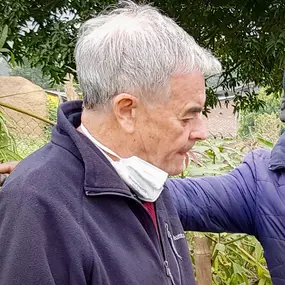
Robert Owen has kept bees for over twenty-five years after being introduced to beekeeping by a work colleague. When Robert retired, he studied for a PhD in diseases of the honey bee at The University of Melbourne, Australia, receiving the degree in 2022. In addition to writing The Australian Beekeeping Manual, Robert has also written Honey Bee Pests and Diseases (with JP Scheerlinck and Mark Stevenson). Robert also co-authored Beekeeping Success: Start Right, Grow Strong Colonies, Harvest More Honey, with JP Scheerlinck. Robert is a regular contributor to magazines such as The American Bee Journal, The Australasian Beekeeper, Bee World, and Bee Culture, as well as publishing many other articles on science and travel. Robert has taught beekeeping in The U.S., Canada, and Australia works extensively overseas as a volunteer with aid agencies, including USAID, teaching beekeeping in Nigeria, Benin, Malawi, Ethiopia, Lebanon, Nepal, Thailand, and Bangladesh.