
The Queen Behind the Colony: Why Honey Bee Queens Matter More Than Ever
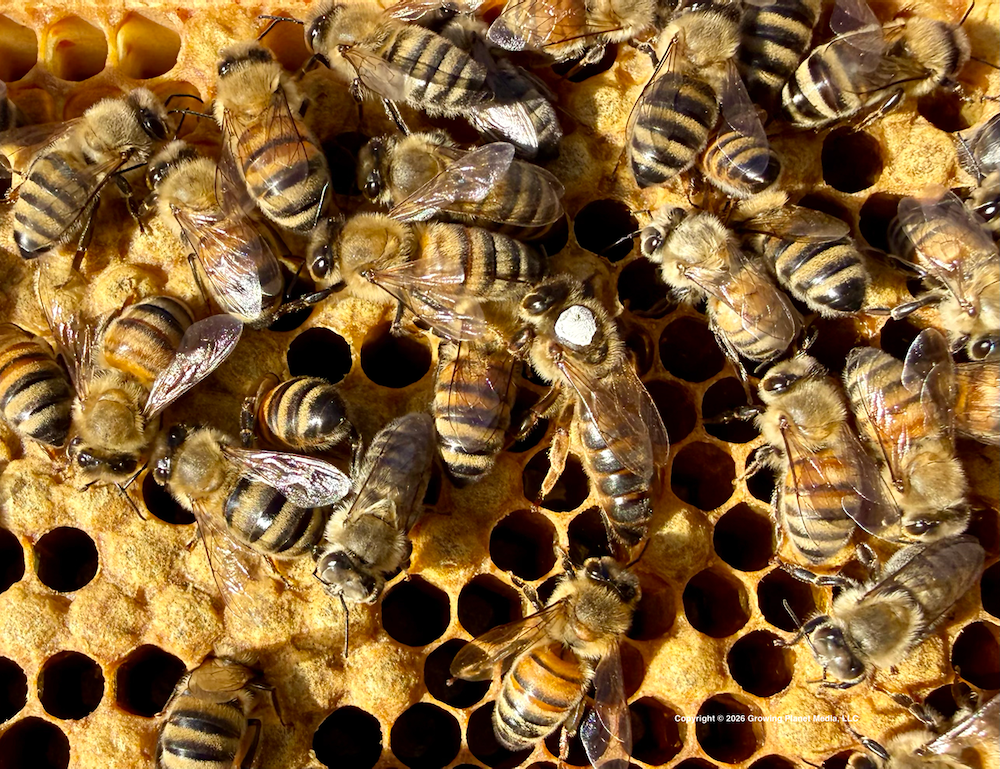
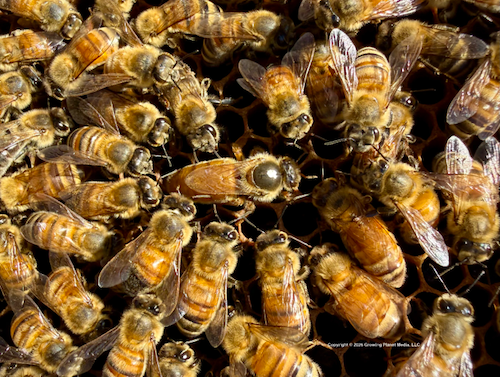
In every thriving colony, there is one bee whose influence reaches nearly every aspect of colony survival, productivity, temperament, and resilience: the honey bee queen.
For many beginning beekeepers, queens can seem mysterious. They are larger than worker bees, capable of laying thousands of eggs, and somehow maintain order within a colony of tens of thousands of individuals. But modern queen biology is proving to be far more fascinating — and far more important to successful beekeeping — than many people realize.
Recent episodes of the Beekeeping Today Podcast Queen Series explored these topics with leading researchers and practical beekeepers, including David Tarpy, Juliana Rangel, and Randy Oliver alongside Eric Oliver and most recently, Ang Roell of They Keep Bees. Together, these conversations highlighted a major shift taking place in modern beekeeping: successful colony management increasingly depends on understanding queen quality, genetics, and long-term colony resilience.
Most new beekeepers are taught that the queen’s primary role is reproduction. While technically true, that explanation barely scratches the surface. A healthy queen influences nearly everything within the colony, from brood production and worker behavior to overwintering success and disease resistance. Even traits such as swarming tendencies, honey production, and colony temperament are closely tied to queen performance.
As David Tarpy explained during the Queen Series, queen quality is strongly connected to mating success. Queens mate with multiple drones during a short period early in life, storing sperm that must last for years. Environmental stress during queen development or mating — including poor nutrition, pesticide exposure, weather conditions, or disease pressure — can affect the queen long after she begins laying. Increasingly, researchers suspect that many unexplained colony failures may actually begin with subtle queen problems that develop months earlier.
 As David Tarpy explained during the Queen Series,
 That concern over queen quality has become one of the defining discussions in modern beekeeping. Commercial operators, sideliners, and hobbyists alike are paying closer attention to brood patterns, supersedure rates, and colony consistency. In her discussion on the series, Juliana Rangel emphasized that queen health begins during larval development. Nutrition, colony conditions during queen rearing, and mating environment all shape the queen’s long-term viability.
These concerns are especially important because honey bees today face pressures unlike those experienced by earlier generations. Varroa mites, viral diseases, nutritional stress, pesticide exposure, habitat fragmentation, and climate variability all place enormous demands on colonies. The queen sits at the center of the colony’s ability to respond to these pressures.
One of the most compelling conversations in the Queen Series featured Randy Oliver and Eric Oliver discussing selective breeding for Varroa-resistant honey bees. For decades, beekeepers relied heavily on chemical treatments to control Varroa destructor mites. Today, however, many breeders are working toward a more sustainable long-term solution by selecting bees with naturally resistant traits.
The Olivers discussed how breeders are selecting colonies that demonstrate hygienic behavior, improved grooming behavior, and other characteristics that help colonies survive mite pressure. They also emphasized that resistant bees are not “magic bees.” Instead, resistance develops gradually through careful selection across generations while still balancing productivity, gentleness, honey production, and survivability.
The newest Queen Series conversation with Ang Roell added another important dimension to the discussion: the growing relationship between queen management, sustainable beekeeping, and beekeeper education. Roell discussed how many newer beekeepers are becoming more intentional about where their queens come from, how queens are raised, and whether locally adapted queens may offer advantages in survivability and colony stability. The conversation also explored how queen rearing helps beekeepers better understand colony biology itself. Raising queens often changes how beekeepers view brood patterns, nutrition, drone populations, and colony timing.
For beginning beekeepers, this shift in breeding philosophy may prove transformative. Future queens may increasingly carry genetics that reduce the colony’s dependence on chemical intervention and improve overall colony resilience.
At the same time, queen failure remains one of the most common hidden causes of colony decline. A queen may still be physically present while quietly failing. Spotty brood patterns, declining population, excessive drone brood, poor temperament, or repeated supersedure attempts can all signal underlying queen issues. Unfortunately, many beekeepers only recognize these warning signs after the colony has already weakened significantly.
This is one reason experienced beekeepers spend so much time evaluating brood quality rather than simply searching for the queen herself. The brood nest often tells the real story of colony health.
The modern honey bee queen has become both a biological marvel and a management challenge. Researchers continue studying how environmental pressures affect queen fertility and longevity, while breeders work to develop more resilient stock for the future. At the same time, important questions remain. How do pesticides affect long-term queen viability? Can locally adapted queens improve colony survival? What balance should exist between productivity and resilience? How much genetic diversity is necessary for healthy colonies?
These are not academic questions alone. They are shaping the future of beekeeping worldwide.
The Beekeeping Today Podcast Queen Series continues exploring these topics through conversations with researchers, breeders, and working beekeepers. Episodes featuring David Tarpy, Juliana Rangel, Randy Oliver, Eric Oliver and Ang Roell offer valuable insight into the science and practical realities behind queen management today.
Whether a beekeeper manages two colonies or two thousand, understanding queens may be one of the most important investments they can make. In many ways, the future of the colony begins — and ends — with the queen.
(Updated 2026-05-15)

Cohost, Producer, Editor & Audio Engineer... Chief Cook, Bottle Washer, Errand Boy
Jeff Ott blends science, storytelling, and hands-on experience into one buzz-worthy package. His journey with honey bees began as a kid, captivated by an observation hive on his bedroom desk—a fascination that sparked a lifelong passion for beekeeping. Over the years, Jeff grew from a hobbyist to a sideliner, managing colonies for honey production and local pollination, and serving as president of the Medina County Beekeepers Association in Ohio.
Now based in Olympia, Washington, Jeff is a Master Beekeeper certified by both the University of Montana and the Washington State Beekeepers Association. He is the co-founder, host, and producer of Beekeeping Today Podcast, which he launched in 2018 with the late Kim Flottum. Through his media company, Growing Planet Media, LLC, Jeff also produces Honey Bee Obscura with Dr. Jim Tew.
Whether he’s interviewing Congressmen, breaking down varroa resistance, or spotlighting sideliners scaling up their game, Jeff delivers clarity with calm authority and genuine curiosity. His goal is to inform and inspire beekeepers at all stages, from first-year beginners to seasoned professionals.
When he’s not behind the mic or tending to bees, Jeff works in IT services, cycles the scenic roads of the Pacific Northwest, and shares his home with Sherry Jennings and their quick-witted African Grey parrot, Frisco G. Byrd.

A Visit to the Heart of American Beekeeping: The A.I. Root Company


