
Mark Carroll
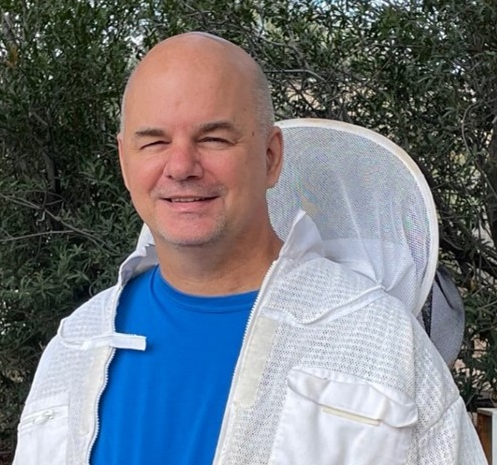
PhD, Research Entomologist
I am a Research Entomologist at the USDA-ARS Carl Hayden Bee Research Center in Tucson, Arizona. I received my BS in Natural Sciences from New College of USF and my MS and PhD in Entomology from University of Illinois with Dr. May Berenbaum. I worked with Dr. Eric Schmelz of USDA-ARS CMAVE on the basics of how plants detect attacks before joining the world of honey bees in 2006.
My research focuses on how colony stressors (poor nutrition/forage, parasites, pathogens, overwintering/seasonal stress, and chemical treatments) disrupt colony cohesion, communication, and performance, and the development of practical solutions to reduce these effects. Honey bees thrive worldwide through considerable flexibility and adaptation under a wide range of conditions. Many stressor effects impact key colony functions, such as queen maintenance, brood production, and nutrition, that are necessary for colony performance and survival. I am particularly interested in improving queen retention, overwintering bee nutrition and productivity, and Varroa mite control to promote colony health and performance. A better understanding of how bees respond to stress and how we can work within these confines is a path to improved beekeeping.
