


 Apple Podcasts

 Spotify

 YouTube

 Goodpods

 Amazon Music

 Overcast

 Castro

 PocketCasts

 Podchaser

 RadioPublic

 RSS Feed
Live from the Pacific Northwest Beekeeping Conference: Varroa, Invasives, and Winter Prep (407)
Recorded live at the Pacific Northwest Beekeeping Conference in Wenatchee, Washington, this episode brings together five experienced voices for a fast-moving discussion of some of the biggest issues facing beekeepers today. Jeff Ott moderates a panel featuring Adam Pachl, Dr. David Peck, Dr. Brandon Hopkins, Kamon Reynolds, and Fred Dunn. The conversation begins with a familiar question: after nearly 40 years of Varroa in the United States, are we actually making progress?
The panel looks at resistant stock, improved management strategies, RNAi technology, and the reality that Varroa will likely remain part of beekeeping for years to come.
The discussion then turns to invasive pests and the importance of vigilance in port states such as Washington, including Tropilaelaps and invasive hornets. Panelists emphasize that local clubs and individual beekeepers can play an important role in early detection and monitoring.
Audience questions bring practical issues to the forefront: creating brood breaks, queen caging, pheromones, warm winters, mite-treatment choices, amitraz resistance, oxalic acid, and the limitations of current Varroa monitoring methods.
The panel closes with one simple challenge: go home, look carefully at your colonies, prepare them for winter, and keep learning from the bees.
Websites from the episode and others we recommend:
- Honey Bee Health Coalition: https://honeybeehealthcoalition.org
- Project Apis m. (PAm): https://www.projectapism.org
- The National Honey Board: https://honey.com
- Honey Bee Obscura Podcast: https://honeybeeobscura.com
Copyright © 2026 by Growing Planet Media, LLC

______________

Betterbee is the presenting sponsor of Beekeeping Today Podcast. Betterbee's mission is to support every beekeeper with excellent customer service, continued education and quality equipment. From their colorful and informative catalog to their support of beekeeper educational activities, including this podcast series, Betterbee truly is Beekeepers Serving Beekeepers. See for yourself at www.betterbee.com

This episode is brought to you by Global Patties! Global offers a variety of standard and custom patties. Visit them today at http://globalpatties.com and let them know you appreciate them sponsoring this episode!
As a beekeeper, you want products that benefit you and your bees. When you choose Premier Bee Products, you choose hive components that are healthier for bees and more productive for you. Because we believe that in beekeeping, details make all the difference. Premier Bee Products: Better for bees. Better for beekeepers. Use promo code PODCAST for 10% off your next online order.

Thanks to Strong Microbials for their support of Beekeeping Today Podcast. Find out more about their line of probiotics in our Season 3, Episode 12 episode and from their website: https://www.strongmicrobials.com
HiveIQ is revolutionizing the way beekeepers manage their colonies with innovative, insulated hive systems designed for maximum colony health and efficiency. Their hives maintain stable temperatures year-round, reduce stress on the bees, and are built to last using durable, lightweight materials. Whether you're managing two hives or two hundred, HiveIQ's smart design helps your bees thrive while saving you time and effort. Learn more at HiveIQ.com.

We'd like to thank Vita Bee Health for supporting the podcast. Vita provides proven tools for controlling Varroa—from Apistan and Apiguard to the new VarroxSan extended-release oxalic acid strips—helping beekeepers keep stronger, healthier colonies.

Thanks for Northern Bee Books for their support. Northern Bee Books is the publisher of bee books available worldwide from their website or from Amazon and bookstores everywhere. They are also the publishers of The Beekeepers Quarterly and Natural Bee Husbandry.

Thanks to Bee Culture, the Magazine of American Beekeeping, for their support of Honey Bee Obscura. Available in print and digital at www.beeculture.com
_______________
We hope you enjoy this podcast and welcome your questions and comments in the show notes of this episode or: questions@beekeepingtodaypodcast.com
Thank you for listening!
Podcast music: Be Strong by Young Presidents; Epilogue by Musicalman; Faraday by BeGun; Walking in Paris by Studio Le Bus; A Fresh New Start by Pete Morse; Wedding Day by Boomer; Christmas Avenue by Immersive Music; Red Jack Blues by Daniel Hart; Bolero de la Fontero by Rimsky Music; Perfect Sky by Graceful Movement; I'm Not Running Away This Time by Max Brodie; Original guitar background instrumental by Jeff Ott.
Beekeeping Today Podcast is an audio production of Growing Planet Media, LLC
** As an Amazon Associate, we may earn a commission from qualifying purchases
Copyright © 2026 by Growing Planet Media, LLC

0:01 Welcome to Beekeeping Today podcast presented by Better Bee, your source for beekeeping news, information, and entertainment. I'm Jeff Ott. And I'm Becky Masterman. Today's episode is brought to you by the Bee Nutrition Superhuman. At Global Patties. Family operated and buzzing with passion, Global Patties crafts protein-packed patties that'll turn your hives into powerhouse production. Picture this: strong colonies, booming brood, and honey flowing like a sweet river. Super protein for your bees and they love it. Check out their buffet of patties tailor-made for your bees in your specific area. Head over to www. globalpatties.
0:42 com and give your bees the nutrition they deserve. Hey, a quick shout out to Betterbee and all of our sponsors whose support allows us to bring you this podcast each week without resorting to a fee-based subscription. We don't want that and we know you don't either. Be sure to check out all of our comments. Content on the website. There, you can read up on all of our guests, read our blog on the various aspects and observations about beekeeping, search for, download, and listen to over 300 past episodes, read episode transcripts, leave comments and feedback. on each episode and check on podcast specials from our sponsors. You can find it all at www. beekeepingtoday.
1:24 com. Welcome to Beekeeping Today Podcast. We're sitting here in the Wenatchee Convention Center. Yeah. Thank you. Yeah, it's fantastic. And it's been a fantastic weekend. Our our podcast listeners know all these guests But I'm gonna just name them off. I'm not gonna have them tell them give them their bios again because we pretty much know Adam Pachl, Dr. David Peck, Dr. Brandon Hopkins, non-Dr. Kamon Reynolds. Okay, and Fred Dunn. And you're giving out a lot of degrees.
2:06 All right, so we have we're gonna we're gonna have some fun here And and we have one microphone, so we're kind of gonna pass it around. I might direct a question to one particular speaker or not, or that you don't have to all answer the question. It's just we're just gonna have some fun here So the first question I have, it's a good segue from David's presentation just a little bit ago. So we've been talking about Varroa for nearly 40 years in the United States and we s and we're still talking about it. Are we actually making progress? Toward B and management systems that can live with Varroa. And what are we still likely treating colonies such the same way? Will we be doing the same thing 10 years from now?
2:47 So let's just kind of give a perspective on this. Adam, you're pr you're appropriately holding the mic. Why don't you go start first? So there's too many questions for me to remember, so I'll answer what I can. Just talk about mites. Yeah, talk about mites. Will we be still talking about Varroa mites in ten years? The short answer I think is unfortunately yes. The first part of your question you were asking if we're making progress. I do think we are. Obviously, I'm a little partial because I work for an arrow, but that's not the only thing out there who are never going to claim be to be the only treatment. And I really like some other treatments. I like some of the things that I'm hearing about that are coming down the pipeline from from other manufacturers. We've learned to take a try to take a preventative approach.
3:28 Over the last few years there's been a lot of research that not surprisingly shows preventative medicine is the best medicine. And however you choose to go about that, we're getting more options. There's even more on the horizon to be proactive. The reason I don't think that we'll ever stop talking about mites is because there's always going to be some sort of a sink that even if we can get rid of them in our hives, they're going to reinfest. There's going to be drift of some somehow we're we're beyond the point of no return. But we're getting a lot of really good ways to manage me to manage mites. We're getting a lot of really good ways to incorporate different management strategies so that no matter what your philosophy is as a beekeeper their options for you and we collectively can can at least make progress and hopefully make them not as much of a problem.
4:16 I'll just jump in and say on the on the breeding side of things We are definitely making progress. And I think if we stop having as our goal these bees that I am currently breeding, this queen that I'm gonna get mated out of this mating nuc. is going to produce bees that are 100% mite-proof. And instead we can let ourselves be satisfied that we have gotten a more mite-resistant bee. or a colony that requires less treatment and intervention instead of none, I think we can we can give ourselves the chance to recognize the progress we've made. One of the things I just talked about was the hygienic uh freeze-killed brood test, which Marla Spivak popularized as a as a selection method for Varroa-resistant bees. And in the initial way that she talked about it She said, you go in, you freeze the circle of brood, you put it into your hive, and then you go back 48 hours later, and then you figure out whether or not the colonies have gotten rid of all of the frozen brood in two days.
5:08 And at first, very few colonies were able to do that. A lot of colonies could not pass that pretty simple test of having two days to remove totally frozen dead pupae. But over the course of selection, very quickly, Marla herself had to come out and say, we're gonna need to use some more restrictive tests, because we very quickly had queen breeders start using this and winding up with colonies that could all remove 100% of the frozen brood in 48 hours. So now we do a 24-hour freeze-kill test because we've already started to shape the bee population. We've shaped those behaviors. And so if you look at a lot of these mite resistance traits, we find no, it's not fixed in the population. No, 100% of the bees aren't 100% mite-proof But we do have bees that lead to at least partially reduced mite reproductive rates compared to what we probably would have been dealing with in 1987 when the mites first arrived.
5:59 Brendan, do you have a perspective? No. Okay. Kamen, do you have a perspective? Yes, but um we can move on to something else because I think the other two guys did pretty good. And Fred, you know, I you know Just ignore him. No, go ahead, Fred. No, what you said is good. Well thank you. With that test that Dr. Peck was talking about That's for hygienic behavior, correct? So we don't necessarily know that that's a response to mites. Correct. Okay. Just want to clarify that Certainly. Yes, it's an open discussion here. Well no, I don't you know I don't want to put Adam on the spot, you know, but the RNAi product that is now in a roa, you know, the original idea for that was develop I mean the idea for it its original entry into beekeeping was a product against viruses.
6:51 So it was an Israeli company product against Israeli acute paralysis virus It was the first time I ever saw it and it was in a bee meeting at an ABF meeting. They had a booth and all that stuff. I don't know how long ago, do you know It's well long time ago. Right? And so the they have targets, the same system that works against Varroa. Um four viruses already and already known. So I was gonna that a long w way of saying is I'd like to hear if Adam if there's any like thought or discussion of adding antiviral RNAi targets to the Norroa pouch? So that's a great question. Um those are conversations we're having.
7:33 Part I and I've talked with some beekeepers about this already the last couple days. Part of The challenge is we're still a small company, so we need to make sure we don't bite off more than we can chew. We don't want to make a bunch of really expensive solutions that no one's interested in because of the cost. I mean it's it's the reality. I know where we are. Um so we one of the things that we're talking about before we dive into this is which targets, which pathogens or viruses do we target? Because we can put more than one in a product the way it the way we do it. What will be the most cost effective way to give beekeepers what they're looking for that will be beneficial? There's a lot of prep work, a lot of things we need to talk about and make sure we're going about them the best possible way before we just jump into this and start devoting a lot of time and money and research into it.
8:21 Things that as a small company can be hard to find. But yes, that is a conversation that's ongoing and and something that I I really hope we're going to address in the not so distant future. For more than 45 years, Betterbee has proudly supported beekeepers by offering high-quality, innovative products, providing outstanding customer Service, many of our staff are beekeepers themselves, and sharing education to help beekeepers succeed. Based in Greenwich, New York, Betterbee serves beekeepers all across the United States. Whether you're just getting started or a seasoned pro, Betterbee has the products and experience to help you and your bees succeed.
9:09 Visit betterbee. com or call 188. Eight hundred-six three two three three seven nine. Betterbee your partners in Betterbeekeeping. We'd like to thank Vita Bee Health for supporting this podcast. Vita provides proven tools for controlling Varroa, Apistan, and Apiguard to the new VarroxSan extended release oxalic acid strips, helping beekeepers keep stronger. healthier colonies. Switching gears for Washington beekeepers. So Washington on the West Coast is a gateway to the rest of the world through our shipping ports.
9:51 It's an entry point for many diseases. A couple years ago we dealt with a giant Asian Hornet or giant m uh giant hornet. And then yeah, it was close. I uh butchered it. No, East northern giant hornet, I think is the Northern This is why scientists speak in Latin names, by the way. Vespa Mandarinian. Vespa Mandarinian. Oh, this is why nobody else speaks in Latin. Lots of edits in this podcast episode. We have a lot of different opportunities. We have the yellow-legged hornet in the southeast. We have the threat of Tropilaelaps We had the display or the possible uh in Vancouver, Washington, the yellow-legged hornet kind of showed up uh temporarily.
10:39 And and so what can be keepers do in the state To monitor or watch for these introductions and how do you see that impacting RB keeping in the next five years And and this is I think this would be good for everybody because everybody's having to deal with a yellow-legged hornet as well and must be thinking about this. My background is apiary inspection, and so that's something that we talked about a lot was these invasive pests, things that are going to be detrimental to the industry. Because Washington doesn't have an APA program, I would really lean in to to Brandon here and their program. He I can't tell if you're nodding or shaking.
11:20 I'm agreeing we don't have one and neither does Oregon. Yeah. Try and find local resources that you're not on your own, first off. Because we can accomplish a lot more together. And just be diligent. If you see something that looks off, get a hold of Brandon or someone at Washington State. And if they can't handle it, they'll at least have resources or cut connections to help figure out whatever needs to be done. I don't know if it's a question or comment from the audience here. WSU does participate in collecting 24 samples every year for the Aethus National Honey Survey. And all states participate in that, or more or less. So if you're a beekeeper, uh Bree usually sends that email out. We are always looking for beekeeper participants.
12:03 And if you are willing to do longitudinal monitoring where we come and collect twice. Which means they will also test the pesticides in those hive residues. But there is like a very clear-cut protocol. Mostly it's on us, but you need to have at least eight hives or more. to be eligible but that's one thing that not just Washington but other states could also participate more keeping track of uh what's going on in the colony they also look for Tropilaelaps Yeah. No, that's a great point. And that there is that program available in the uh states that have apiculture inspection programs are great, but I think that that's gonna be falling short.
12:45 I mean, like you said, I mean it's 24 or 28 samples across the entire state of Washington. It's not a very big sample size of the whole total pool, right? And how many how many colonies can an apiary inspector like look through and it's dependent on being called out there? So that's why I mean I think it's important I mean you guys get to talk to all your club members and educating folks, making sure people aren't buying queens illegally from other countries and bringing that stuff in. Um I think working with and encouraging and educating like the people that manage ports or legislatures and try to get like programs in place to try to prevent this these things from ever coming in, whatever it is. Um and then supporting the you know they You know, I don't know of another successful program in which the state was successfully eradicated an invasive pest like they were with the northern giant hornet.
13:37 And I'm not saying it's all money, but the federal government immediately gave them twenty million or fifty million dollars to the state to eradicate that thing, and they were successful. So you know, like that kind of money and that kinda like pressure. It's probably because they named it the murder hornet and got great press, but still so so when the yellow leg hornet came in they should have gave it a better name. You know so now I'm gonna hand it to the guys expert on marketing. So that's my lead into marketing. You know, it's all about marketing. Well thank you, Brandon. So all jokes aside, you know, the let yellow-legged hornet just sounds like a a dance group more than it sounds like a threat. And also there's habitat differences.
14:17 Uh Georgia is a perfect habitat for a hornet. We're the further north it's a shorter season and also the difference between those two hornets are quite extreme and And so uh but also infrastructure, preparations, uh it's difficult. I mean these things are really complicated and also really good at what they do, just like uh varroa mines are and so Uh having the infrastructure in place is difficult because where we do have state apiarists, like in Tennessee, they're overtaxed. They they can't even begin to keep up with the basic stuff that they have Much less be really diligent about port security. Now we don't really have so much of a threat in Tennessee, but I think the best thing that we can do is support what is there and then maybe go beyond as beekeepers.
15:05 I think that we sometimes are just expecting the researchers or the state organizations to just do all the heavy lifting I think sometimes we need to look at ourselves and go, what can we do to fill in those gaps? And so my recommendation to anyone who's in Washington, Oregon, California, anywhere that has a port. is is your bee club that's close to that, any of the beekeepers that you know that are close to that monitoring. Is there any sentinel uh things going on? And if there already is, maybe help them because there's always a lot of work and usually there's only one or two people doing it. Maybe it's just rotating out and helping them monitor those sentinel hives. Or maybe if you're close or you know somebody who's close, make them aware.
15:45 and and as a club work together and then communicate with the state powers that be, whether it's uh you know Brandon Hopefully Priya more likely. And and then and then you can do that. But these things are very good at what they do. And when honey bees came over, they just blew across the country because They didn't really have a lot of stressors. Now things have followed. And really, I want to just talk real fast about the first question where it was about Will we ever stop talking about Varroa? Well, the American chestnut tree was the dominant tree species, especially in my region, the photos of these giant trees and and what that what that changed when we lost those because of all the chestnuts and the dynamics that they had on the ecosystem, the mammal population, the bird population, the insect population, everything was impacted when we lost those, they're still talking about American chestnut trees and they are technically uh not not completely extinct.
16:41 They still have some, but they are not but a shadow of what they used to be and functionally extinct is what I'd like to say. And for honey bees We also need to be diligent and be realistic about it that there could be something that comes and just continues to add one more burden, one more stress. And part of it is because, of course, we import things from all over the world. I don't think you see stuff online, I don't think there's any evil agendas. Things just happen. And A hornet nest gets on a shipping container, goes to Savannah, Georgia, next thing you know, flies off. The first person that reported it was a beekeeper at a club and let the state know. And And they threw what little resources they had.
17:23 I think it was uh it just wasn't enough and it wasn't fast enough. And I'm not blaming anybody because it's these are very tenacious species. Um however Uh I think beekeepers could definitely fill in a lot of gaps and and we should fill those gaps. I would also add, I know the question was addressed to Washington, but because this is going to be a podcast episode That's not exclusive to coastal states. You know, I live along the Canadian border and if something were to get into Canada or on the south side on into Mexico and fly under the radar, it's I mean these are living creatures. They don't care about our borders. So anywhere that you live along a border, or really anywhere in the country because of our migratory industry We just need everyone to really be vigilant and and and kind of listen to and take to heart everything that we just said.
18:14 All right, let's open it up to the audience. So you're gonna have to let me I saw a hand over here in the blue shirt real quick and then Uh we'll take these questions from the audience and just say yes your name and where you're from and then you can ask your question Kathy Burns, uh Tillamook, Oregon, the Oregon Coast. Um, I want to tell you I I appreciated years ago finding you and I thank you for all you've done. Um So I love the brood break. You're talking about giving that you'll have a brood break with the queens with the queen. I years ago uh bought this cage that were popular, you stick your frame in there with the queen on it.
19:00 Put it back in the hive and the rest and um we give the hive a queen quake break because she's in this little cage doing an artificial brew break It didn't work. They instantly just decided to go make their own queen again. So what are what are your ideas when you were talking about a brood break for the hive that we can oxidate acid after? That's such a great question and my experience has been the same as yours. Whenever I have caged queens, um I haven't been very successful with them not wanting to raise a different queen. I think a lot of it has to do with the time of the year. They have certain expectations for the queen at certain times of the year versus others when they're expecting a queen to shell it out and then all of a sudden she's not well she's not fulfilling her role.
19:46 We have all this nectar and pollen coming in, she should be performing. And this is really a question for someone who's an expert at queen caging I am not, but when I have tried it, I haven't had very good success at a high level with that. And so I've I've stopped uh trying to cage queens I know in certain countries like Hungary, it is very normal for everyone to cage queens and to do that. And some of them are actually just replacing their queens each year as well. They raise them. Uh I have been told from people in Hungary that over 80% of the beekeepers only use oxalic acid vapor with one brew break a year And so uh obviously that's less treatment, that's less expense, it's but it also is being able to find the queen or replacing the queen.
20:30 So m the way I deal with it is I always want to make splits, just like in my talk, I I think it's important to be splitting for preventing losses, insurance colonies, and also for profitability and or at least breaking even with our hobby, which um is uh tricky enough to do. So when we make these splits, oftentimes the queen remains in the original colony. I'm going to create this split and it will be queenless for I'll come back on the seventh day. And on the seventh day we will cut down every queen cell, so that's created quite a significant part of the brood break. And then I can either install a queen that I've purchased from a company or a queen cell.
21:12 And there's going to be a lot more of a break in capped brood because even when that queen emerges from that cage And it's going to take a day or two before she really starts beginning to try to lay. And then it'll take a little bit longer before she really starts getting with it. And it takes nine days before her brood is capped. And so if we time it to where we're doing an oxalic acid vapor about 10 days after the queen is released Usually there's no capped brood at that point and all of the brood that we all have put into that colony because of that original seven days where we didn't put the queen in, then we put the queen in and waited ten more days Now we virtually have zero capped brood, we can do an oxalic acid vaporization, and and we're just fine typically I thought it said, I don't want any more hives.
22:02 I got too many. Well, you know, give give 'em to um uh someone you're trying to seduce to the dark side of beekeeping or something like that. So other than that, that's kind of what you got. Yeah, so You can um you can just go ahead and remove your queen. Um you could um take her and make a split with her and stick her over in here and and only shake bees and make a shook swarm and then combine her back later. The problem is whenever you do this kind of stuff, especially with old queens, their their pheromone profile and all this is already starting to go down anyways. And so these events that we create could be what triggers them to be superseded anyways.
22:42 And they may have been four months from it and you just sped it up by three or four months. So that's the trick with this. And there are people much more qualified to talk on this subject. So I know Brandon was wanting the mic. So Brandon. Thanks. Yeah. Well and I and you didn't ask me, but part of getting a PhD is giving unsolicited advice. So I just want no, I just what kind of cage did you use? I think it was Mann Lake. And they still re-queened her, huh? That's amazing. Yeah, I mean the type of cage you use does make a big difference. I mean we've done a a lot of this in previous years and I saw them using it in a big way in Italy. Like every colony had the cage in there, the I can't remember what they call it.
23:26 Yeah, but it they had they had it It's the Italian version of it. But that scalvini gauge is nice because they so they're on the coma. That's the one where they can continue to lay. Right. Right? But they can't build it out. So that but the fact that you put her on a comb ruins the whole thing I was gonna say. So but the main thing I want to say is I wouldn't give up on it. Maybe try a different Cajun system and like what he said is you can go back in s ten to twelve days later and scratch any queen cells that they're trying to supersede her and then they don't then now it's too late and they're out of options. So don't give up on it 'cause it works really well if you can get it to work. People have been very, very successful. I I will just I don't I don't like to uh to act like a salesman for the company that happens to pay me, but I I will say that Betterbee sells some queen caging uh options and we are actively in the process of launching two more and all of them are based on things that have been successful in European countries where people have been perfecting this for a very long time.
24:21 So there are a lot of different options and in this case the Americans are woefully behind. Yeah they are we'd have neither the the material nor the expertise. And so we are We are happily learning from European beekeepers that have had more success. And I think as more products are available, more education is available, more people try things. you'll find something that works in your climate at the time of year with the breed of bees you were using. And it might just have been that that cage wasn't the right cage for what you were asking that colony to do at that time. Yeah. All right, you have a question? Yes. And your name and your where you're from and then your question? I'm Claire Moody and I'm with her from Tillamook, Oregon. Um I've noticed that a lot of my queens don't have a retinue around them quite often And I began to think that means I should keep an eye on that colony because there's a problem.
25:07 And I didn't know if that was true or not true. How much smoke do you use when you inspect? That my I don't even if I didn't have smoke. Yeah, so alright, so so the the concern, right, the the supposition is that because your queen doesn't have a robust retinue, that must mean that there's something wrong with her pheromone profile. She's not quite as attractive to the daughters that are supposed to be taking care of her. But the problem is the pheromones are both contact pheromones and volatile pheromones. So touching the queen is going to give them some of these chemical cues, but just being near her Some of them will become airborne and they'll say, oh look, mom 's over here. Let's follow her around on the comb. So if you're using a substantial amount of smoke, there would be a risk that you would you would obstruct their pheromone sensitivity.
25:49 And so bees that might very well be following that queen around constantly during your inspection, once you've puffed some smoke into the entrance, might scatter and start running around. And we do know that colonies that are inspected, especially if they're if they're heavily manipulated if a lot of smoke is used, show signs of disruption, you know, more than a day after that inspection has taken place. So it's not to say that every time you inspect your colony, the whole next 48 hours is shot, but we do know that colonies can be detectably perturbed or altered in some way for a period of time after you've done your inspections. Holly Lepkin, Marrowstone Island. I'm reading about the El Nino that's coming this year and as a backyard beekeeper I want to know what I should be expecting might be different.
26:35 in terms of clustering and survivability because of the weather change. But um yeah ever you know Washington's so diverse, right? So it's very difficult. I was gonna let you answer but then I couldn't help myself as soon as I got the microphone. I don't know. Warm they don't cluster and they're cycle of food and now. Yep. Yeah, so you may have to like take these warm day opportunities to add more f food, right? Because a lot of people think that like, oh, cold weather means they're gonna consume more food, but it it's oftentimes the opposite.
27:18 Like they do very well. Like I wish right now it was forty degrees out and I my bees were done for the season. This eighty degree weather and keep flying is a nightmare for bees. Right? Because if they fly they die. So you're just like losing bees and you probably notice there's not a lot of brood in there, right? So very little bo brood to replace all these dying bees. So you may just have to Go in and feed them. When it's warm, you may have to reduce like their space if they're reduced down to five frames of bees, you know, take a box off and let them overwinter in a single box. Those kinds of things can help. Beekeeping is demanding work. The last thing you need is equipment that can't keep up.
27:58 That's why Premier Bee Products builds every frame and hive body in our South Dakota factories with one goal in mind. Reliability when it matters most. From our beefy pure frames to our natural profile high bodies with rough interiors, we design for long life in the field and in the colony. Because we believe that in beekeeping, Details make all the difference. Premier Bead Products better for bees, better for beekeepers. Visit online at PremierBeeProducts. com or call us today. Use promo code PODCAST for 10% off your network. Next online order.
28:42 Beekeepers, if you're looking for a smarter way to support colony health, take a look at Bee Bites from strong microbials. Bee Bites are a new protein patty made with spirulina, chlorella, and targeted probiotics, designed to support nutrition without creating new problems in the hive. With 15% protein, Bee Bites are unique because they do not attract small hive beetles. A big deal if you've ever battled infestations during feeding. Strong Microbials has been supporting beekeepers and farmers since 2012, developing high-quality commercial probiotics and nutritional supplements you can trust. Learn more about Bee Bites and their full line of bee nutrition at strongmicrobials.
29:23 com. Patty Schamholzer from Leavenworth. So my question was about the brood break. If you put it in a cage, the queen in a cage, or you take the queen out for a small period of time, should be used as then did your pair moment. in the hive to keep them from growing brood. From growing a new week. Creating a new weed. Okay, that's an interesting question. And by the way, I want to reinforce that the best cages for isolating your queen, for queen introduction or queen separation uh come from better be let's move on oh god uh endorsement anyway uh the th that question about the queen mandibular pheromone aka temp queen sold by better bee All right.
30:13 Um when you put that into a hive, it was originally thought to also act as if a queen were present and therefore they wouldn't produce a replacement queen. That turned out not to be the case. They actually have produced replacement queens. What they didn't do was have laying workers. So it successfully suppressed laying workers activating their ovaries. Am I right, Dr. Peck? It does appear to delay the beginning of the construction of the emergency replacement queen cells. So you can buy yourself a little bit of time. When I take an observation hive out and I go and you know speak to a school and then I bring the queen back and I put her back into the hive. I might be able to buy myself twenty-four hours because it's there's just enough of that sense of a queen around that they don't totally commit to the construction of the new cells.
30:59 But yeah, if you if you left Queen mandibular pheromone strips into a colony for a month, they're eventually going to figure out that s things are not going the way they should. A major part of that is not even so much the queen mandibular pheromone itself, it's the brood pheromones. The the queen is not judged and evaluated so much by her own physical traits, smells, pheromones, things like that. A lot of bees don't interact with the queen. The retinue or the ones gathered around her. It's the results of the work she's supposed to do. And so if that work is brood, and if the bees don't think the right amount of brood and the right health of brood is present in that hive, whether the queen's involved or not. . Imagine yourself to be a bunch of bees living in a tree, you know, out in a forest.
31:39 You don't have the capacity to go get an antibiotic. You don't have the capacity to go buy a mitocide. You don't have the ability to do very much other than say Well let's try killing mom and replacing her and see what happens. And so often bees will will pull that great big queen replacement lever Because it it gives them an opportunity to engineer a brood break, essentially. It gives them an opportunity to refresh the the queen pop the you know the the uh genetic information inside of that colony. Maybe she goes and mates with a drone that has some great trait that's gonna help them fight the fungus that they're in the middle of battling. So requeening is a common response to, you know, any of a number of different, you know uh perturbations to the uh health of the colony.
32:22 And I will say, because it it just the truth is the truth, uh you know, Bob Benny was the first one to bring it to my attention, but I was having issues with Uh queen's going through my excluders at too high of a rate. Sometimes you get some uh requeening and you'll have a virgin queen that comes back and you know she still hasn't blown up and she'll go right through an excluder, even a properly sized one Uh but y I was having a lot of issues with across a few hundred colonies of qu Queens getting through my excluders. And what Bob found out is that pretty much besides Betterbee no one is to our knowledge, making excluders the proper size. So um it's important that whenever we're getting Whether it's a queen cage for isolation, that it's the proper size, whether it's the queen excluder, because uh what's the point of having a queen excluder if the queen's just going right through it or it's not doing its job?
33:13 And so Unfortunately, a lot of the stuff that comes from China specifically just doesn't have the quality control that it needs to. So this morning Kamon mentioned a common practice of equalizing colonies strength that we can group between colonies. In the afternoon they mentioned that one of the practices of softy beekeeping is put the breeding between points. Give me that. We've been fighting since since I saw him in the hotel. Uh the the important thing to keep in mind is that when we you're talking about Varroa transmission from colony to colony, yes, you can move mites by moving capped or uncapped brood. From colony A to colony B.
33:53 But there's 75 different ways that those mites can move from colony A to colony B, and if they're three inches away from each other you know, there's not really much point in fretting about whether or not you're moving mites from point A to point B. You've got to be aware if you're saying, hey, this colony's been growing like gangbusters. They've got all this cap brood, they're so big and strong. I'm gonna take all that brood and move it to all my other colonies. You're gonna feel like a real heel if you don't do an alcohol wash on that colony and confirm that they don't have lots and lots of brood, but also lots and lots of parasites, which certainly can happen. So you've gotta be prepared to to do that evaluation before you you So first of all, he's just a doctor.
34:38 I actually have kept bees for a living, so there's there's a difference in skill sets here. And oh sh there there's another shot across the bow right there, but all jokes aside I know that David uh would agree with me that there's certain cases where it is good to equalize and there's or you can use that manipulation tool, and it has been used for a while. All right, we have a question here. Dean McConnell um from Castle Rock, Washington. There's two different kinds of Frame cages and one would have a much different result if you're isolating your queen on it. The other question that I wanted to ask is wouldn't it be best to just have Drawn comb that's pretty much empty that you put in there so the queen can continue to lay and get the brood pheromone continuing on in the in the colony.
35:28 So the the frame containing cages that are available. The the one that you want is the one that has queen excluder material on the outside. worker bees are coming and going, the queens are kept inside. There is another cage that can be used to introduce queens. Which doesn't allow the passage of bees. That is not something you'd want to leave your queen cooped up in for three weeks. But yes, the principle of the the frame cages is that the queen has the opportunity to continue laying eggs, therefore you continue to have brood produced in the colony, it's just produced only in the inside of the cage. The the European practice that la allows for good uh biotechnical varroa control by doing that generally involves removing the queen and the frame once it's all capped, letting her go off to start repopulating the colony while you do your oxalic acid treatment or something like that.
36:16 and then taking that colony of that frame of capped bees and either freezing it or melting it down, destroying them, sacrificing the brood. Their function was simply to allow there to continue to be brood pheromone in the colony during that period when the queen was otherwise not producing you know brood outside of the cage. Colleen from Ellensburg, Washington, um came in US said that you would not use MR2 And I know that I have heard that the bees have become or the mites have become resistant to apapar. And why would you not use apapar too? And the second question is what is more uh effective in oxalic acid, dribble, or vapor alone?
36:56 So great, great questions and thank you for them. And some of them I'm gonna have to I'm gonna have to lean on a couple of these guys uh to give uh a more accurate answer. So my experience with Apivar two point oh was very poor. There's been a handful of people that I personally know that have had uh some good results with it. Not necessarily They were telling me they just got amazing knockback, but they it just didn't disrupt their bees. But mine was causing the bees to abscond. I I lost three-quarters of the test group within ten days. We don't even fully understand yet what's going on. Dr. Priya and several other researchers around the country are doing tests and we're hoping to get answers in the future. Apivar 1 or the original Uh it was really successful for a while and then it wasn't working.
37:40 And I know people who are still using it, they're having good success. So is it a j is it uh the mites? Is it product, is it timing? I don't really know. I I really lean towards more organics anyways. I only used it for a few years primarily when I was driving a truck. And so I didn't have time to really do things at a as high level as I wanted to. I'm really trying to just focus on organic stuff at this point And so I I would like for Brandon and uh David to be able to talk about uh resistance, maybe just slightly about it and their opinions on it. But as far as the oxalic acid vapor and dribble If there's no brood in there, they both do a phenomenal job of thrashing the mites.
38:23 And so whichever one is more affordable for you. Even and it's not always about a full brood break. You know, that's ideal, but if you can get 80%, 70% of a brood break, and you can use one of those dribble, um whether it's their RTU or if you're using a vaporizer, you'll still get very good results with that and definitely take advantage of it. But we have done just trials at home, definitely not super scientific But we've had great results with both. M my personal experience is that we get longer kill with the the dribble, but it's I think it's because it's tacky. And I have talked to researchers who are still digging into it, but it seems to be that the oxalic acid vapor degrades fairly quickly on the bee's exoskeleton, whereas the oxalic acid dribble again is tacky and illiquid and and lingers around for a little while longer.
39:16 So if I had to pick between the two in the same circ circumstance I would totally go dribble on that. Um so about the amitraz, Apivar, original, all that stuff, uh Brandon and David. Well I yeah, I'd be interested in hear what you have to say. I just don't want folks to give up on this Apivar two point oh. So maybe there is something that needs to be refined in it because there are stories of people having difficulties with it. But it's you know w when I started Beekeeper Beekeeper said we need more tools to control Varroa. We need more tools to control Varroa. And so if we And we still do, right? And so I we we don't I don't want folks to be thinking like, Oh, I'm never gonna try that because I heard someone say they had trouble with it, right?
39:58 So Um not not that you're gonna ruin it for everyone, but um but I I what we want is to have these in the toolbox so we can come back to them, right? So you like so that we're not just like I only use oxalic acid. I know that's not what you're saying, but like you need the it's the best thing you can do is learn how to use like three or four things so that you can rotate through these compounds. And so Um, you know, maybe give these guys some time to figure out what's going on and get like what's really happening and maybe they refine the product a little or something, but and then come back to it to it, you know, in your next rotation of treatments or something like that. Um before David real fast. Because you know, David really won't add much to that.
40:38 But what uh but what I I will say is I agree with that. I think that we shouldn't throw the baby out with the bathwater But what I would like to say, um, based off of my experience with three new products this year, don't be the guinea pig. I think it it's good to probably if if I was recommending something to a beekeeper that only has a few hives of bees don't be the guinea pig on a new product. This is complicated stuff and weather conditions and and who knows what else and and then there's the human element which means chaos is going to happen at some point and so maybe don't be the guinea pig, but someone like me, I I lost twelve colonies from it, but I can afford to lose twelve colonies from it. A commercial beekeeper can afford to do a trial and lose uh some stuff from it and of course there's some research colonies that are being again done by Priya and many many others that are dedicated towards that purpose.
41:28 I think maybe we should give these things a a year often times, um if you especially if you're a small scale. But I don't think we should write them off. David, contribute a little bit if you can. Well much has already been said. The the one thing that I do want to just make crystal clear here is that it there's an important distinction to be drawn between the concern about mites having developed resistance to amitraz, which is the active ingredient in apivar 1. 0 and apovar 2. 0 exact same active ingredient, exact same molecule. If a mite's resistant to it over here, it's gonna be resistant to it over there, by and large. That's one concern. And and if you have mites that are resistant to this chemical, then using that chemical is probably not the best way to kill your mites.
42:10 The separate concern, this concern about the Apivar 2. 0 potentially causing absconding or B death or colony loss, that's a separate matter and you know as Cain alluded to, there is now this large-scale experimental study. Better bees hives are involved. I have to go on Wednesday and inspect a bunch of colonies and count up the brood. where we've treated them with Apivar original and Apivar 2. 0 and are trying to replicate some of these concerns in different climates, different regions, different circumstances. And then, you know, also find places where it works perfectly well. And and so as those data start to come out, this is the valuable interplay between beekeepers and researchers. That we are able to do the research and then immediately tell you, hey I was up in upstate New York, you're here in the Pacific Northwest, absolutely no problems, no concerns, nothing to report, at least based on the research we did.
42:58 If you're in southern Florida and you start to have problems similar to what Cayman had in the summer, okay, now we've started to find a pattern. Now we've started to learn something. So I I think that it's a valuable tool. I think all of these tools have their place. But if you if you have something and and you've got the choice between something that you know works in your hives or has worked for you before and something brand new, yeah, it's it's not a half-bad idea to let your neighbor be the one that does the experiment And uh if their bees all die, you say, all right, I'll stick with what I had. And if their bees do better than yours, then all right, well maybe I'll try that next year. Steve, Wentfall, Marlin, Washington. Um talk about testing. Um Everybody's talking about habitat bees, um alcohol or soap suds or whatever.
43:47 But all we're able to look at is the bees in dispersal phase. We can't look at other than with the fork and with the Harbo method. So I I only treat with on gallery acid vapor. And so I count after three days how many dead mites and I say this time of year there's about 30,000 bees so I can get my percentage. Um , Mr. Head, you know. Hey, I don't brought me out there. But why why do people continue to kill bees? When something like oxalic acid vapor will get you a little bit more accurate, it every accurate because we all know most of the mice are going to be out of the caps at any point.
44:32 So, you know, if if you can get a brute break of some kind , you know, even that I just keep treating The question is, what information do you need? Right? We're never going to get a perfect measure of the mites in a colony unless you kill every single bee in the colony, open every single cell and then get a whole bunch of graduate students to sit there and quietly sift through the detritus and count up mites, which has been done. And I 'm thankfully I was never a grad student who had to do that. Uh I might have quit. So um if you don't need that level of of precision, the question is what do you need to know? And in your case, whether it's doing an alcohol wash And knowing that a lot of the mites are under the caps, but at least getting some information.
45:15 If it's doing a a sticky board drop or a screen bottom board drop after a mite treatment. That's still going to give you information. The question is, does it give you enough information that it's going to allow you to do one of two things? Either say, yes, I do need to treat this colony again Or to say, no, this colony actually doesn't have enough mites to warrant me putting them through an additional chemical stressor to cause me to go buy yet more mitocide to treat them. So as long as you're getting sufficient information to do that, the specific mechanism through which you do the evaluation, no, I uh you know that's that's up to you. Far better that you have some imperfect information than absolutely none because the people who contact any of us and say, well, my bees died this winter and I don't know why.
45:58 Well, what what were your mite counts? And you say, I have no idea, I haven't measured mites in the last ten years. Okay, then I can't really offer a good hypothesis for what happened. So So follow up, butJeff Walked away with the mic so I will Try to talk loud and everybody here. So doDewey Caron says that the mites are not evenly distributed throughout the hive. So how do you how do you possibly think that you have an accurate count uh and I asked Randy Oliver this and he says well I get a consistent count because I always look at the same frame. But consistent is consistently wrong. Unless you know, you know, if if if you know where the drug the drug route is, you're gonna get an eye count.
46:42 If you just look under Work you can get a lower account. How can you possibly get an accurate count? Yeah. I think this is a you know I I we could have probably spent this whole time talking about this one subject because I think this is very interesting. I do I think it's really interesting. I think it's an area where I think researchers have failed the B industry by relying on this for way too long because it is very inaccurate. And there's some good publications where they compare this. the accuracy of this alcohol wash to the accuracy of sticky cards over long periods of time. And that alcohol wash is like plus or minus like I don't know, it's let's say like the average is three mites per hundred bees, like plus or minus like five mites per hundred bees. It's hot it's wildly inaccurate. Like from the same calling the same day, you can get wildly different numbers.
47:24 The problem isn't I think you said it is that it's what we it's the best we have, unfortunately, and it's what we can compare to what other people are doing. The one thing I do want the other point I wanted to make and then I'll pass it on, but is that The problem I have with the idea of treating to measure mites is that there's so many examples in other areas where like especially if you're treating with the same thing is that I know there's like no you know, measured resistance to oxalic acid. But that's what they say all the time and they're like, oh we've we there's no resistance to amitraz and there was no resistance to coumaphos before that and there was no resistance to flu until there was. And I hope it never happens But using the same one over and over again is a good way to get there.
48:05 Um the other thing is that the what then happens is that I could have said the same thing with like I could be modern with a sticky card and treat with a tactic towel and then I see like oh a big knockdown, big knockdown. And then ten years later if that's what I'm doing, I don't see any mites. Oh they're clean. Put a tactic down. I don't see any mites. They must be clean It's not that they're clean, it's that they're not dying from the thing and then you have like this massive loss, right? So just like in general, sort of the I don't know, just a cautionary statement, maybe more than anything Well again, you know, everyone monitoring, getting their own systems, finding what works, and you know, trying not to develop develop any resistance. But at scale, you know, someone just like me I'm not even that big uh with how many bees that I have.
48:48 I'm not that big in multiple ways by the way, if you haven't noticed. 200 hives is is a lot of sticky boards. And you know, uh these big commercial guys definitely can't. So I think that's why the alcohol wash soap wash has been standardized. It's partially because of that reason um as well and you're right. We we did a lot of testing this year with sticky boards, um treating every day for 15 days with a blast of formic acid. And if we count 200 mites dropping over here this day, then there'd be hardly nothing on that side as the Queen's brood emerged out across the frame. So theoretically I would think that depending on the frame that you take like Dr. Brandon, Dr. Pe Peck, I I I David, can't call you doctor.
49:31 You you're gonna it just depends on which frame you're taking from and when it emerged and how much infestation was there. So There's no perfect way of doing this. And this is why diligence is important. And learning from me in Tennessee can teach you some of the fundamentals, but it's not going to teach you how to keep bee successful in Washington. You've you've got to figure out systems that work for you. And Washington has several different regions. And so that's why it's so important to not just rely on these uh educators online. YouTube 's a dangerous place, man Um all right, Jeff, next question. Yeah. One other thing real quick is just oh sorry. Is it keep an eye out for the stuff that is coming out of what Brie is doing and some of these so like you might have seen too that And you guys too, but is the using of like the wax strips to look at mites in brood rather than these phoretic mites as a test.
50:25 Again, you're sacrificing some stuff. It's like the uncapping, right? But you Peel it back, you whack it, you open up, look in the brood and see what the mites are. So hopefully there are some better monitoring methods coming up other than the alcohol wash. All right, we're coming right up to the end I'm gonna, this is gonna be a quick answer question for all the panelists here. Lightning round. Lightning round. Because we're at the end of time. Give us one thing positive that beekeepers can do when they go home this weekend to help their bees and to be successful because I do not want to end on Varroa Yeah, I would just I don't want to give him that time. So uh w start down there with Fred and lightning round.
51:07 A positive thing you can do this weekend to go home and look at your But I don't have anything to do with you Nothing to do with Varroa. Well my I don't center around Varroa anyway, so a positive thing. I'm I'm in a different climate completely, but in its backyard small scale Sterub bees forever environment. But uh the positive thing I guess we can just check them out for their current status as far as food and resources and whether or not they're ready for winter. Uh. Make sure your entrances are reduced 'cause the biggest threat for the bees right now is gonna be other bees. They're looking to rob 'em out. We're focused on yellow jackets and things like that. They're chump changed when it comes to one colony robbing another.
51:47 And figure out who the robbers are and close them up. So that's a positive thing, and it's positive because we hit them with powdered sugar. The robbing, the one that's being robbed, get a big scoop of powdered sugar, throw it on them So much fun. They fly away. We get to see who the robbers are. We find that colony. There's one. That's who gets locked up. Not the ones being robbed. The ones that are robbing. They have all they need. That's my positive thing, and then sit and enjoy your bees and look forward to a great winter. And by the way, the really cold weather, consistently cold, terrible, worst winters ever in northwest Pennsylvania in the snow belt. we get the best survival and the most resources left over in spring.
52:28 These warmups that we're talking about, that warm-up midwinter when there's no other resources around, and if you haven't taken the time to provide some kind of emergency resource for your bees in preparation for that, Hopefully have it not need it. You're gonna find out things are gonna be great. It's gonna be perfect. This is gonna be the best year you have ever had with your bees. But not all of it. All jokes aside, uh management is is helpful. And there but the reason we talk about Varroa so much is because that's That's the big bad guy, right? And if you can typically take care of that, a lot of the other things are much easier compared to that.
53:10 And then it's on to you know, honey production and all that kind of stuff. This is an important time of the year prepping your colonies. Maybe r some of them need to be reduced. Uh we overwinter singles in our area as long as they have tons of food in that single If that's thermodynamically helpful for them, we're gonna take some space. A lot of my colonies are triple deeps right now. I don't overwinter triple deeps, so I've got to go in there and take some of that space and make sure that top box, if I have two deep boxes, the food is up in that top box really good and especially for those of you with a long winter. That's those stores need to be in a a good position. So they go up there and they have plenty of food and resources. You can make sugar bricks and all kinds of stuff and prep that for emergency feed. We don't use a lot of that because In our area, once our fall flow is done, if we have a fall flow, we are going to feed feed, get them up to, I need at least 60 pounds minimum to overwinter with wooden boxes And so we're just we're eyeing the colonies, we're condensing poor colonies sometimes.
54:06 Some of them didn't build up enough, re-queened late, messed things up. We're going to condense those down with the other ones, take our losses now, then later in winter. And so, yeah. But it don't forget too, there's a lot of great things about beekeeping. There's a lot of other exciting things besides talking about Varroa mites, our favorite topic. But yes, get out there, get in your bees, learn from them. This is a journey. This is 20-something years for me. I'm I've learned a lot from you guys here and uh a little bit from Brandon and Fred and Adam. I think the one positive thing would be to go find some beekeeper you know from your club or your neighborhood and call them or email them, knock on their door and tell them what a great conference you just went to and encourage them to come to the conference next year.
54:54 So that would be a positive thing. I think it's spreading the word. Tell us something interesting you learned. Right. Emphasize that there's a real value to it. It's not just fun. It's also, you know, it's gonna make you a better beekeeper and you want them to be better beekeepers because heck, they're your neighbors, and so if their bees get sick, your bees are gonna get sick. All right, one quick, easy, cheap, positive thing that they can do on their way home. All right. That doesn't come from Betterbee. That doesn't come from Betterbee. Perfect. So go to the home Home Depot or the Lowe's or whatever hardware store you've got handy to you. Buy yourself a Big sheet of one inch insulating foam. Go home, cut yourself rectangles of that foam so that you can put it in between your inner covers and your outer covers.
55:36 and insulate the roofs of your hives. Whether you insulate the walls, whether you do any of these other winterization techniques that that folks do or don't recommend. Rooftop insulation is almost guaranteed to give your colonies an easier time and to improve any of the challenges that they might otherwise be dealing with inside of that box during the winter. You don't want them to be losing heat through the roof, or even worse, having warm, moist air condensing directly above them and then raining back down on their heads. So cheap, easy, straightforward, just cut a rectangle of foam, put it between the inner and outer covers set it on top of the hive. You can do it year-round or you can just put it in the winter. Really what I was going to say is kind of a combination of everyone else. Go out.
56:17 Take a look at your bees and see what they're telling you. I'm a huge proponent of not going into a hive with a set plan, but with open eyes and the hive is going to tell you a lot of what they need. So just go in, do that, and then make sure that you're starting to get everything you need for your winter prep, whether that's the insulation boards, uh, some sort of you know wrap. Sugar if you're gonna need to do some feeding make sure you're prepared so that when you need to do something you can do it instead of saying well I need this So I'm gonna have to take 45 minutes to an hour to run to the hardware store and then get sidetracked by this thing and then the day's half gone. Just make sure you're planning ahead and getting yourself ready for what's to come. So I just want to say thanks to everybody for Coming out and for the showrunners especially, I run a show.
57:02 I uh understand how much work it takes to do this, the sacrifice. And there's there this was a great show. I we all go and speak at several different shows. And you know, I have a big one, but it's not all about the size, don't let anybody tell you that. Um it's it's about the quality of it and state pride. You guys have a great state. You have some great honeys out there. You have some great unique vendors out there And I go to a lot of state conferences. This one was well ran and it was enjoyable to be to be here with you guys. And congratulations team who put this on. This was a great show.
57:42 And that about wraps it up for this episode of Beekeeping Today. Before we go, be sure to follow us and leave us a five-star rating on Apple Podcasts or wherever you stream the show. Even better. Write a quick review to help other beekeepers discover what you enjoy. You can get there directly from our website by clicking on the reviews tab on the top of any page. We want to thank Betterbee, our presenting sponsor, for their ongoing support of the podcast. We also appreciate our longtime sponsors, Global Patties, Strong Microbials, and Northern Bee Books for their support in bringing you each week's episode. And most importantly, thank you for listening and spending time with us.
58:24 If you have any questions or questions, feedback just head over to our website and drop us a note. We'd love to hear from you. Thanks again everybody
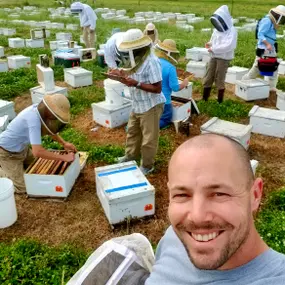
PhD, Assistant Research Professor
Dr. Hopkins got his BAE and MS at Eastern Washington University. He went on to get his PhD at Washington State University in Dr Sheppards lab. That is where he found his passion for bee research. Largely fueled by the amazing people of the beekeeping community and the fascinating biology of the species.
His work was originally focused on cryopreservation and reproduction, but has branched out into various aspects of commercial colony management. Current work includes Indoor Storage, varroa management, pollination and nutrition.
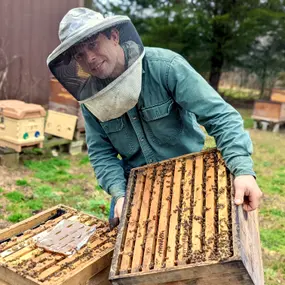
Beekeeper, Conference Founder, Educator
Kamon Reynolds is the co-founder of one of North America’s largest honey bee conferences, The North American Honey Bee Expo, is the founder of Tennessee's Bees and has been keeping bees in North Central Tennessee for 20 years.
Kamon keeps 250 hives with his wife Laurel. Kamon and Laurel also have filmed hundreds of educational videos to help new and veteran beekeepers around the world keep their bees successfully. Though Kamon does 99% of the talking, Laurel has been Beekeeping for 16 years and is an invaluable part of their Business, Tennessee’s Bees LLC. Tennessee’s Bees specializes in quality Bee Genetics, Pure Tennessee Honey, and Honeybee Education.
Kamon currently has 62,000+ beekeepers that follow him on Youtube.
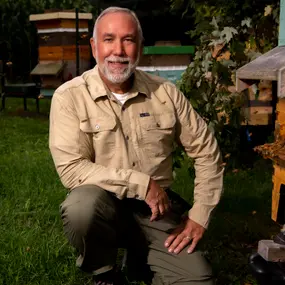
Beekeeper
Frederick Dunn is a Cornell University Certified Master Beekeeper. He keeps a small research apiary on his rural property in Pennsylvania, where he makes his observations and documents honey bee behavior with photography and cinematic sequences.
Fred also evaluates beekeeping equipment, various hive configurations, and conducts basic backyard beekeeping experiments that he shares via YouTube and in-person presentations.
He began keeping his own Honey Bees in 2006. Find out more about Fred through his website: TheWayToBee.org; Fred's Podcast is The Way To Bee (PodBean) and on YouTube: YouTube@FrederickDunn

Ph.D., Director of Research & Education
David is the Director of Research and Education at Betterbee in Greenwich, NY, where he assists in product development and research, and teaches classes and develops scientifically-sound educational materials. His doctoral work in Cornell University's Department of Neurobiology and Behavior was supervised by Professor Tom Seeley. His dissertation research focused on the transmission of mites between bee colonies, as well as the mite-resistance traits of the untreated honey bees living in Cornell's Arnot Forest.
After earning his degree, he has continued to research varroa/bee interactions, including fieldwork in Newfoundland, Canada (where varroa still have not arrived) and Anosy Madagascar (where varroa arrived only in 2010 or 2011). He has served as a teaching postdoctoral fellow in Cornell's Department of Entomology, and is still affiliated with Cornell through the Honey Bee Health program in the College of Veterinary Medicine. David has kept bees for more than a decade, though his home apiary is often full of mite-riddled research colonies, so he doesn't usually produce much honey.
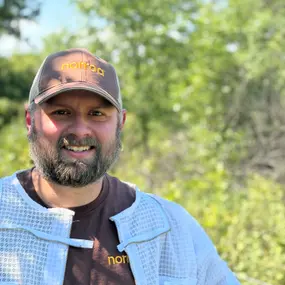
Adam Pachl is the North American Technical Manager for Bee Health for GreenLight Biosciences, the maker of Norroa. He has been with GreenLight since August of 2024, but prior to this he was the Assistant State Apiary Inspector for the North Dakota Department of Agriculture for 6 years. He lives in Mandan, North Dakota, where he manages two colonies with his 8-year-old son, Anson, and also helps manage colonies for the Dakota Zoo and Gateway to Science in neighboring Bismarck for educational purposes. When not working with or talking about bees Adam likes drumming, cooking, or being outdoors with his son, wife Sara, and two dogs Cora and Penny.


