Apple Podcasts

 Spotify

 YouTube

 Goodpods

 Amazon Music

 Overcast

 Castro

 PocketCasts

 Podchaser

 RadioPublic

 RSS Feed
Sustainable Beekeeping with the Two Phils (411)
Phil Breed and Phil Westra of Siouxland Beekeepers join Becky for a deep dive into sustainable northern beekeeping. They discuss resource colonies, overwintered nucs, queen rearing, locally adapted genetics, apiary location, winter management, recordkeeping, Varroa monitoring, and building an operation with enough internal resources to recover from queen failures and colony losses.
Key Takeaways
- Not every colony needs to be a honey-production colony; resource colonies can supply brood, queens, food, and replacement bees.
- Locally adapted stock can be selected for winter survival, gentleness, productivity, and Varroa resistance.
- Apiary location can matter as much as management, particularly where forage is limited by row-crop agriculture, wind, drought, or flooding.
What changes when you stop thinking of every colony as a honey producer and start giving colonies different jobs? In this episode, Becky takes over the studio and welcomes Siouxland Beekeepers Phil Breed and Phil Westra for a practical conversation about building a sustainable northern beekeeping operation.
Phil Westra describes a management system influenced by Michael Palmer, with production colonies supported by resource hives, overwintered nucs, locally raised queens, and carefully selected genetics. His goal is simple: maintain enough queens, brood, food, and colony resources within the operation that problems can be solved without constantly buying replacements.
The conversation covers apiary location, nutrition, queen castles, double nucs, winter preparation, upper entrances, recordkeeping, and the realities of managing bees through drought, flooding, unpredictable nectar flows, and harsh northwest Iowa winters.
Phil also explains his queen-rearing calendar, why he waits for adequate drone populations, and how he uses mite washes and Varroa-sensitive hygiene assays to identify potential breeder colonies. His long-term objective isn't treatment-free beekeeping as an ideology; it is developing genetics capable of carrying more of the Varroa-management burden themselves.
Throughout the discussion, both Phils return to one guiding idea: build a system appropriate for your location, your scale, and your goals—and know your why.
Websites from the episode and others we recommend:
- Phil's BEESTINGZ Course: https://oercommons.org/courseware/lesson/129599
- Honey Bee Health Coalition: https://honeybeehealthcoalition.org
- Project Apis m. (PAm): https://www.projectapism.org
- The National Honey Board: https://honey.com
- Honey Bee Obscura Podcast: https://honeybeeobscura.com
Copyright © 2026 by Growing Planet Media, LLC
______________

Beekeeping Today: A Practical, Seasonal Guide for Beginning Beekeepers
Whether your goal is to harvest honey, support local pollination, or simply enjoy a fascinating new hobby, Beekeeping Today (Lyons Press |On Sale 01/19/2027) provides a solid foundation for anyone interested in keeping honey bees.
Available for preorders now!
______________

______________

Betterbee is the presenting sponsor of Beekeeping Today Podcast. Betterbee's mission is to support every beekeeper with excellent customer service, continued education and quality equipment. From their colorful and informative catalog to their support of beekeeper educational activities, including this podcast series, Betterbee truly is Beekeepers Serving Beekeepers. See for yourself at www.betterbee.com

This episode is brought to you by Global Patties! Global offers a variety of standard and custom patties. Visit them today at http://globalpatties.com and let them know you appreciate them sponsoring this episode!
As a beekeeper, you want products that benefit you and your bees. When you choose Premier Bee Products, you choose hive components that are healthier for bees and more productive for you. Because we believe that in beekeeping, details make all the difference. Premier Bee Products: Better for bees. Better for beekeepers. Use promo code PODCAST for 10% off your next online order.

Thanks to Strong Microbials for their support of Beekeeping Today Podcast. Find out more about their line of probiotics in our Season 3, Episode 12 episode and from their website: https://www.strongmicrobials.com
HiveIQ is revolutionizing the way beekeepers manage their colonies with innovative, insulated hive systems designed for maximum colony health and efficiency. Their hives maintain stable temperatures year-round, reduce stress on the bees, and are built to last using durable, lightweight materials. Whether you're managing two hives or two hundred, HiveIQ's smart design helps your bees thrive while saving you time and effort. Learn more at HiveIQ.com.

We'd like to thank Vita Bee Health for supporting the podcast. Vita provides proven tools for controlling Varroa—from Apistan and Apiguard to the new VarroxSan extended-release oxalic acid strips—helping beekeepers keep stronger, healthier colonies.

Thanks for Northern Bee Books for their support. Northern Bee Books is the publisher of bee books available worldwide from their website or from Amazon and bookstores everywhere. They are also the publishers of The Beekeepers Quarterly and Natural Bee Husbandry.

Thanks to Bee Culture, the Magazine of American Beekeeping, for their support of Honey Bee Obscura. Available in print and digital at www.beeculture.com
_______________
We hope you enjoy this podcast and welcome your questions and comments in the show notes of this episode or: questions@beekeepingtodaypodcast.com
Thank you for listening!
Podcast music: Be Strong by Young Presidents; Epilogue by Musicalman; Faraday by BeGun; Walking in Paris by Studio Le Bus; A Fresh New Start by Pete Morse; Wedding Day by Boomer; Christmas Avenue by Immersive Music; Red Jack Blues by Daniel Hart; Bolero de la Fontero by Rimsky Music; Perfect Sky by Graceful Movement; I'm Not Running Away This Time by Max Brodie; Original guitar background instrumental by Jeff Ott.
Beekeeping Today Podcast is an audio production of Growing Planet Media, LLC
** As an Amazon Associate, we may earn a commission from qualifying purchases
Copyright © 2026 by Growing Planet Media, LLC

Frequently Asked Questions
What is a resource colony?
A resource colony is maintained primarily to support other colonies rather than maximize honey production. It can provide brood, queens, food, or bees when another colony needs help.
Why is apiary location so important?
Phil and Phil emphasize forage, nutrition, wind protection, and local environmental conditions. Supplemental feeding cannot necessarily compensate for a location that consistently fails to support healthy colonies.
What is the main lesson from the episode?
Phil Breed summarizes it simply: know your why. Management decisions should serve a clearly understood goal rather than being copied simply because another beekeeper uses them.
Beekeeping Today Podcast Episode 411 - The Two Phils
John Moore
Hi, I'm John Moore from North Cascade Beekeepers. I'm out here in Ohio at the Ohio State Beekeepers Association. Welcome to Beekeeping Today.
Jeff Ott
Welcome to Beekeeping Today podcast presented by Betterbee. Your source for beekeeping news, information, and entertainment. I'm Jeff Ott.
Becky Masterman
And I'm Becky Masterman.
Global Patties
Today's episode is brought to you by the Bee Nutrition Superheroes at Global Patties. Family-operated and buzzing with passion, Global Patties Crab. Protein-packed patties that'll turn your hives into powerhouse production.
Picture this. Strong colonies, booming brood, and honey flowing like a sweet river. It's super protein for your bees and they love it.
Check out their buffet of patties. Tailor-made for your bees in your specific area. Head over to www.globalpatties.com and give your bees the nutrition they deserve.
Jeff Ott
Hey, a quick shout out to Betterbee and all of our sponsors whose support allows us to bring you this podcast each week without resorting to a fee-based subscription. We don't want that and we know you don't either. Be sure to check out all of our content on the website.
There, you can read up on all of our guests, read our blog on the various aspects and observations about beekeeping, search for, download, and listen to over 300 past episodes, read episode transcripts, leave comments and feedback on each episode, and check on podcast specials from our sponsors. Find it all at www.beekeepingtoday.com. Thank you, John Moore from North Cascade. You know, Becky, John was at the Ohio State Beekeepers Association meeting.
He and his wife have driven all the way from they're doing a tour of the United States and so they live north of Seattle, if I remember right. They've been visiting all over the place. And they were excited to be in Ohio at the same time and going to Ohio State Beekeepers Association meeting at the same time I was there from the Pacific Northwest.
What are the odds?
Becky Masterman
I don't think there are odds. I think they are your biggest fans and they followed you to the Ohio State Beekeepers meeting.
Jeff Ott
It's like the dead. You know, the Grateful Dead group. They follow. They follow. It's it's f no. John is great. I'm
Becky Masterman
I love that so much. What a great way to travel. Stopping at beekeeping clubs and meetings along the way.
Jeff Ott
I thought that was really, really amazing. Jamie Walters, the president of Ohio State Beekeepers Association meeting, came up to me before the meeting when we just got there and he said, Oh, have you met the people from Washington? They're excited. They're waiting and they're waiting to see you.
Becky Masterman
Oh, from where what? But w how that's great.
Jeff Ott
It was it was fun. It was a good meeting. Thank you, John, and your wife, I can't remember your wife's name, for being there at the Ohio State Beekeepers.
Becky Masterman
That's such a great way to start the recording today.
Jeff Ott
Yeah, I'm looking forward to the show.
Becky Masterman
Well, I have some news for ya.
Jeff Ott
Yeah?
Becky Masterman
So today You know how I like to get up early and your time zone is way different than my time zone and
Jeff Ott
Yeah.
Becky Masterman
And you know how you gave me the password to the studio a little while ago?
Jeff Ott
Did I? Okay. Alright, I'm sure. Yeah. Okay
Becky Masterman
You did, yeah. Well, this morning, if you look at your maybe files in the studio, you'll see that there's a really long file I actually met with two Phils in the studio from Siouxland Beekeepers and we kinda recorded an episode without you, Jeff. Not because we don't like you or didn't want you there. But it was more just, you know, early bird catches the worm and something like that.
Jeff Ott
I wasn't the early bird today, I was the turkey.
Becky Masterman
Let me tell you how much we missed you.
Jeff Ott
Well, I sounds like I'm gonna l have fun editing and listening to and editing this episode without me, but thank you, Becky. It's actually good. I was able to sleep in
Becky Masterman
There you go. There you go. So I I do think you're going to enjoy listening to uh this episode.
It's it's heavy on Beekeeping management and also a little bit of education in there too. So you'll have fun, Jeff. Just like you were there.
Jeff Ott
I look forward to it. And with that, let's hear from the two Phils, and Becky ran after these words from our sponsors.
Betterbee
For more than 45 years, Betterbee has proudly supported beekeepers by offering high quality, innovation. Products, providing outstanding customer service, many of our staff are beekeepers themselves, and sharing education to help beekeepers succeed. Based in Greenwich, New York, Betterbee serves Beekeepers all across the United States.
Whether you're just getting started or a seasoned pro, Betterbee has the products and experience to help you and your bees succeed. Visit Betterbee.com or call one eight hundred six three two three three seven nine.
Betterbee, your partners in Betterbeekeeping.
Vita Bee Health
We'd like to thank Vita Beehealth for supporting this podcast. Vita provides proven tools for controlling Varroa, Apistan, and Apiguard to the new Varroxsan extended release oxalic acid strips, helping beekeepers keep strong.
Becky Masterman
Welcome to Beekeeping Today podcast. This is a very special episode because I once again have the secret password to the studio and decided to invite a couple of friends. It's early in the morning, so Jeff is actually probably still sleeping in Washington, but I have two fantastic Midwestern beekeepers.
I have Phil Breed and Phil Westra on the podcast today. So I'll start by saying that I met Phil, he just reminded me it was four years ago, when he attended the Tri-State Beekeeping Conference. Phil and his wife Donna were easy to spot.
because they have appropriate conference bee themed gear. But it wasn't what they were wearing. It was the fact that they were so enthusiastic, friendly, eager to learn, eager to talk about bees.
And I think Phil and I became fast friends at that meeting. So I'm going to start and ask Phil to talk about his beekeeping journey a little bit, and then I'm going to make him do the heavy lifting and then introduce his actual vice president of his Siouxland Beekeepers because Phil is president. I'm going to ask him to introduce Phil Westra to everybody.
Phil, take it away
Phil Breed
Hey, thank you, Becky, and good morning. Yeah, uh we were fast friends right away. There's no doubt about that.
It's a friendship that continues to grow and of which I'm quite appreciative. As you mentioned, Midwest, I'm in Southeast South Dakota And birdsong bees is our operation. I always giggle, it's like, are you a hobbyist?
Are you a sideliner? I guess by category of number of colonies, I fall into sideliner. But for me it's more of an interest of bees and not what kind of money I can make on the side.
Knowing that education of bees is more of my forte. but also being self-sufficient, sustainable is what I'm after. And I think Phil Westra, you can talk about this too as we get going, I think your similar mindset in that area.
Becky, as you mentioned, I am current president of Siouxland Beekeepers. We are called Siouxland. We meet in Sioux Center, Iowa, which is in Sioux County, not far from Sioux Falls and North Sioux City, South Sioux City and the city of Sioux City.
Jeez, I think I got all the Sioux in there along the big Sioux River.
Becky Masterman
Whoa. So
Phil Breed
you can start to understand our name. Yeah And we have members from Nebraska, Iowa, of course, South Dakota, and Minnesota, which is pretty exciting. And we're I would call this a quite a cohesive group.
Phil Westra is currently our vice president. I know we've both been on the board and have flip-flop roles off and on over the years. And so uh Phil, I'm gonna just pass this on to you of anything additional you wish to add about our organization and then we'll get started.
Phil Westra
Yeah, my name is Phil Westra, and this is I think the first time I've ever been on a podcast. Appreciate uh the invitation. Yeah, I've lived in the Sioux land, if you want to call it that, since 2020.
I started beekeeping in Vermont, actually, and fell in love with with honey bee colonies and management and real honey All the uh dimensions of of beekeeping. Really it was it was a neighbor and a local club and a mentor. And Betterbee, by the way, um lived two hours just north of Betterbee.
That was my supplier and got education through them. And so yeah, started in Vermont and then uh moved in twenty twenty to northwest Iowa and had to totally readjust and relearn beekeeping, going to a different environment. And been part of the club since that move and have loved interacting and meeting with people that kinda share that passion.
Becky Masterman
I was just at a Sioux land at your field day. I presented it was just last it was this year, right? Twenty twenty six?
Phil Breed
Yeah, this past June.
Becky Masterman
Sometimes I forget. And then and I think I was there a couple of years ago. Not that not that all all clubs aren't education centric, but you are very strong on providing all levels of education.
and that's one of the reasons why why Phil Westra was invited because I happened to although I presented, I also was able to actually watch both of your your presentations and feel you had such a f fantastic presentation of I'm sorry, Phil Westra, because nobody knows which Phil I'm talking about. Both of your presentations were fantastic. But Phil Westra, your your presentation on your operation, it was one so generous because you literally shared all of your secrets with with the attendees, but it was also a nice level of of advanced for beekeepers who want to do a better job and become more sustainable.
and it not only talks about your system, but it I think you speak to how to have a system also.
Phil Breed
I'm gonna say no, it's not hard to coordinate. So as the as the main coordinator for our field day I must say it's a little easier for me because one, we've got a fantastic supportive club and we have members of our club who are willing to step up. Whether that be through presentation, through demonstration, through through icebreakers, through prayer, it's appreciated all the way through.
Two, because I've had the great fortune of meeting a number of people, uh a number of beekeeping people through conferences and through other opportunities. And this, for example, Becky, this is how we got connected as well And that combination makes it easy to just reach out, find people who are willing to come in I gotta throw a plug in for Dordt University as well. They have been absolutely fantastic at hosting us.
There have never been difficulties or misunderstandings. And part of that I'm gonna throw out to uh Dr. Duane Bajema. who initially started all of this through a USDA DIFA grant and a program called BEESTINGZ, which is a curriculum.
That's a whole nother podcast so they will take care of that some other time. But I think that combination made it super easy So what do you think on that?
Phil Westra
I think what we tried to do is say we can have a beginner track and an advanced track and anybody can come and nobody's gonna come to this. field day and say, oh, this is all beekeeping 101 again, which I've heard now five, six, seven times. So people kind of check out, you know, unless you give them some interesting rabbit trails or new ideas that they hadn't heard before that aren't kind of part of the basic, I think, ground ground level knowledge of of beekeeping. So Yeah
Phil Breed
and I would add to that. So we've got our beginner track and then our intermediate advanced track. And we have a third track when we can and that is be related but not beekeeping.
For example, what do you do with the wax? What do you do with the propylus? So what what are the other options that we have?
I think in the past we've had presentations also for pollinator plots, native forbes, and that seems to capture an interest as well
Becky Masterman
I'm just gonna circle back because you can't mention a program called BEESTINGZ without leaving all of our listeners curious what BEESTINGZ what that program is. and it's probably probably not what they think.
Phil Breed
It was initially designed to bring twenty high school FFA or science teachers from our five state area to develop a curriculum designed for Gen Z and how to get them enthusiastic about science and specifically about pollinators and honey bees. And there is a seven volume curriculum that is available at no charge to not only educators, but to anyone. And I believe it is online, and Becky, I can get that connection or that link to you at some point.
the beauty of it is it is completely scripted so anybody can pick this thing up. And take it and go. So for example, if I were a classroom teacher and I'm going to be ill or I'm going to be gone, I'm going to say, hey, here's a plan, and whoever walks in should be able to grab that and just run with it.
Becky Masterman
We're here today. We have a lot of topics we could talk about, but I mentioned that Phil Westra, you just Boy, that was a fun presentation to listen to. I think I even I even got there a little bit late, but it was it was such a fun presentation to listen to, so could you Just give us a presentation.
No, I'm kidding. Don't do that. Although although I wouldn't mind.
But could you introduce your operation and then I think Phil Reed and I are gonna have a fun time asking you questions. But Go ahead and start. Start at the beginning of of what your operation looks like.
Phil Westra
Yeah, well, I think probably a lot of your listeners are familiar with the name Michael Palmer. And he is a pretty well-known beekeeper in northern Vermont and has shared his experience and kind of the development of his his means or how would you say it operation for how to be sustainable in a northern climate He doesn't migrate bees to the south. And so my operation really is kind of a miniature version of what he's doing.
And so I appreciate the Palmer sustainability model because a couple things. One, you're raising queens, you're making splits, you're increasing the bees when they would naturally be reproducing in in nature anyway. You're trying to work with the seasons, and when you do that, you end up over time developing a locally adapted bee stalk And that's one of the things that I value is I want my own genetics, so I can select gentleness.
I can select the colonies that seem to overwinter the best. And I'm also adding to that selecting for Varroa resistance through some assays that are out there. The other thing I really really like about it is When you're doing this mechanism, you're really saying all my bee colonies fit into one of two categories.
They're either going to produce honey. Or there are going to be resources to help me raise queens, to help me boost colonies, to help me support the rest of the apiary. So those are the two, I guess, introductory things I would say about what I try to do is I'm not migrating, so I have to work with the seasons.
And then second of all, I'm trying to uh reproduce the colonies and the genetics that are I enjoy working with that are suited for northern climates. And so the presentation you came to really was about how to use the resource hives, the colonies that aren't for honey production, to boost and support the rest of my my operation. So I use those to make splits.
I use those to feed my queen mating nucs. I use those to put some additional frames of brood so I have bustling colonies to produce great queen cells And that's kind of the I guess uh small snippet into what the presentation was that you listened to, Becky. So
Becky Masterman
As far as numbers are concerned, are you running about the same number of colonies every single year?
Phil Westra
Well, I've grown quite a bit since since uh Since moving to northwest Iowa, yeah.
Becky Masterman
One film is laughing and the other is trying to explain their rapid growth of their operation. This is fantastic. I wish we were recording this video. Phil Westra, I'm not gonna have you answer that question right away. Phil Breed, why don't you answer that question?
Phil Breed
I'm I'm laughing just because Phil Westra and I have been through uh have experience along with our club members weather, flooding, changes just all over the place. And so when you ask the question of what's the size of your operation, I have to giggle giggle because I think Mm both of us have just gone up and down and it so it's funny I'm thinking more of the question is, so where are you now? You know? Yeah, rather than oh my gosh, are you consistent with numbers?
Becky Masterman
Do you have a target goal? And then is there a number where if you're over that number, you're definitely going to be selling nucs or or and I'll I'm just going to ask both of you. before we go on. Is there is there a number that you want to be at that you try try to stay at?
Phil Westra
Well for me there's a number that I can't handle any more of because because I'm a sideline Beekeeper with a full time job in addition to this. And so yeah, I'm trying to shoot for about sixty production colonies. And I generally overwinter about 120 nucleus colonies a year.
Now that I'll say that's my target. But yeah, like the other Phil said. I lost a third of my colonies three years ago in a flood and have tried to build up back from that.
So That's a target, but I'm not gonna beat myself up too too badly that I haven't met that target yet because we've had a lot of setbacks. Northwest Iowa is not an easy place to keep bees. And that's part of I think why I feel it's, you know, step up to the challenge.
Here we go. Let's let's try to do everything we can, learn everything we can, and then roll with One year of being drought, the next year being flood. And that's that's a tough thing to adapt and always be aiming and adjusting your practices to.
So yeah.
Phil Breed
And I'm gonna add on that what Phil Westra says not a easy place to keep bees. One of the things I think of is the nutrition factor and the row-crop. monoculture we have around here. And that's not knocking agriculture, that's saying, hey, this is our environment. So what do we need to do to be successful with our bees and to be good stewards as well?
Phil Westra
and that's the thing that changed quite a bit when I moved from Vermont to northwest Iowa. Now I don't keep bees in my backyard. I travel quite a ways quite a ways to find the spots that can sustain a small apiary with nutrition.
with wind breaks because we have a lot of wind up here too. This is wind turbine land. You've got to just find it's it's like the real estate's uh market says it's location, location, location.
up where we are. And I know some fellow beekeepers that are trying to keep bees places where they're just not going to thrive because of the nutrition and because of the climate they're in. So
Becky Masterman
How many years do you give a location a chance to tell you whether or not it's the right place?
Phil Westra
I've given 'em too many sometimes. But about about three and I'm done. Yeah.
'Cause you don't want to Yeah, maybe I put six or twelve colonies somewhere I try to start with about six. And if they die every year, all of 'em, no matter what I do, I'm just not gonna keep 'em there anymore. And it and that's that's about knowing that your practices are pretty solid and you are being disciplined about getting there on time and doing everything you can.
But if I don't think that you can just feed with pollen patties and sugar syrup to make up for the complete lack of nutrition in a location.
Becky Masterman
Phil Breed, are you the same? Is it about three years in a location and
Phil Breed
Yeah, sometimes I'm not even quite that patient for it two years. Oh oh
Becky Masterman
two yeah, okay.
Phil Breed
Three of it generally is thinking, okay, if we're if I'm hitting if I'm hitting a rough spot two in a row, then it's like, nah, okay. I've because I've got other locations, other opportunities, and so I'll move along.
Becky Masterman
This is a great place to take a break and we will hear from our sponsors and we will be right back
Premier Bee Products
Beekeeping is demanding work. The last thing you need is equipment that can't keep up. That's why Premier Bee Products builds every frame and hive body in our South Dakota factories with one goal in mind.
Reliability when it matters most. From our Bee-Pro frames to our Natural Pro hive bodies with rough interiors, we design for long life in the field and in the colony. Because we believe that in beekeeping, Details make all the difference.
Premier Bee Products better for bees, better for beekeepers. Visit online at PremierBeeProducts.com or call us today.
Use promo code PODCAST for 10% off your network. Online order.
Strong Microbials
Beekeepers, if you're looking for a smarter way to support colony health, take a look at Bee Bites from Strong Microbials.
Bee Bites are a new protein-patty meal. With spirulina, chlorella, and targeted probiotics, designed to support nutrition without creating new problems in the hive. With 15% protein, Bee Bites are unique because they do not attract small hive beetles, a big deal if you've ever battled infestations during feeding.
Strong Microbials has been supporting beekeepers and farmers since 2012, developing high-quality commercial probiotics and nutritional supplements you can trust. Learn more about Bee Bites and their full line of bee nutrition at strongmicrobials.com
Becky Masterman
Welcome back everybody. Okay, Phil Breed and I, let's dig deep into Phil Westra and just Just grill 'em and get all of the secrets out. This is exciting. But I wanna start with you said you've got sixty production colonies and you winter about this is your goal at about a hundred and twenty nucleus colonies. Is that this year that you said Is that what you're looking at?
Phil Westra
Yeah, no, I don't I didn't get that nucleus colony goal this year.
Becky Masterman
You didn't get it, okay.
Phil Westra
Nope. So and that kind of talks to uh challenges every year. This year we had a really good problem.
We had a huge nectar flow in the spring. And I had never had a huge nectar flow in the spring. So here I am going through my resource hives, making mating nucleus colonies.
I take a frame of brood and a frame of food. And I use what's called queen what are known as queen castles or queen hotels. And so I build out a bunch of mating nucleus colonies, put queen cells in them.
And there's nothing in there for food. And I'm I'm worried. I'm kind of freaking out.
So I put some feeder buckets on on them to make sure they're alright. I go back to those resource hives two weeks later And half of them had swarmed. And so that really cut off my ability to now keep reproducing And so I'm going into this this winter with seventy-four nucs instead of a hundred and twenty.
So I've got a lot of sadly I've got a lot of empty boxes and I we don't like to look at empty boxes in our storage units. But again, that one challenge, you know, that suddenly we had a flow hit us like out of nowhere. Now, yeah, another chalk it up to education from the bees themselves, right?
So
Becky Masterman
also I remember that You also are wintering, or correct me if I'm wrong, your production colony. So you're putting two different types of hype configurations into winter. Is that correct?
Phil Westra
So I use ten frame equipment for production, and I have fifty-four production colonies. So fifty-four colonies that are that 10-frame double-deep configuration now going into the winter. Then I use what 's oh there's so many names for them resource hives, support hives, double nucs.
It's a 10-frame configuration split in half And that's what I use for my support hives, resource hives. Mike Palmer calls them his brood builders, brood factories. The advantage to that is you have two queens in that same footprint So you get a lot of a lot of brood to use for your for the rest of your operation.
And in that footprint as well, it seems like they can keep each other warm fairly well through that middle inner divider and so they overwinter fairly well in that configuration as well.
Becky Masterman
How many frames on each side of that divider?
Phil Westra
Yeah, so there's four on each side. And so then you have a ten frame deep that's split in half. And I like the ones that have the thicker split in the half, so you don't have a lot of extra room.
You know, you gotta think about bee space and all those rules that don't change in beekeeping. So four and then you have four on top of that, and sometimes four on top of that again. So I have them either two or three deeps high.
So either eight or twelve deep frames total in each side.
Phil Breed
So that our listeners understand that when you talk about two queens within one system, that they don't have contact with each other. And so essentially, Phil, within a 10-frame box, you're running a 4 over 4 and possibly another 4, rather than, for example, say a 5 nucleus over a 5-frame nucleus, a 5 over 5.
Phil Westra
Yeah, those are the two configurations of different hives. So yeah, so literally if I've got seventy-four colonies going into winter that are these double colonies, so that's That's thirty-seven boxes with two queens in each one side by side. Yep.
Becky Masterman
Then then how do you put them into winter as far as any kind of topper side installation. Why am I laughing?
Phil Westra
We were laughing about this at our last
Phil Breed
of our last club meeting. That's why I'm laughing.
Phil Westra
Our last club meeting was talking, you know, what do you do to get ready for winter? And if you've been on Facebook recently and watched all these, you know, different hive companies advertise their insulation I'm I'm the beekeeper that's got the little shivering bees inside that is I must hate my bees according to these advertisements because I simply put a layer of insulation between the inner cover and outer cover Put a mouse guard on it and that's it. They go into winter that way.
Becky Masterman
What's the R factor of that ins that top insulation? Is it the one and a half polystyrene?
Phil Westra
Yeah, yeah.
Becky Masterman
That's 7.5, I think. Seven or seven phase. Okay.
Phil Westra
and and what I've learned over the years, if I don't put that insulation, I've I just get moisture problems and The bees are wet and dead every spring. And, you know, there's a huge there's a huge debate going on in the beekeeping world about condensing hives versus upper ventilation. And I people do you do what you want to do.
My experience is if I don't have a little bit of upper ventilation, my bees are wet and dead in the spring. So That's just my my experience and I'm gonna keep doing that if and I think that's what happens.
Beekeepers have a bad experience and then that shapes what they decide to do from then on out.
Phil Breed
Yeah, I agree. I agree.
Becky Masterman
And when you say the upper entrance, is that are you using the inner cover notch?
Phil Westra
Yeah, just put the inner cover notch down. Put that foam board in there. Put the outer cover on and make sure there's some weight on the top in the northwest Iowa winters because those tops will blow off so quick. I used to ratchet strap every single hive, but I don't do that anymore. I just find some big bricks for it, and it works.
Phil Breed
So Phil, just for a clarification for the listeners as well, there's that ventilation notch in the undercover. Is that also an upper entrance for your bees?
Phil Westra
Yeah, I think the other thing that Maybe I'm unique in this that I have bees that are kind of off in the corner of some conservation spot land or um they're hard to get to, it's off-roading, you know, to get back to those colonies I will close it up in November and I won't get back out there until January 1st. And we'll see if they're alive or not. And so uh make sure you feed them plenty. So you're not gonna be going back over and over in the winter.
I'm not gonna be visiting them. I'm just gonna get 'em ready for winter, close 'em up, and if they're buried in snow they need that upper entrance to do the cleansing flight. And you will if if I do have a nice warm day that the snow has melted and it's not gonna be too muddy to get back there, I have been back there in you know, about middle of March.
And you have that beautiful brown circle around your colonies on the snow, and you're like, yes, they're alive, and they got out for For uh for some relief.
Phil Breed
And I think, Phil, both of us have experienced that when we've got our bees in the outyards like that, that they do eat their way up. And so to have access to that upper entrance rather than having to break cluster to move down and come back. I imagine you've experienced that. I've experienced it. My bees really utilize that upper entrance to the winner.
Phil Westra
Oh yeah. You'll get comments saying that we're we're mean and we're not keeping our bees warm enough, but again, this is uh this is the way of selecting genetics that thrive in our climate genetics that can hold it for three and a half months and not have a cleansing flight, some bees can do that fine and some can't. And The ones that can now are the ones that are part of my operation.
Becky Masterman
You also have you can select for the size of the cluster that's that's going into winter and then the how conservative they are. So if if you tried to put Italian queens into those resource hives you'd be I think you'd be in trouble come. November. I think. May maybe December, maybe January, but
Phil Westra
Yeah, I mean I want my bees to take the cues from nature on when to build up, when to shrink down. I don't want to just always be, oh, I have so many B's I can always be producing packages off these. That's that's not the way the cl the cycle of of our our year goes here. So
Becky Masterman
if you get out to your colonies, say in in January and you feel like they're light, do you have an emergency feed provision or
Phil Westra
I do not know. You're just saying
Becky Masterman
bad planning. Not not on you, but on the the side of the bees and
Phil Westra
Oh no, sometimes it's on me.
Becky Masterman
Well, okay.
Phil Westra
Yeah, yeah. This is
Becky Masterman
confessions of a beekeeper.
Phil Westra
It's it's that's the I think that's the truth, right? Is we make We put our best efforts in there and then we keep learning. Didn't d wasn't disciplined enough about that.
Didn't get out there on time. And again, that's part of having a full-time job and doing this on the side. I think we have to give ourselves a little grace about that as well.
Becky Masterman
I think it's it's also though confusing because I've seen colonies that go into winter with plenty of stores and then they've consumed them. It could be they just didn't stop raising brood because maybe they were they had some kind of a pathogen that caused an infection that they just tried to kind of raised bees out of in order to move on and so they just went through all their resources. So sometimes it's a beekeeper, but sometimes it is also something that the bees are going through that we can't really easily identify.
Phil Westra
Yeah, if it's if it's let's say ten degrees outside, there's no snow and it's nice and frozen, I can go back to m some of my colonies and I'll put my ear on the side of the hive, knock on it. If I don't hear anything until I knock on that thing, they're quiet. And those bees are They're clustered, they're conserving their resources and then I put on my ear on a colony that was just as noisy as anything.
So I'm like, yeah, one of these types of bees is gonna do better in winter than the other one. And that's just and then again the winters select those out. And you kind of keep reproducing from the best stock that you've had.
And doing it ten years, I feel pretty happy with where my bees are. As far as winter hardiness and gentleness and uh productivity for our our climate and what they have to deal with in our our little neck of the woods here.
Phil Breed
It's always interesting to me too, Phil, the time of day when you go out to a bee yard. You know, you could be there late morning and some of the colonies are just active and others are nothing. And you go back two hours later and it's flip flopped completely You know, so I appreciate what you're saying about knocking on there and hearing, okay, how busy are you and taking note of that?
And then and speaking of notes, I know you and I both are copious note takers. I'll speak from my memory. Yeah, don't ask me about yesterday.
I couldn't tell you. And so to be able to say, hey, I've noted this and now look, here's who I have in the spring. Could you tell us a little bit about just your note taking system to keep track of all of these?
Phil Westra
You do have to track your hives and try to record the traits that you notice. So what I do is I've got just pieces a p pen and pad and also I shoot little videos with my own phone from time to time. As I've gone through twelve colonies, I've made it some made some notes, but I also will just flip my phone on camera and speak to it and point at that colony and say this one was light.
and probably needs a couple frames of brood to boost it next time you come out um this colony, let's say uh lost its queen and I see some queen cells, you know, try to try to note every time you open a colony the things that you observe. And then I have a spreadsheet back in my on my computer that I will say, what's the, what's the genetic heritage of this queen in colony number seven. I do paint a number on each one of my doubles two of my boxes.
Every box has a number on it. Q something for my queen castles. N something for my double nucs or a number on my production hives.
And so yeah, I want to track How much did you weigh going into winter? What was the last mite wash count? Just say, I've done everything I can to help these bees and steward their health.
And now we'll see, based on that information, how next spring goes. If the ones that I thought might I loot might lose, yep, I was right. Or, hey, this had a really low count, it did great for two years in a row, and now it's dead.
Wonder why, you know? Just trying to track everything. and also, I have I think developed a scheme for doing a mite wash on every single one of my production colonies three or four times a year.
And so I will do mite washes to see what the mite loads are and take the ones that are really, really low, and then also do Varroa assays on them to see if they have Expressing the Varroa sensitive hygiene traits. And again, those that's those are the top ones in for being the breeder queens for the next next year's batch of genetics. So yeah, all of that requires some diligence and discipline and keeping track of your colonies, both the date stamping when you've seen things, but also just in general, do I know what where I got the queen that's in this hive right now?
Because I'm always adding some genetics from outside to make sure I don't get inbred And I want to see, you know, do I want to buy queens from that person again or not? Some people say, Oh, I've I've I've got treatment-free bees and they're so great, and then I We'll buy twenty queens and I'll overwinter them they got way higher mite counts than anything else. I'm like, sorry, didn't prove to be better than what I've got and some some are phenomenal and I'll go back to those those breeders and say, I want to reserve another twenty queens from you in two years to just just keep adding different genetics to my my yards.
Becky Masterman
You say that you also raise queens, about how many queens are you purchasing a year and from how many different queen breeders?
Phil Westra
I raise about two hundred queens a year. It's between two and three hundred queens a year myself And I will r buy anywhere between a dozen and two dozen queens from other people. So I raise way more than I buy.
And that's how I can sustain it, I think, because queens are expensive if you start adding up. and if you can raise your own queens from stock that you like and then create your own nucleus colonies to go into winter The next spring you have all the resources you need. If if you had decent survival rate, you've got enough nucleus colonies to repopulate your dead-outs.
and sell so you have a little bit of income so you can keep doing this, right? So that's that's my goal is to is to be sustainable myself and always have extra for others That's what I've been able to pull off last for the last few years. Now, um, it took a little while to build back up to that after some setbacks, but that's where we're at here.
Becky Masterman
Can you go through your queen schedule? So when do you start raising queens? And then what's the last time of year that you would you would start a nuc to go into winter?
Phil Westra
I have figured out that in I don't have good drone population until the last two weeks of May. If I do queens earlier, they're just not mated well. And so I will start preparing cell builders pretty much the beginning of May.
That's boosting a colony, so it's gonna be so abundant it wants to swarm. And then you of course separate the queen, you just trap the queen in a certain part of the colony. So now you know where the eggs are going to be, and I take the eggs away from that really thriving colony, that box with the queen in it, set it aside and now put my grafts in there.
So that's all yeah, May I start that in May, so generally I have my first queens ready in June one. I will do three or four rounds of of queens. I have uh forty queen castles, so 160 slots for queens.
And I can't catch more than like 60 in a day. So I I divide I divide that up into two and then I stagger them, you know Again, you learn you learn what your upper limit is pretty fast. And yeah, I can only get out to my bees twice twice a week.
even in the busy seasons unless I take some vacation time, which which I do for beekeeping. But anyway, so it's it's raising queens and that's right in the middle of everything else that's going on. It's a busy season.
June and July are Really busy. And so that's that's the yeah, I think we probably do 70% of our work in those two months here in Northwest Iowa. I'm usually done by the end of July, early August raising queens.
And I have learned just we don't have a great fall flow where my hives are. So my colonies I'm not gonna build nucs to overwinter past like July 15th or so. Because I want uh we generally have a great flow in June and July.
So if you're not in the early part of July they're not going to build up on their own and be ready for for winter. That's my experience. I think, Phil, you have a little better fall flow.
Becky Masterman
Would both of you tell me what getting them started looks like for the latest you can get a nuc started? Is that with a queen cell or is that with a mated queen? How many frames of resources, what are you looking at as far as the latest you get a nuc started that you're going to get in in through winter?
Phil Westra
It is taking a mated queen. from my queen castles and I'll my queen castles are four slots with two deep frames each And so what I do is I catch the queens and then I merge those queen castles into four over four nuc configuration. So I start every Every nucleus colony starts with four frames that are drawn with with a queen with some brood that started from the queen castle itself.
And then my goal is that they build they double their size. They can actually build up into the second story. The second story is what you want to be all honey anyway, mostly going into the winter.
so that's that's my my process. Again, I think When you start getting a little bit bigger in scale, you start realizing that your B operation is about the flow of where your frames go from where to where to where. And mine go from you know the production colonies they get boosted by my resource hives my resource hive frames get moved into queen castles which then get moved back into nucs so You're cycling your frames through and the whole time you're getting rid of the junk frames too.
I I'm kind of a pretty big believer in If something is just black as midnight and starting to smell, I'm not going to use that frame anymore. And so the fact that you're always moving these things means you're also kind of culling some things in the process.
Phil Breed
I'm pretty similar to what Phil Westra is doing. One of my differences is I don't graft. I use Mel Disselkoen's OTS (On-The-Spot) queen rearing.
And that's a whole nother presentation as well. But so when my OTS colony has created its cells, and oh my god, all my queen cells, Once those are capped, they get shifted into five-frame nucs. And it may be multiple cells per nuc at that time until those queens emerge and they get divvy out even farther.
One of the things that I do in the spring is my power colonies for my honey production, instead of a medium super going on top for that for that third box, I put an undrawn ten frame deep. up there and so they draw out that absolutely brand new fresh and then also cap it with honey and then those go straight into my chest freezer in my honey house and they stay there until it is August and now I've got my feed resources to put in. and that's a that's a luxury that I have that may not work for everybody else.
And so people may disagree of hey I'm I'm I'm doing it differently or incorrectly. But what I'm finding is that works for me and my over my 5-over-5 survival
Becky Masterman
How many of those those frames, those beautiful frames, are you putting into each of your colonies for wintering? The new colonies
Phil Breed
They each get two in the in the upper 5-over-5 box, and then the other three are drawn but empty. So the queen can move up and do what she does. And then I will I will assess again as we get closer to fall.
Who do I need to manipulate? Who do I need to give some additional feed? Man, this is a powerhouse, they don't need anything else.
And I concur with Phil Westra. When it's when it's black comb, it's gone. It's just there's there's so much at stake, especially when you're moving frames around for biosecurity That yeah, I know these bees, and at the same time I'm introducing from this household to that household.
And so I need to be cognizant of what's happening there
Becky Masterman
Did I just want to make sure I don't know if we said it, but when you're saying you're giving them two, you're putting them on the edge. Correct. And then three in the middle. That is correct.
Phil Breed
Two in the outside, three empty in the middle. Yep.
Becky Masterman
Okay.
Phil Westra
I was just going to say that I think the reason there's so many different methods and strategies for beekeeping is one of the questions is how well does that scale? If you stay pretty small, you can put frames in your freezer. If you get pretty if you get pretty big, you'd is is investing in a walk-in freezer what I want to do in my bee operation or not?
Right. So Uh one thing that I think. But I think one of the things that I found useful about the scheme that I have have embraced is that it is pretty scalable.
You can do this small and you can do this big. The Palmers of the world are doing it with the thousand colonies. I'm doing it with fifty.
50 right now, you know, production colonies. And I think that's something that to me is is pretty useful. There's a lot of things advertised out there that are great if you have two or four hives.
But if if you want to grow, usually you grow out of a lot of those practices and then you have to grow into things that mo more commercial leaning people would embrace. And so that's kind of goes with my My my philosophy is if I can't scale it, I'm not gonna go down that road because yeah, I'll just end up changing anyway, and then I haven't really learned what I need to do for my for my operation.
Becky Masterman
I'm just going to say also I think that when you start beekeeping you have maybe maybe if if you get a a good start you're starting with two colonies that you're trying to kind of run exactly the same And it's funny because we ask new beekeepers to do one of the most difficult things possible is to run two colonies without really having a lot of extra resources for when you have a queen problem, which I promise is going to happen in your first, if not year Two years. But think about if we had a method where we say, here's you're gonna start with two colonies, kind of three, because you're gonna have a production hive. That'll be your production you're you're gonna make honey production, but then start with a resource colony and figure out how to have an extra queen and you could start them maybe more slowly, maybe let them do like somet something like a raise their own queen, like a walk away.
But what we really uh you can do that, have your colonies that do different jobs. And if you as soon as you have colonies that do different jobs, beekeeping just got a whole lot easier because you can move brood, you can move food. and you have queen options.
Phil Westra
Yeah, I mean that's and that's a big difference between beekeeping and other livestock, right? I mean if you're f if you're a cattle rancher, you're not gonna have these cows in that pen. just there to replace the cows that die, right?
You're you're just you're gonna treat your cows the same. but in in the world of beekeeping really I mean shout out to the first club meeting that I went to in Vermont They were all saying, hey, if you're starting this, you should start with a couple colonies and you should get a nuc or two and learn how to run that and how to manage that. Because in that nucleus colony Next to your regular colonies are that's your spare.
That's your spare queen. That's some spare resources. And now you don't have to be dependent If you if your queen if you lose a queen in August and the queen breeders are done making them, you've got one.
And by the way, often when you lose a queen, you've also lost population. So often the best solution is to merge that nuc with that production colony because now you've boosted it and gotten it back on track for for the population that needs to be there as well and the brood in all stages and the bees in all stages of development.
Becky Masterman
This could go on forever because I'm having so much fun. But we are approaching the end of our time. But I want I want to just Phil, I ask Phil Westra, I ask you just two quick questions. And I know they're the answers are not quick, but maybe we um come back to talk a little bit more about it. But I would love for you to just give us a general overview of both what you do with your surplus honey and then also how can we not talk about Varroa management? Because I believe that you don't have to go into a lot of detail, but I know you have a process for that
Phil Westra
too. Yeah, well, I mean, as far as the honey goes, I've got a few stores that I'm selling them through, and that's that's really key around here. I think that going to the markets for me I d I just don't have enough time to hit all the farmers markets and all the all the places that some some people can and I used to do the farmers market round, but Right now I'm selling through a few stores.
So that's kinda key. I just started making my own candles and I've got to go to some markets to sell those. So I'm gonna do that a couple times this fall.
But the honey the honey, uh, I'm I'm bottling it and Around here there are not a lot of beekeepers. So if people in town hear that you've got honey, they will literally just come to your door and Hey, someone down the road says you got honey. Do you sell it in big five-pound jars?
Absolutely, I do. so that that's a pretty quick answer to that piece. As far as Varroa goes, I do think that there's a lot of great information out there.
And I know that your podcast has often plugged the honey bee Health Coalition. management guide as kind of the gold standard right now. And I would just agree with that.
Follow the best practices for testing. And have a have a plan for treatment. I would love to be treatment-free, but I'm not trying to get there because of an ideology.
I'm trying to get there because my genetics can support it And I think that's the right way to go is is let's I think the only v long term solution is genetic. That's just my belief. I think that's the tr the truth in most of agriculture Is your long-term solution to this pest or that pathogen is is we have the genetics that can deal with it, tolerate it, fight it themselves.
And I think the same is true in the honey bees. So my goal is always to reproduce the colonies that can fight Varroa on their own. Unless you want to buy 200 colonies and then have 20 left.
And then braid from them, which some people have done, and I kudos to them. That was a huge sacrifice. And now they got a treatment-free operation.
I find I wanna try to treat as minimally as I can. And so I'm letting I'm letting the fact that a colony if they can't survive a year without only two treatments, they're just gonna die and I'm gonna say too bad. uh cut that as a loss.
I know I know guys that are treating seven times a year and I'm just saying for me knowing that over the years I've built this these bees to deal with Varroa on their own. I'm gonna treat less, have a few losses, but then keep selecting for that genetic Varroa sensitive hygiene. so yeah, treatment is I alter between three different treatments and have a two-year cycle.
I don't treat my overwintered nucs I'm finding that when you build a nuc in June or July, they've already had a brood break because they've been through a Queen Castle. I test those in the spring. So the ones that make it, I do a mite wash in the spring before I sell them or before I move them into 10 frame equipment.
Which, by the way, if you want to Let yourself stand out in nuc sales, say this one's been tested, and it had and it had a 1% mite wash I found that hardly anybody does that, but that's one then one way I can say I'm developing, I'm delivering a quality product. This this queen has made it through one winter. And it's this spring it's had this level of mites.
Have fun, you know, with with your bees. So that's I mean I Did I answer your question in a nutshell?
Becky Masterman
Both of them beautifully. Yes.
Phil Breed
I think what I'd add is as we've gone through our whole conversation, is it boils down to a really simple know your why. And I think Phil Westra, you've covered that. I know that's the approach in my yard as well. It's just know your why. Why are you doing what you're doing?
Becky Masterman
Wow, I don't think I could wrap that up any better. Phils, this has been such a fantastic uh hour. I really appreciate both of you and uh look forward to continuing the conversation in the future.
Phil Westra
Yay, thanks Becky.
Becky Masterman
Phil, thank you so much for
Phil Breed
My pleasure.
Becky Masterman
Oh, this I this is we knew we'd be a good co-host team. Don't worry everybody, Jeff will come back. But It's nice to sneak in the studio and have a guest co-host. And Phil, I certainly hope that you will come back.
Phil Breed
Oh, I would love to. I you and I vibe off of each other pretty well.
Becky Masterman
We pretty much could have our own podcast because you and I talk bees all the time.
Phil Breed
We do on a regular basis.
Becky Masterman
On a regular basis it really is nice to have somebody who has, you know, just a lot of experience in in doing um kind of innovative beekeeping, sustainable beekeeping, because I think you and I both like to try some things and we want to one keep the bees healthy. I guess the fact you run deep supers, that's so near and dear to my heart. Because
Phil Breed
Well, and I think another bond we have is that we're both excited about not only the current research, but also some of the antiquated literature of of what used to work that we've now forgotten about. And it's like, oh look at that. How did how did we drop that along the way
Becky Masterman
There's that and then there's also what practices are we doing that really don't have any kind of basis in research at all, but somebody mentioned them years ago and we picked them up. And we just moved on. So I think that's there's a there's a lot to talk about there.
I'm so glad that we were able to talk to Phil Westra. That was such fantastic information and your insight and sharing a little bit about your operation along the way was was great too. So thank you so much, Phil.
Jeff Ott
And that about wraps it up for this episode of Beekeeping Today. Before we go, be sure to follow us and leave us a five-star rating on Apple Podcasts or wherever you stream the show. Even better, we're Write a quick review to help other beekeepers discover what you enjoy.
You can get there directly from our website by clicking on the reviews tab on the top of any page. We want to thank Betterbee, our presenting sponsor, for their ongoing support of the podcast. We also appreciate our longtime sponsors, Global Patties, Strong Microbials, and Northern Bee Books for their support in bringing you each week's episode.
And most importantly, thank you for listening and spending time with us. If you have any questions or feedback, Just head over to our website and drop us a note. We'd love to hear from you.
Thanks again, everybody.
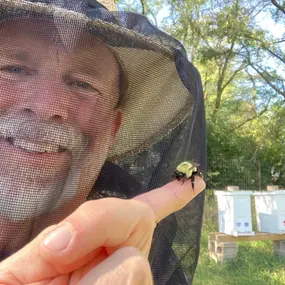
Phil Breed, Ed.S. (Education Specialist) - 35 years public education
Birdsong Bees 2018 – present
Employment:
· Beekeeping Technician Dordt University- USDA/NIFA 2023 – 2026
· Premier Bee Products Club Purchase Coordinator 2024 - present
Organizations:
· Siouxland Beekeepers Board 2022 – present
· Siouxland Beekeepers President 2026-27
· South Dakota Beekeepers Association Secretary 2026 – present
· South Dakota Beekeepers Association District 8 Representative 2026 - present
Community:
· Beginning Beekeeping I, II, and III classes 2024 – present
· Clay County Fair, Vermillion, SD “Honey Bee & Beekeeping” exhibit – annually since 2023
· Adams Homestead and Nature Reserve volunteer beekeeper 2023 – present
· SDSU Southeast Research Farm beekeeper 2024 – present
· Siouxland Beekeepers Field Day coordinator – annually since 2023
Publications:
· Beekeeping Success, Dr. Robert Owen (2026) – contributing photographer, proof reader
· Beekeeping in Northern Climates, Dr, Katie Lee et. al. (upcoming 4th edition 2027) – proof reader
· ABC and XYZ of Bee Culture, (upcoming 43rd edition 2027) – contributing author, proof reader
· Beekeeping Today, Jeff Ott & Dr. Rebecca Masterman (Jan. 2027 release) – contributing photographer
Presentations:
· Black Hills Area Beekeepers “Buzz in the Hills” Rapid City, SD 2026
· Tri-State Conference, Fargo, ND 2026
· IHPA Confer… Read More
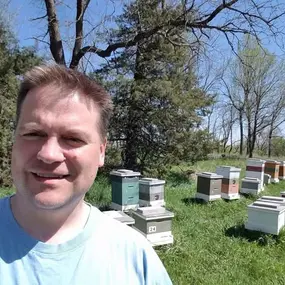
Pastor and Sideline Beekeeper
I am a sideline beekeeper in Northwest Iowa and currently serve as the vice president of the Siouxland Beekeepers club. I mostly follow the Mike Palmer model for sustainable beekeeping and do not migrate my colonies. My focus is on reproducing honeybee genetics that do well in my climate, are gentle to work with, and demonstrate Varrora resistance. My sideline business name is Westra Apiaries.